Welcome to our guide on the most sustainable wood flooring options available today. As more homeowners look for ways to reduce their environmental impact without sacrificing style or durability, sustainable flooring has become an important consideration during renovations and new builds. From responsibly sourced hardwood and reclaimed timber to engineered wood and bamboo alternatives, choosing the right flooring can help support healthier forests, reduce waste, and create a long lasting foundation for your home. In this guide, you will learn what makes wood flooring sustainable, how different options compare, which certifications to look for, and how to select a flooring solution that aligns with your budget, lifestyle, and environmental goals.
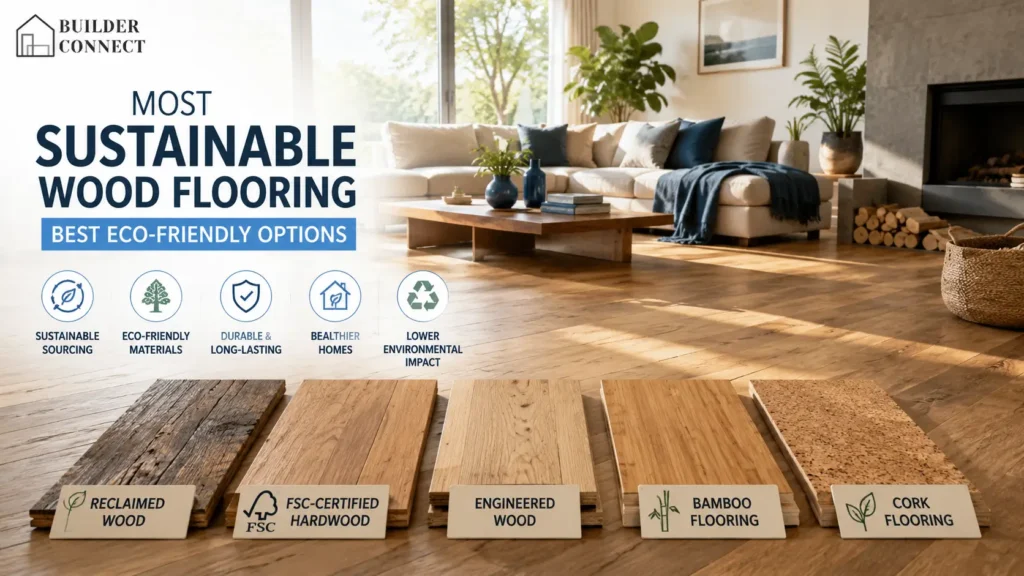
The most sustainable wood flooring is typically reclaimed wood, FSC certified hardwood, or responsibly manufactured engineered wood. These options reduce environmental impact by promoting responsible forestry, extending material life cycles, and minimizing waste while providing durable, attractive flooring for residential and commercial spaces.
- What Makes Wood Flooring Sustainable?
- The Most Sustainable Wood Flooring Options
- Comparing Popular Sustainable Wood Flooring Choices
- Certifications To Look For When Buying Sustainable Flooring
- Environmental Benefits Of Sustainable Wood Flooring
- How To Choose The Best Sustainable Wood Flooring For Your Home
- Common Mistakes To Avoid When Buying Eco-Friendly Flooring
- References
- FAQs: About Most Sustainable Wood Flooring
- Conclusion
- Find A Professional Flooring Company Near You!
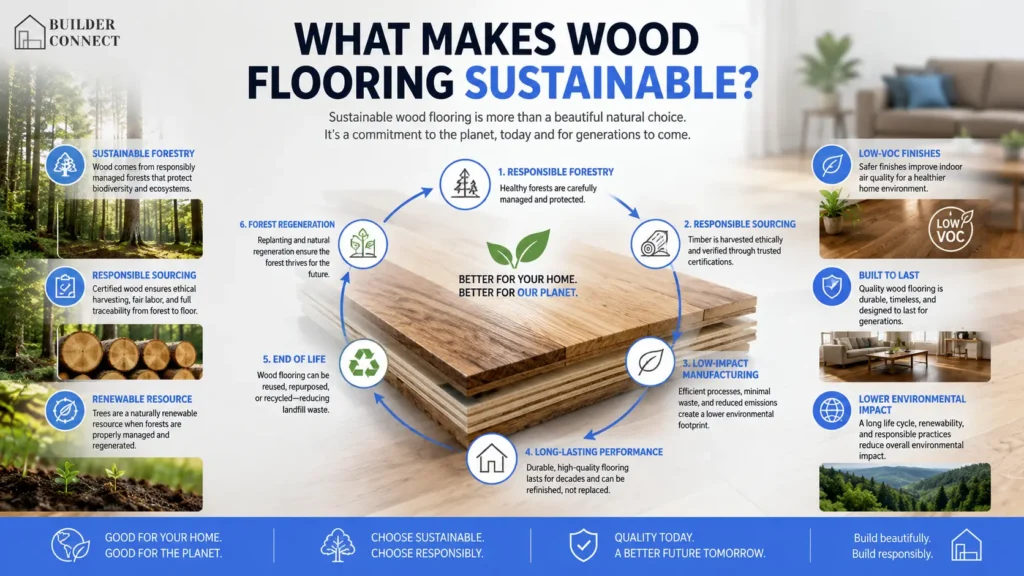
What Makes Wood Flooring Sustainable?
Sustainable wood flooring is about more than choosing a natural material. A floor is only truly sustainable when the timber is responsibly sourced, built to last, manufactured with care, and safe for the home. The most sustainable wood flooring options balance environmental responsibility with durability, beauty, and practical day-to-day performance.
Sustainable Forestry And Responsible Sourcing
Responsible sourcing is one of the most important factors behind sustainable wood flooring. Wood may be renewable, but that does not mean every timber product is environmentally responsible. The difference comes down to how forests are managed, harvested, restored, and protected after the timber is removed.
Sustainable forestry focuses on keeping forests healthy for the long term. This includes selective harvesting, protecting wildlife habitats, avoiding illegal logging, maintaining soil quality, and supporting replanting programs. When timber comes from responsibly managed forests, it can remain a renewable resource rather than a source of deforestation.
Certifications can also help buyers make better choices. Labels such as FSC or PEFC show that the wood has been assessed against recognized forestry standards. These certifications give homeowners more confidence that the flooring was sourced through a managed supply chain rather than from poorly regulated logging.
- Responsible harvesting: Sustainable forestry avoids removing trees faster than the forest can recover. This helps protect biodiversity, soil health, and future timber supply.
- Replanting programs: Replanting supports long-term forest renewal, but it should be paired with proper forest management rather than used as a simple marketing claim.
- Verified sourcing: Certified timber gives buyers clearer proof that the wood comes from a responsible source, which matters when comparing eco-friendly flooring products.
- Material origin: Where the wood comes from can affect its environmental impact. Locally or regionally sourced flooring may reduce transport emissions compared with imported products.
Sourcing matters as much as the material itself because two floors can look almost identical while having very different environmental impacts. A hardwood floor from a responsibly managed forest can be a sound long-term choice. The same type of wood from illegal or poorly managed logging can contribute to forest loss and environmental damage.
Longevity And Life Cycle Impact
Durability plays a major role in sustainable flooring. A floor that lasts for decades usually has a lower environmental impact than one that needs to be replaced after only a few years. This is why life cycle thinking is so important when choosing the most sustainable wood flooring for a home.
The life cycle of flooring includes raw material sourcing, manufacturing, shipping, installation, maintenance, repair, and eventual replacement. A cheaper floor may seem like the greener option at first, but if it wears out quickly, the total environmental cost can become much higher. New materials must be harvested, manufactured, transported, installed, and disposed of again.
High-quality wood flooring can often be repaired, sanded, refinished, or recoated instead of replaced. This extends the life of the floor and reduces waste. Solid hardwood and some engineered wood flooring products can last for many years when installed correctly and maintained with suitable cleaning products.
- Long service life: Flooring that lasts longer reduces the need for new materials, new manufacturing, and disposal of old flooring.
- Repair potential: Floors that can be refinished or repaired are often more sustainable than products that must be fully replaced after damage.
- Lower waste: Durable flooring helps reduce construction waste and landfill pressure over time.
- Better long-term value: A well-made floor may cost more upfront, but it can provide better value when measured across its full lifespan.
A sustainable floor should suit the way the space is used. For example, a busy family home with pets and children needs a tougher surface than a low-traffic bedroom. Choosing flooring that matches the room helps prevent early damage, which supports both sustainability and long-term cost savings.
Low Environmental Footprint
A low environmental footprint means the flooring has been produced, transported, installed, and finished in a way that reduces unnecessary harm. This includes the energy used in manufacturing, the chemicals used in finishes and adhesives, the distance the product travels, and how efficiently raw materials are used.
Manufacturing can have a major effect on sustainability. Some flooring products require heavy processing, high energy use, or chemical-heavy treatments. Others use more resource-efficient methods, such as engineered wood construction, which uses a thinner hardwood surface layer over a stable core. This can make better use of valuable timber while still providing the look of real wood.
Transportation also matters. A sustainable wood flooring product may lose some of its environmental advantage if it travels long distances through complex supply chains. Local or responsibly sourced regional products can reduce freight-related emissions and make supply chains easier to verify.
Indoor air quality should also be considered. Low-VOC finishes and adhesives help reduce chemical emissions inside the home. This is especially important in bedrooms, living areas, and homes with children, pets, or people sensitive to strong odors and airborne irritants.
- Efficient manufacturing: Flooring that uses timber carefully and limits waste can reduce pressure on natural resources.
- Lower transport impact: Choosing locally available or regionally sourced products can help reduce emissions linked to shipping.
- Low-VOC products: Safer finishes and adhesives support better indoor air quality and make the home healthier to live in.
- Resource efficiency: Products that use more of each harvested tree or repurpose existing wood can reduce waste and improve sustainability.
The most sustainable wood flooring is not always the option with the greenest label or the trendiest material. It is the product that combines responsible sourcing, long-term durability, low-impact manufacturing, safe finishes, and practical performance for the home.
When choosing sustainable wood flooring, look beyond appearance and price. A well-sourced, long-lasting, low-VOC floor can reduce environmental impact while giving your home a natural, durable, and comfortable surface for years.
The Most Sustainable Wood Flooring Options
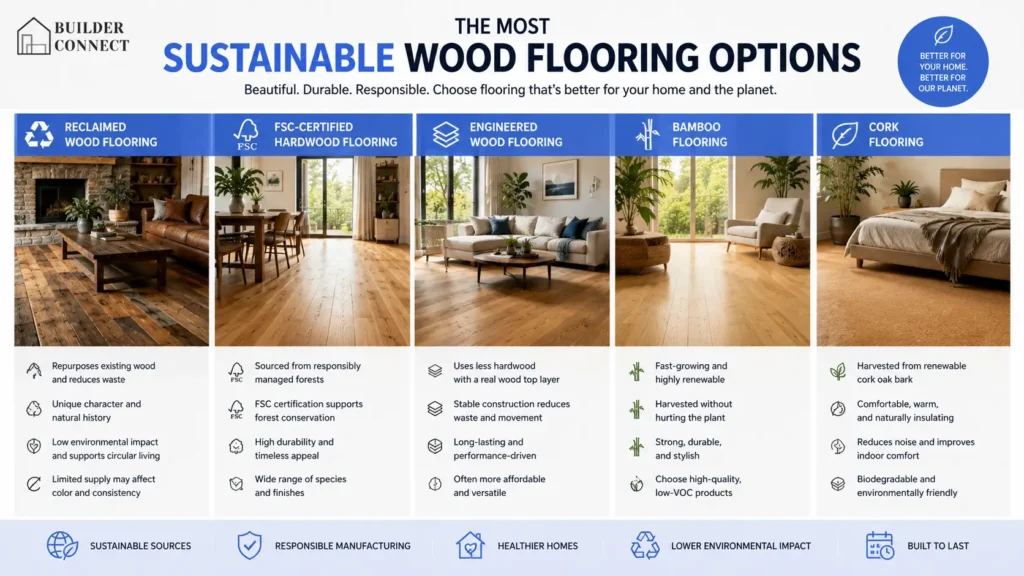
When searching for the most sustainable wood flooring, it is important to look beyond appearance alone. True sustainability involves responsible sourcing, long-term durability, efficient use of natural resources, and a reduced environmental impact throughout the product’s life cycle. Several flooring options stand out for their eco-friendly qualities, each offering unique benefits depending on your priorities, budget, and design preferences.
Reclaimed Wood Flooring
Reclaimed wood flooring is widely regarded as one of the most environmentally responsible flooring choices available. Instead of harvesting new trees, reclaimed wood is sourced from old buildings, barns, warehouses, factories, and other structures that are being renovated or demolished. This approach gives existing materials a second life while reducing the demand for newly harvested timber.
One of the biggest advantages of reclaimed wood flooring is its contribution to waste reduction. Large quantities of usable timber can be diverted from landfills and repurposed into durable flooring that may last for decades. Because many reclaimed boards come from old-growth forests, they often feature dense grain patterns and natural strength that are difficult to find in modern timber.
The visual appeal of reclaimed wood is another major benefit. Every plank carries unique characteristics that reflect its history and age.
- Distinctive Character: Knots, nail marks, weathering patterns, and natural imperfections create a one-of-a-kind appearance.
- Historical Appeal: Many homeowners appreciate the story and authenticity behind reclaimed materials.
- Design Flexibility: Reclaimed wood works well in rustic, farmhouse, industrial, traditional, and contemporary interiors.
From a sustainability perspective, reclaimed wood minimizes the environmental impact associated with logging, transportation, and manufacturing new flooring products.
- Reduced Resource Consumption: Existing timber is reused rather than harvested.
- Lower Waste Levels: Valuable materials remain in circulation instead of entering disposal sites.
- Extended Material Life Cycle: Wood that may otherwise be discarded continues serving a practical purpose.
Despite its benefits, reclaimed wood flooring does have some considerations.
- Limited Availability: Certain wood species and sizes may be difficult to source consistently.
- Higher Costs: Additional processing, cleaning, and preparation can increase prices.
- Variable Condition: Materials must be carefully inspected to ensure structural integrity and suitability for flooring applications.
FSC-Certified Hardwood Flooring
FSC-certified hardwood flooring is another highly sustainable choice for homeowners who want new timber products without compromising environmental responsibility. FSC stands for Forest Stewardship Council, an internationally recognized organization that promotes responsible forest management.
An FSC certification indicates that the wood comes from forests managed according to strict environmental, social, and economic standards. These standards help ensure that forests remain productive and healthy for future generations while protecting wildlife habitats and supporting local communities.
- Responsible Harvesting: Trees are harvested using practices that maintain forest health.
- Biodiversity Protection: Sensitive ecosystems and wildlife habitats receive protection.
- Community Support: Local workers and indigenous communities benefit from responsible forestry practices.
Choosing FSC-certified hardwood allows consumers to support sustainable forestry while still enjoying the natural beauty and performance of traditional wood flooring.
Several hardwood species are commonly available with FSC certification.
- Oak: Known for durability, versatility, and long service life.
- Maple: Offers a smooth appearance and excellent wear resistance.
- Walnut: Valued for its rich color and premium appearance.
- Ash: Provides strength and distinctive grain patterns.
- Hickory: Popular for high-traffic areas due to its toughness.
One of the strongest sustainability advantages of FSC-certified flooring is transparency. Consumers can verify that the timber originates from responsibly managed sources rather than forests affected by unsustainable logging practices.
Engineered Wood Flooring
Engineered wood flooring has become increasingly popular among environmentally conscious homeowners because it uses hardwood resources more efficiently than many traditional solid wood products.
Unlike solid hardwood flooring, engineered wood consists of multiple layers. A thin layer of real hardwood is bonded to a stable core made from plywood, high-density fiberboard, or other wood-based materials. This construction allows manufacturers to use significantly less hardwood while still delivering the appearance of a natural wood floor.
- Efficient Resource Use: Less slow-growing hardwood is required per plank.
- Material Optimization: Core layers often incorporate fast-growing or recycled wood products.
- Greater Yield: More flooring can be produced from the same amount of hardwood.
Engineered wood flooring also offers several practical advantages.
- Dimensional Stability: It is less likely to expand or contract due to moisture fluctuations.
- Installation Flexibility: Suitable for a wider range of environments.
- Long Service Life: High-quality products can perform well for many years.
From an environmental perspective, engineered flooring can reduce pressure on hardwood forests while extending the availability of valuable timber resources.
However, sustainability depends heavily on manufacturing quality and materials used.
- Adhesive Selection: Low-VOC adhesives contribute to healthier indoor air quality.
- Source Verification: FSC-certified engineered wood provides greater sustainability assurance.
- Product Quality: Higher-quality flooring generally lasts longer and reduces replacement frequency.
Cork Flooring
Cork flooring is often overlooked, yet it remains one of the most renewable flooring materials available. Cork is harvested from the bark of cork oak trees, which naturally regenerate after harvesting. The tree remains alive and continues producing new bark throughout its lifespan.
This renewable harvesting process makes cork a highly sustainable option because no trees are cut down during production.
- Renewable Resource: Bark regrows after each harvest cycle.
- Long-Term Production: Trees can continue producing cork for many decades.
- Minimal Forest Impact: Harvesting does not require tree removal.
In addition to its environmental benefits, cork flooring provides practical advantages that many homeowners appreciate.
- Comfort Underfoot: Cork has a naturally cushioned surface.
- Thermal Insulation: Helps maintain comfortable indoor temperatures.
- Noise Reduction: Absorbs sound more effectively than many hard flooring materials.
Cork also contributes positively to indoor environments.
- Low-Allergen Surface: Resists dust accumulation more effectively than some flooring materials.
- Natural Material: Contains fewer synthetic components when sourced responsibly.
- Improved Comfort: Softer surfaces reduce strain on joints during prolonged standing.
While cork is highly sustainable, homeowners should consider the quality of protective finishes and manufacturing methods when evaluating products.
Bamboo Flooring
Bamboo flooring is frequently promoted as one of the most sustainable alternatives to traditional hardwood flooring due to its exceptional growth rate. Unlike hardwood trees that may take several decades to mature, many bamboo species can reach harvest maturity within a few years.
This rapid renewability makes bamboo an attractive option for environmentally conscious consumers.
- Fast Growth Cycle: Bamboo regenerates much faster than hardwood trees.
- Continuous Regrowth: Harvesting does not typically require replanting.
- High Yield Production: Large quantities can be produced from relatively small growing areas.
Bamboo flooring offers several sustainability benefits when sourced and manufactured responsibly.
- Reduced Harvest Time: Faster regeneration supports ongoing production.
- Efficient Land Use: High growth rates maximize output.
- Strong Performance: Certain bamboo products provide excellent durability.
However, not all bamboo flooring products offer the same environmental benefits.
Manufacturing processes vary significantly between suppliers. Some products may use adhesives or finishes that contain higher levels of emissions, while others follow strict environmental standards.
- Manufacturing Transparency: Reputable suppliers provide detailed sourcing information.
- Low-Emission Products: Look for low-VOC certifications where possible.
- Quality Standards: Higher-density bamboo generally delivers better durability and longevity.
Bamboo flooring also has some limitations.
- Quality Variations: Product performance can vary between manufacturers.
- Transportation Impact: Imported bamboo may involve longer shipping distances.
- Certification Availability: Verification standards may vary across suppliers.
Choosing sustainable wood flooring involves balancing environmental responsibility, durability, appearance, and practical performance. Whether you prefer the character of reclaimed wood, the verified sourcing of FSC-certified hardwood, the resource efficiency of engineered wood, the renewability of cork, or the rapid growth of bamboo, each option offers meaningful ways to reduce environmental impact while creating a beautiful and durable floor for your home.
Comparing Popular Sustainable Wood Flooring Choices
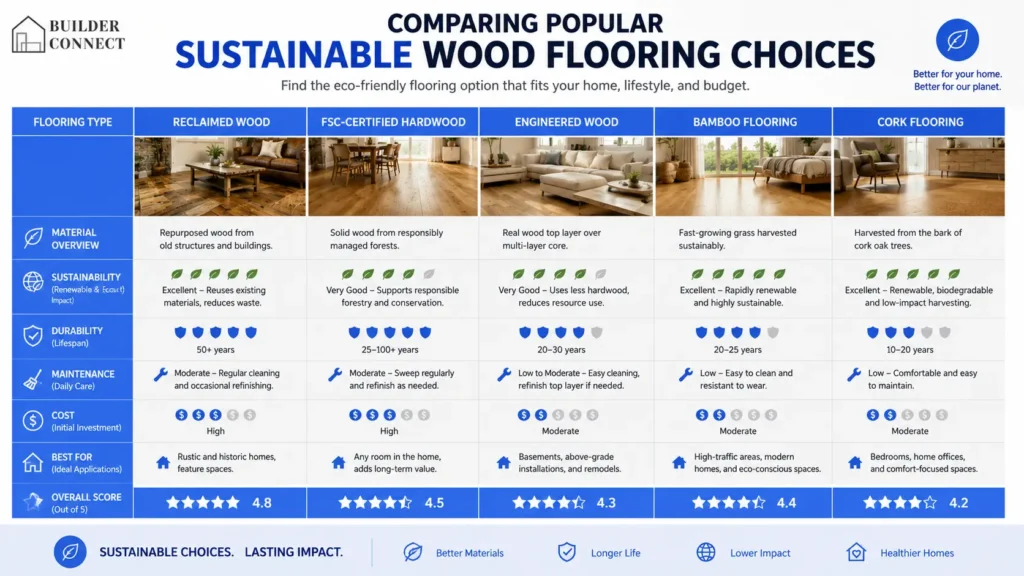
Choosing the most sustainable wood flooring depends on more than the type of timber. You also need to consider where the material comes from, how long it lasts, how it is made, how it is maintained, and whether it can be repaired instead of replaced. A truly eco-friendly floor should balance environmental responsibility with day-to-day performance.
Sustainability Comparison
Sustainable wood flooring should come from responsible sources, use resources wisely, and have a lower environmental impact across its full life cycle. Reclaimed wood often performs well because it reuses existing timber rather than relying on newly harvested trees. FSC-certified hardwood is also a strong option because it supports better forest management and traceable sourcing.
Engineered wood can be sustainable when it uses a certified hardwood veneer over a stable core, which reduces the amount of slow-growing timber needed. Bamboo and cork are often considered renewable choices because they grow or regenerate faster than traditional hardwoods, but their manufacturing methods and transport distance still matter.
- Resource Renewability: Reclaimed wood avoids new harvesting, while cork and bamboo renew faster than many hardwood species.
- Carbon Footprint: Locally sourced timber or reclaimed flooring can reduce transport-related emissions.
- Manufacturing Impact: Low-waste production, certified materials, and low-VOC adhesives can make a major difference.
Durability And Lifespan
Durability is one of the most important parts of sustainable flooring. A floor that lasts 40 years is usually more responsible than a cheaper product that needs replacing after 10 years. Solid hardwood and high-quality reclaimed wood can often be sanded and refinished multiple times, which extends their useful life.
Engineered wood can also last well, but its lifespan depends on the thickness of the top veneer. A thicker wear layer allows limited refinishing, while a thin veneer may only support light surface restoration. Cork and bamboo can perform well in the right setting, but they need proper sealing and care to handle heavy traffic.
- Expected Lifespan: Solid hardwood and reclaimed wood can last for decades when installed and maintained properly.
- Repairability: Floors that can be sanded, refinished, or repaired in sections usually create less long-term waste.
- Refinishing Potential: A thicker wood surface gives the floor more chances to be restored instead of replaced.
Maintenance Requirements
The most sustainable wood flooring should be easy to care for without relying on harsh cleaning products. Regular sweeping, gentle mopping, and quick spill clean-up can help protect the floor and reduce the need for repairs. Using the wrong cleaner can damage finishes, shorten the floor’s life, and introduce unnecessary chemicals into the home.
Low-VOC finishes, water-based sealants, and plant-based cleaning products can help support better indoor air quality. This is especially important in homes with children, pets, or people sensitive to strong chemical smells. Good maintenance also means preventing moisture damage, using furniture pads, and keeping grit away from high-traffic areas.
- Cleaning Needs: Most sustainable floors only need regular sweeping and a damp mop with a suitable cleaner.
- Long-Term Upkeep: Protective finishes, rugs, and quick repairs help prevent early replacement.
- Environmental Impact: Low-toxicity cleaners and low-VOC finishes reduce the chemical load inside the home.
Cost Comparison
Sustainable wood flooring can cost more upfront, but the lowest initial price is not always the best long-term choice. Reclaimed wood and FSC-certified hardwood may have a higher purchase price because sourcing, grading, and preparation require more care. High-quality engineered wood can offer a good balance between cost, stability, and reduced hardwood use.
When comparing costs, look at the full life cycle rather than the product price alone. A durable floor that can be refinished may save money over time because it avoids full replacement. Cheaper flooring that wears quickly can create higher labour costs, more waste, and more disruption later.
- Initial Investment: Reclaimed wood, certified hardwood, and premium engineered products can cost more at the start.
- Long-Term Value: Durable, repairable flooring often delivers better value across decades of use.
- Life-Cycle Cost: Installation, maintenance, refinishing, and replacement should all be considered before choosing a floor.
The best sustainable wood flooring is the one that fits your home, performs well for your lifestyle, and avoids unnecessary replacement. By comparing sourcing, durability, maintenance, and cost together, you can choose an eco-friendly floor that looks good, lasts longer, and supports better environmental choices.
Certifications To Look For When Buying Sustainable Flooring
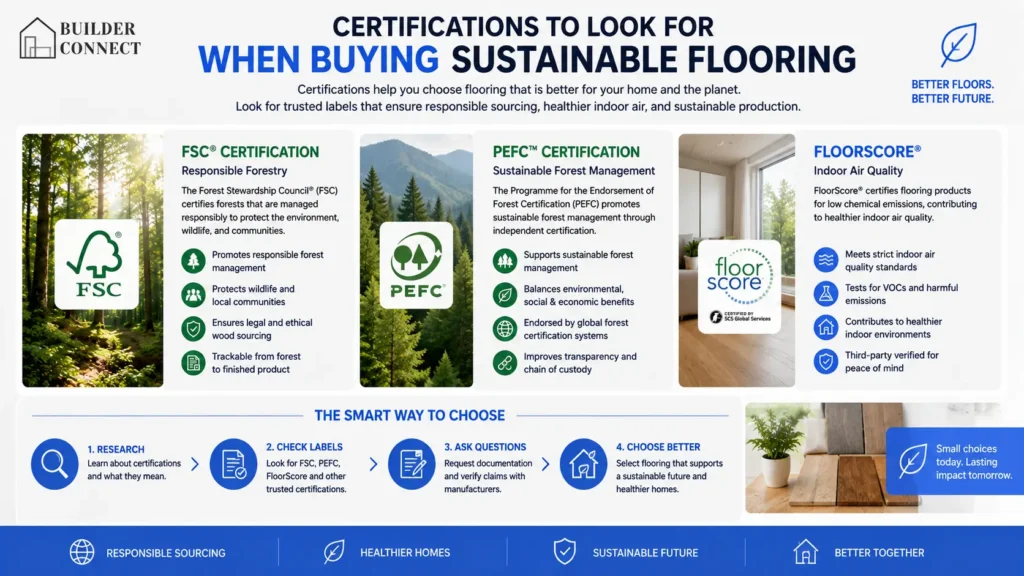
Sustainability claims can sound convincing, but certifications help you check whether a flooring product has been assessed against recognized standards. When choosing the most sustainable wood flooring, look beyond the marketing language and check for proof of responsible sourcing, low-emission materials, and transparent manufacturing.
FSC Certification
FSC stands for Forest Stewardship Council. It is one of the most recognized certifications for responsibly sourced wood products, including hardwood flooring, engineered wood flooring, and timber used in construction. FSC certification shows that the wood comes from forests managed with environmental, social, and economic standards in mind.
For flooring buyers, FSC certification matters because it gives you a clearer way to avoid timber linked to poor forest management. It also helps support suppliers that protect biodiversity, respect local communities, and follow stronger chain-of-custody controls.
- Responsible sourcing: FSC certification helps confirm that the timber comes from forests managed under recognized forest-management standards.
- Better traceability: Chain-of-custody certification helps track timber from the forest through processing, manufacturing, and sale.
- Buyer confidence: FSC labels make it easier to compare sustainable wood flooring options without relying only on supplier claims.
PEFC Certification
PEFC stands for Programme for the Endorsement of Forest Certification. It is a global forest-certification system that endorses national and regional forest-management standards. PEFC is often used for timber, paper, packaging, and flooring products where responsible sourcing is a priority.
PEFC certification is useful because it supports sustainable forest management at a large scale. It can be especially relevant when buying flooring sourced from regions where PEFC-endorsed standards are common. Like FSC, it gives homeowners, builders, and designers a way to check whether timber has come through a recognized certification system.
- Global recognition: PEFC is used across many countries, making it relevant for imported and locally sourced timber products.
- Sustainable supply chains: PEFC-certified products help show that the timber has been sourced through approved forest-management systems.
- Practical verification: Buyers can ask suppliers for PEFC documentation to confirm that the claim applies to the actual flooring product, not just the brand.
FloorScore And Indoor Air Quality Certifications
Sustainable flooring is not only about where the wood comes from. It is also about how the product affects the air inside your home. FloorScore certification focuses on indoor air quality by testing hard-surface flooring, adhesives, and underlayments for low volatile organic compound emissions.
This matters because flooring can release emissions from finishes, adhesives, sealants, and backing materials. Choosing low-emission flooring can support a healthier indoor environment, especially in bedrooms, living areas, schools, offices, and homes with children or allergy-sensitive occupants.
- Low-emission performance: FloorScore helps identify flooring products tested for lower VOC emissions.
- Health-focused choice: Low-emission flooring can reduce exposure to unwanted indoor pollutants.
- Whole-system thinking: Ask about adhesives, underlayments, and finishes as well as the flooring itself, since each layer can affect indoor air quality.
Other Environmental Labels Worth Considering
FSC, PEFC, and FloorScore are among the most useful certifications to check, but they are not the only labels that may support a sustainable flooring decision. Some flooring products may carry regional environmental labels, responsible manufacturing certifications, recycled-content claims, or green-building program recognition.
The key is to check what each label actually measures. Some focus on forestry. Others focus on emissions, recycled content, chemical safety, or manufacturing practices. A strong sustainable flooring choice often combines more than one standard, such as certified timber sourcing with a low-emission finish.
- Regional certifications: Local labels may reflect climate, forestry, or manufacturing standards specific to your area.
- Responsible manufacturing programs: Some manufacturers publish sustainability reports, material sourcing policies, or third-party audits.
- Product-specific proof: Always confirm that the certification applies to the exact flooring range, not just the company as a whole.
Choosing certified sustainable flooring gives you more confidence that the product meets real standards for sourcing, safety, and environmental care. Before buying, ask for documentation, check the product label, and compare certifications alongside durability, maintenance needs, and long-term performance.
Environmental Benefits Of Sustainable Wood Flooring
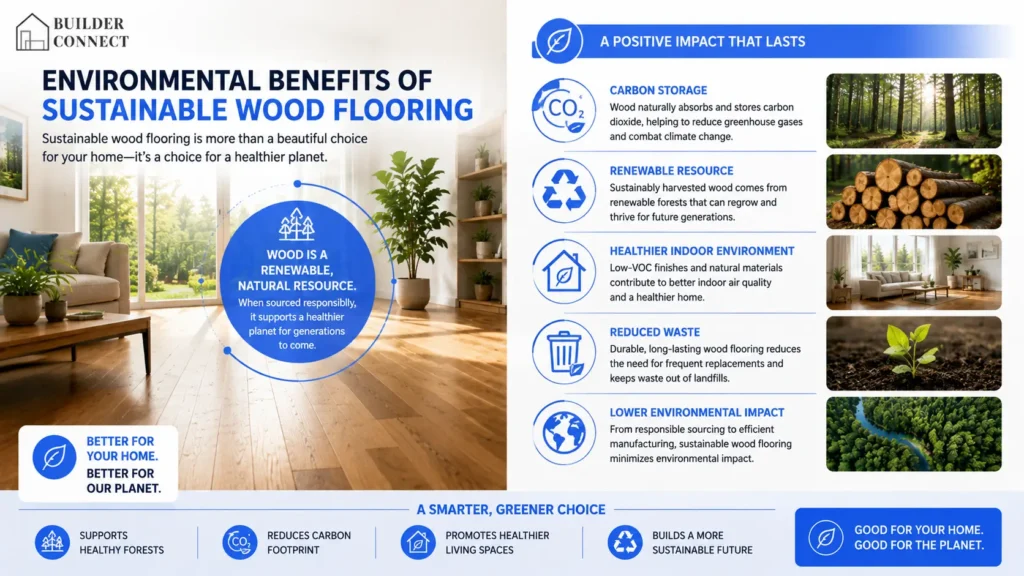
Sustainable wood flooring offers more than a natural look. When chosen carefully, it can support responsible forestry, reduce material waste, and help create a healthier indoor environment. The key is to look beyond appearance and consider where the wood comes from, how it is made, how long it will last, and what finishes or adhesives are used during installation.
Carbon Storage And Renewable Resources
Wood is a natural carbon-storing material. As trees grow, they absorb carbon dioxide from the atmosphere and store carbon within their trunks, branches, and roots. When that timber is turned into long-lasting flooring, some of that stored carbon remains locked inside the wood for many years, especially when the floor is well maintained and not quickly replaced.
This is one reason sustainable wood flooring can be a responsible material choice when it comes from well-managed forests. Unlike many synthetic flooring products made from non-renewable resources, wood can be regrown when forests are managed with replanting, biodiversity protection, and careful harvesting practices.
- Renewable sourcing: Responsibly harvested timber can be replaced through planned replanting and forest regeneration, helping protect the long-term supply of wood.
- Long-lasting value: A durable wood floor can last for decades, reducing the need for frequent replacement and lowering the overall environmental impact.
- Lower reliance on synthetic materials: Choosing natural wood can reduce dependence on flooring products made from petroleum-based materials.
Reduced Waste And Resource Conservation
Sustainable wood flooring can help reduce waste by making better use of existing or limited resources. Reclaimed wood flooring is a strong example because it gives old timber a second life instead of sending it to landfill. This wood may come from barns, factories, warehouses, or older homes, and it often has a character that new materials cannot easily match.
Efficient production methods also play an important role. Engineered wood flooring, for example, uses a real wood surface layer over a stable core. This can make better use of premium hardwood species because less solid hardwood is needed for each board. When made responsibly, this approach can reduce pressure on slow-growing trees while still giving homeowners the look and feel of real wood.
- Reclaimed materials: Reusing existing timber reduces demand for newly harvested wood and helps keep valuable materials out of landfill.
- Efficient manufacturing: Some flooring products use wood more carefully by reducing offcuts, improving yield, and making better use of each harvested tree.
- Resource-conscious design: Durable, repairable flooring supports sustainability because it stays useful longer and does not need frequent replacement.
Improved Indoor Air Quality
Sustainable flooring should also support a healthier home. This is where low-VOC products matter. VOCs, or volatile organic compounds, can be released from some flooring finishes, adhesives, stains, and sealants. High-VOC products may affect indoor air quality, especially in tightly sealed homes with limited ventilation.
Health-conscious flooring choices focus on safer finishes, low-emission adhesives, and trusted certifications. When choosing sustainable wood flooring, it is smart to ask about indoor air quality as well as sourcing. A floor may come from a responsible wood source, but the final product should also be safe and comfortable for everyday living.
- Low-VOC finishes: Water-based and low-emission finishes can help reduce indoor air pollutants after installation.
- Safer adhesives: Low-VOC adhesives are especially important for engineered wood and glue-down installations.
- Health-focused certifications: Certifications such as FloorScore can help buyers identify products tested for low indoor air emissions.
Sustainable wood flooring is a practical choice for homeowners who want beauty, durability, and lower environmental impact in one material. By choosing responsibly sourced timber, reclaimed materials, efficient products, and low-VOC finishes, you can create a floor that supports both your home and the environment.
How To Choose The Best Sustainable Wood Flooring For Your Home
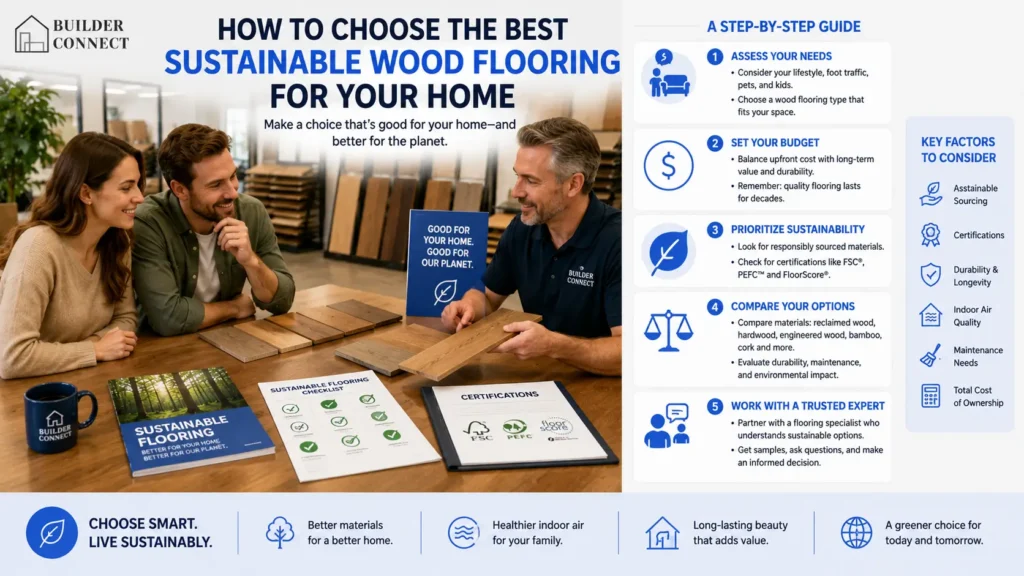
Choosing the best sustainable wood flooring starts with looking beyond appearance. A floor may look beautiful in a showroom, but it also needs to suit your daily routine, local climate, budget, and long-term expectations. The most sustainable wood flooring for your home is usually the option that combines responsible sourcing, strong durability, low-impact manufacturing, and practical performance in the rooms where it will be installed.
Consider Your Lifestyle And Household Needs
Your household should guide your flooring choice. A quiet adult home has different flooring needs from a busy family home with children, pets, and constant foot traffic. Sustainable flooring only performs well when it is matched to real use, so durability, maintenance, and comfort should be part of the decision.
- Children: Homes with young children need flooring that can handle spills, dropped toys, and daily wear. Engineered wood with a durable finish can be a practical choice because it offers the look of timber with good stability and easier upkeep.
- Pets: If you have pets, look for scratch-resistant finishes and harder wood species. Reclaimed hardwood or FSC-certified hardwood can work well, but the surface finish matters just as much as the timber itself.
- High-traffic areas: Hallways, kitchens, and living rooms need long-lasting flooring that can handle repeated use. A sustainable floor that lasts for decades is often better for the environment than a cheaper product that needs early replacement.
- Moisture-prone spaces: Bathrooms, laundries, and entryways need careful product selection. Solid wood can move with moisture, while high-quality engineered wood may offer better dimensional stability in certain spaces.
Evaluate Climate And Location Factors
Climate plays a major role in how wood flooring performs over time. Wood naturally responds to moisture, heat, and seasonal change, so the right flooring choice should suit the conditions inside your home as well as the wider environment where you live.
- Humidity: In humid areas, wood can expand if it absorbs too much moisture. Engineered wood is often a better option than solid hardwood in homes where humidity changes throughout the year.
- Temperature fluctuations: Homes with strong sunlight, underfloor heating, or large seasonal temperature shifts need flooring that can remain stable. Always check whether the product is suitable for heated floors or sun-exposed rooms before buying.
- Room-specific suitability: Not every sustainable flooring option suits every room. Cork may feel warm and quiet in bedrooms, reclaimed wood may add character to living areas, and engineered wood may be better for open-plan spaces where stability is important.
Balance Sustainability, Budget, And Performance
The most sustainable wood flooring is not always the most expensive option. A smart choice balances environmental responsibility with practical performance and realistic cost. This means looking at the full life of the product, not just the purchase price.
- Finding practical solutions: If reclaimed wood is outside your budget, FSC-certified engineered wood may still offer strong sustainability benefits. The goal is to choose the best available option for your home, not the most expensive product on the market.
- Long-term ownership considerations: A floor with a higher upfront cost may offer better value if it lasts longer, needs fewer repairs, and can be refinished. Durability is a key part of sustainability because replacement creates extra waste, transport emissions, and material demand.
- Maintenance needs: Choose flooring that fits how much care you are willing to provide. Some timber floors need regular refinishing, while others only need routine cleaning with low-VOC or wood-safe products.
- Performance expectations: Think about comfort, sound, insulation, and wear resistance. Sustainable flooring should not only reduce environmental impact but also support the way your home is used every day.
Work With Reputable Flooring Suppliers
A trustworthy supplier can help you avoid misleading sustainability claims and choose flooring that genuinely suits your project. Good suppliers should be able to explain where the wood comes from, how it was made, what certifications apply, and how the product should be installed and maintained.
- Questions to ask suppliers: Ask where the timber was sourced, whether it carries FSC or PEFC certification, what finishes and adhesives were used, and whether the product has low-VOC or indoor-air-quality certification.
- Verifying sustainability claims: Do not rely only on words like eco-friendly, natural, or green. Look for clear proof, such as certification documents, product data sheets, sourcing details, and manufacturer transparency.
- Installation guidance: A reputable supplier should explain subfloor requirements, acclimation time, moisture limits, and room suitability. Poor installation can shorten the life of even the most sustainable wood flooring.
- Aftercare support: Ask how to clean, protect, and refinish the flooring over time. Proper care helps extend the life of the floor and protects the environmental value of your investment.
The best sustainable wood flooring is the one that fits your home, performs well over time, and comes from a source you can trust. By considering your lifestyle, local climate, budget, and supplier credibility, you can choose a floor that looks good, lasts longer, and supports more responsible use of natural resources.
Common Mistakes To Avoid When Buying Eco-Friendly Flooring
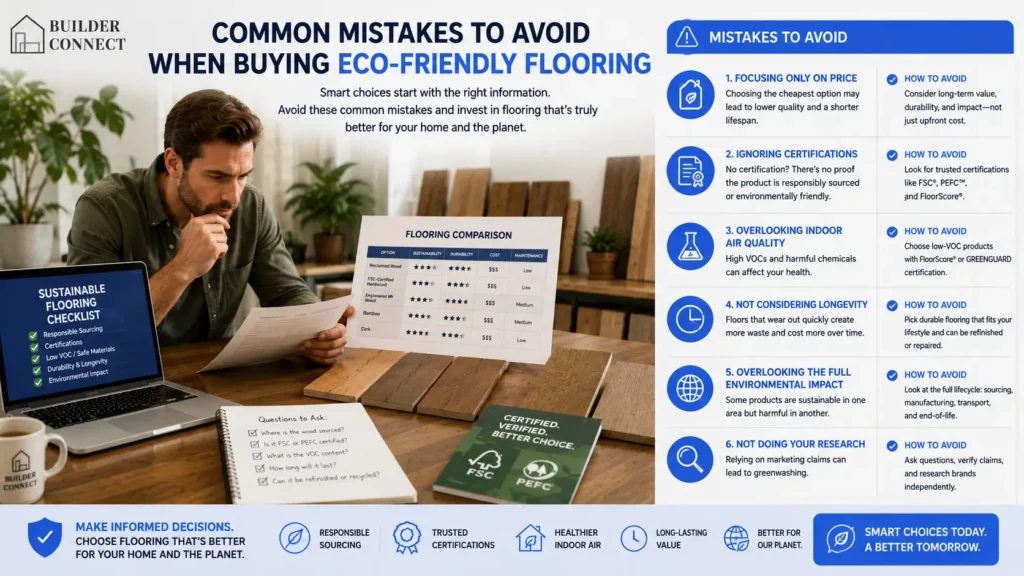
Choosing eco-friendly flooring is a smart step, but not every product marketed as sustainable delivers the same environmental value. To make the right choice, you need to look beyond the label and consider sourcing, manufacturing, certifications, durability, and long-term performance.
Assuming All Wood Flooring Is Sustainable
Wood is a natural material, but that does not automatically make every wood floor sustainable. The environmental impact depends on where the timber comes from, how it is harvested, and whether the forest is managed responsibly.
Flooring made from poorly sourced timber can contribute to deforestation, habitat loss, and weak supply-chain standards. This is why sourcing matters as much as the material itself. A hardwood floor from a responsibly managed forest may be a better choice than a cheaper product with no clear origin.
When comparing sustainable wood flooring, ask where the timber was harvested and whether the supplier can verify its source. Reputable suppliers should be able to explain the wood species, country of origin, and certification status without vague claims.
- Responsible sourcing: Choose flooring from managed forests, reclaimed timber, or verified supply chains to reduce environmental harm.
- Clear origin: Avoid products that do not disclose where the wood comes from or how it was harvested.
- Reclaimed materials: Consider reclaimed wood flooring when you want to reduce demand for newly harvested timber.
Focusing Only On Material Type
Many buyers focus only on whether the flooring is hardwood, bamboo, cork, reclaimed wood, or engineered wood. Material choice matters, but it is only one part of the sustainability picture.
A fast-growing material can still have a high environmental impact if it requires heavy processing, long-distance shipping, or chemical-heavy manufacturing. For example, bamboo can be a strong eco-friendly flooring option, but the final product depends on adhesive quality, factory standards, and transport distance.
Manufacturing also affects indoor air quality. Some flooring products use finishes, sealants, or adhesives that release volatile organic compounds into the home. A truly sustainable floor should support both environmental responsibility and a healthier living space.
- Manufacturing process: Look at how the flooring is made, not just what it is made from.
- Transport impact: Consider whether the product has been shipped long distances when a lower-impact local option may be available.
- Indoor air quality: Choose low-VOC finishes and adhesives to reduce chemical emissions inside your home.
Ignoring Product Certifications
Sustainability claims can sound convincing, but unsupported claims should be treated with caution. Terms like green, natural, eco-conscious, and environmentally friendly do not mean much unless they are backed by trusted standards.
Certifications help buyers separate verified products from marketing claims. FSC-certified wood, PEFC-certified timber, and low-emission flooring labels can provide better confidence that the product meets recognised environmental or health standards.
This is especially important when buying online or comparing products from different suppliers. Without certification, it can be hard to confirm whether the flooring was responsibly sourced or manufactured to safe emission standards.
- FSC certification: Look for Forest Stewardship Council certification when choosing responsibly sourced wood flooring.
- PEFC certification: Consider PEFC-certified products as another recognised mark of sustainable forest management.
- Low-emission labels: Check for indoor air quality certifications when choosing flooring for bedrooms, living areas, or family homes.
Overlooking Durability
A floor is not truly sustainable if it needs replacing too soon. Durability plays a major role in the total environmental impact of flooring because every replacement requires new materials, transport, labour, and waste disposal.
The most sustainable wood flooring options are usually those that last for many years, can be maintained properly, and can be repaired or refinished when needed. A cheaper product may seem appealing at first, but if it wears out quickly, it can create more waste and cost more over time.
Think about how the floor will perform in your actual home. A busy family home with pets, children, and heavy foot traffic needs a different flooring choice than a low-use guest room. Matching the product to the space helps extend its lifespan.
- Long-term performance: Choose flooring that can handle the traffic, moisture level, and daily use of the room.
- Repairability: Look for flooring that can be sanded, refinished, or repaired instead of replaced.
- Lifecycle value: Compare the full lifespan of the product, not just the upfront price.
Eco-friendly flooring should be judged by more than its appearance or marketing label. When you consider sourcing, production methods, certifications, and durability together, you can choose a floor that looks good, performs well, and supports a lower-impact home for years to come.
References
- Eco-Friendly Wood Flooring: The 6 Most Sustainable Choices
https://modernize.com/homeowner-resources/flooring/eco-friendly-wood-flooring-the-6-best-choices - Eco-Friendly Wood Flooring: 7 Sustainable Choices In 2025
https://www.flooringstores.com/a/blog/sustainable-wood-flooring - 8 Sustainable Hardwood Flooring Options (And Why It Matters)
https://www.leafscore.com/eco-friendly-living-products/ethical-hardwood-flooring-the-complete-guide/ - How To Choose FSC-Certified Hardwood Flooring For Your Home
https://www.fromtheforest.com/blogs/fromtheforest/how-to-choose-fsc-certified-hardwood-flooring-for-your-home - Eco-Friendly Wooden Flooring: FSC Certified, Bamboo, And Reclaimed Wood
https://mrsander.co.uk/news/more-environmentally-friendly-flooring/
FAQs: About Most Sustainable Wood Flooring
Conclusion
Choosing the most sustainable wood flooring comes down to more than selecting a natural-looking material. The best option should combine responsible sourcing, durable construction, verified certifications, and long-term performance that suits your home. Reclaimed wood, FSC-certified hardwood, and well-made engineered wood can all support lower-impact living when they are produced, installed, and maintained with care. Before making a final decision, compare each flooring choice against your budget, room conditions, maintenance needs, and environmental goals. A trusted flooring specialist or supplier can help you review product certifications, understand real-world durability, and choose the most sustainable wood flooring solution for your specific project.
Find A Professional Flooring Company Near You!
Floor Sanding Auckland
Call now: 09 887 7886 Main Menu ServicesReviewsBenefitsOur Work Call For Instant Quote 09 887…
Flooring Contractor Auckland
Main Menu ServicesReviewsBenefitsOur Work Call For Instant Quote 09 887 7886 Call now: 09 887…
Timber Flooring Specialists Auckland
Call now: 09 887 7886 Main Menu ServicesReviewsBenefitsOur Work Call For Instant Quote 09 887…
Flooring Specialists Hamilton
Drummond Floors Your ProfessionalFlooring Specialists Hamilton Timber, Laminate, Bamboo, Vinyl Floors Highest Rated Flooring Company…
Flooring Specialists Wellington
Your ProfessionalFlooring Specialists Wellington Timber, Laminate, Bamboo, Vinyl Highest Rated Flooring Company Over 20 Years…

About the Author:
Mike Veail is a recognized digital marketing expert with over 6 years of experience in helping tradespeople and small businesses thrive online. A former quantity surveyor, Mike combines deep industry knowledge with hands-on expertise in SEO and Google Ads. His marketing strategies are tailored to the specific needs of the trades sector, helping businesses increase visibility and generate more leads through proven, ethical methods.
Mike has successfully partnered with numerous companies, establishing a track record of delivering measurable results. His work has been featured across various platforms that showcase his expertise in lead generation and online marketing for the trades sector.
Learn more about Mike's experience and services at https://theleadguy.online or follow him on social media: