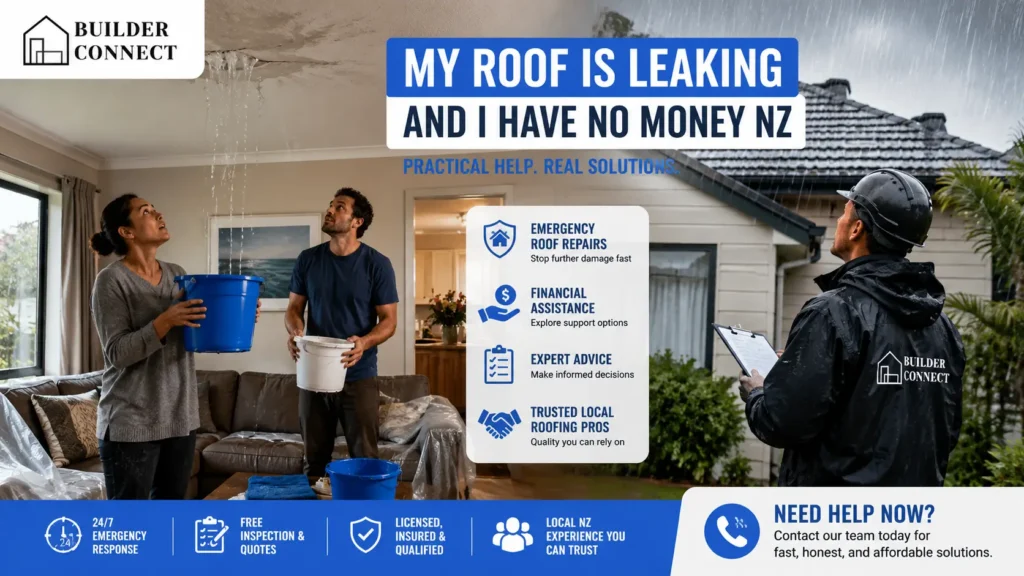
Welcome to our guide on what to do if your roof is leaking and you have no money in NZ. Discovering water coming through your ceiling can be stressful, especially when you are already dealing with financial pressure, but acting quickly can reduce further damage and help you explore practical solutions. Whether you own your home, rent, or live in a unit title property, there are steps you can take to protect your home, understand who is responsible for repairs, check whether insurance may help, and investigate financial assistance or affordable repair options. This guide explains what to do first, where to find support, and how to make informed decisions so you can manage the situation safely while keeping long term repair costs under control.
If your roof is leaking and you have no money in NZ, act quickly to limit water damage, document the leak, contact your insurer or landlord, and arrange a professional inspection. You may also qualify for financial assistance, payment plans, or community support depending on your circumstances and eligibility.
- What Should You Do Immediately When Your Roof Starts Leaking?
- How Urgent Is A Leaking Roof?
- First Determine Who Is Responsible For The Repair
- Will Home Insurance Cover A Leaking Roof In New Zealand?
- Can Work And Income Help Pay For Roof Repairs?
- Other Ways To Get Help With A Roof Repair In NZ
- What Is The Cheapest Safe Way To Stop A Roof Leak?
- How To Avoid Being Overcharged When Money Is Tight
- Should You Repair The Roof Or Replace It?
- What Should You Do If You Cannot Afford Any Repair Right Now?
- Common Mistakes To Avoid When Your Roof Is Leaking
- Ignoring A Small Ceiling Stain
- Climbing Onto A Wet Roof
- Paying For A Full Reroof Without An Inspection
- Assuming Insurance Will Automatically Cover The Damage
- Failing To Notify The Landlord In Writing
- Hiring An Unverified Contractor
- Accepting A Verbal Quote
- Using Indoor Sealant As A Permanent Fix
- Borrowing Without Checking The Total Repayment Cost
- Repairing Visible Damage Without Finding The Source
- A Practical Action Plan For The Next 24 Hours
- References
- FAQs: About My Roof Is Leaking And I Have No Money In NZ
- Conclusion
- Find A Professional Roofing Company Near You!
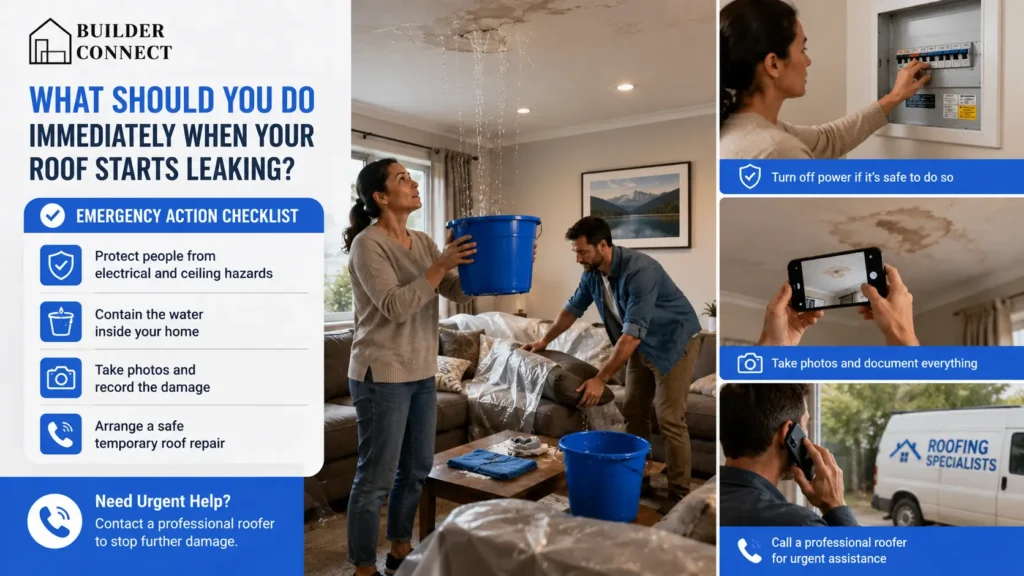
What Should You Do Immediately When Your Roof Starts Leaking?
When your roof starts leaking, your first priority is to protect people and prevent further damage. A permanent roof repair can wait until the immediate risks are under control. Water can quickly affect ceilings, electrical systems, insulation, furniture, and flooring, so taking calm, practical action in the first few minutes can make a major difference.
Protect People From Electrical and Ceiling Hazards
A roof leak can create serious safety risks, especially when water reaches electrical fittings or causes ceiling materials to weaken. Keep everyone away from the affected area until you can assess the situation safely.
- Clear the area: Move children, pets, and other occupants away from rooms with active leaks, sagging ceilings, or visible water damage.
- Watch for ceiling movement: A ceiling that is bulging, cracked, or sagging may be holding trapped water and could collapse without warning.
- Move electrical items: Unplug and relocate appliances, power boards, chargers, and extension leads that are close to the leak.
- Turn off the power safely: If water is near lights, switches, sockets, or wiring, switch off electricity to the affected area only if you can reach the switchboard without entering a wet area.
- Call for professional help: Contact a licensed electrician when water has reached electrical wiring, light fittings, or the switchboard. Call emergency services if there is an immediate risk of fire, electric shock, ceiling collapse, or injury.
Never touch wet electrical equipment or stand in water while attempting to disconnect power. When there is any doubt, leave the area and wait for a qualified professional.
Contain the Water Inside Your Home
Once the area is safe, focus on limiting how far the water can spread. Even a slow drip can damage flooring, furniture, insulation, and wall linings if it continues for several hours.
- Catch active drips: Place buckets, bowls, or waterproof containers beneath each leak. Use a wide container when the water is spreading across the ceiling rather than falling from one point.
- Protect the floor: Place towels, absorbent cloths, or plastic sheeting around the container to catch splashes and overflow.
- Move valuable belongings: Relocate electronics, furniture, clothing, documents, rugs, and other items before water reaches them.
- Check nearby rooms: Water can travel through roof framing and ceiling cavities before appearing indoors, so inspect adjoining rooms for damp patches or staining.
- Empty containers regularly: Do not allow buckets to overflow, especially during heavy rain or when several leaks are active.
Avoid puncturing a bulging ceiling unless a qualified roofer, builder, or emergency professional advises you to do so. Releasing trapped water incorrectly can cause a sudden ceiling collapse, spread contaminated water, or expose electrical wiring.
Take Photos And Record The Damage
Clear records can help support an insurance claim, tenancy request, contractor complaint, or financial-assistance application. Document the situation before cleaning up where it is safe and practical to do so.
- Photograph the leak: Take clear images of active drips, ceiling stains, cracks, sagging areas, and water collecting inside the property.
- Record damaged belongings: Photograph furniture, flooring, electronics, clothing, insulation, and other items affected by water.
- Capture exterior conditions: From ground level, photograph visible roof damage, blocked gutters, fallen branches, missing roofing materials, or storm debris. Do not climb onto the roof.
- Note the timing: Record the date, approximate time, weather conditions, and when you first noticed the problem.
- Save all communication: Keep copies of emails, text messages, repair requests, insurance correspondence, inspection reports, and contractor advice.
- Keep financial records: Store quotes, invoices, receipts, and proof of temporary repair costs in one folder.
Good documentation creates a clear timeline of what happened and what action you took. It can also help a roofer understand how the leak developed and whether the problem appears linked to storm damage, gradual deterioration, recent building work, or blocked drainage.
Arrange A Safe Temporary Roof Repair
After protecting the inside of your home, contact a professional roofer to arrange emergency weatherproofing or a temporary repair. The goal is to stop more water from entering until the roof can be properly inspected and repaired.
- Request an urgent inspection: Explain where the leak appears indoors, when it started, and whether the damage followed heavy rain, wind, or a storm.
- Ask about temporary weatherproofing: A roofer may use a securely fitted cover, replace a damaged tile, seal a failed flashing, or carry out another short-term measure suited to the roof type.
- Confirm the inspection process: Ask whether the company will identify the likely leak source before recommending permanent work.
- Request written findings: Photographs and a brief condition report can help you compare repair options, contact your insurer, or apply for financial support.
- Separate temporary and permanent costs: Ask for the emergency weatherproofing cost and the full repair cost to be listed separately.
- Avoid unsafe access: Do not climb onto a wet, damaged, steep, or wind-exposed roof. Roofing materials can become slippery, and weakened sections may not support your weight.
Temporary weatherproofing is designed to reduce immediate water entry. It does not correct widespread corrosion, rotten framing, failed underlay, or other underlying roof problems. A complete repair should address the source of the leak and restore the affected roof area to a safe, weather-resistant condition.
Acting quickly can limit damage, protect your family, and give you time to arrange a proper roof inspection. Once the immediate leak is under control, you can review repair options, insurance cover, financial support, and the safest long-term solution.
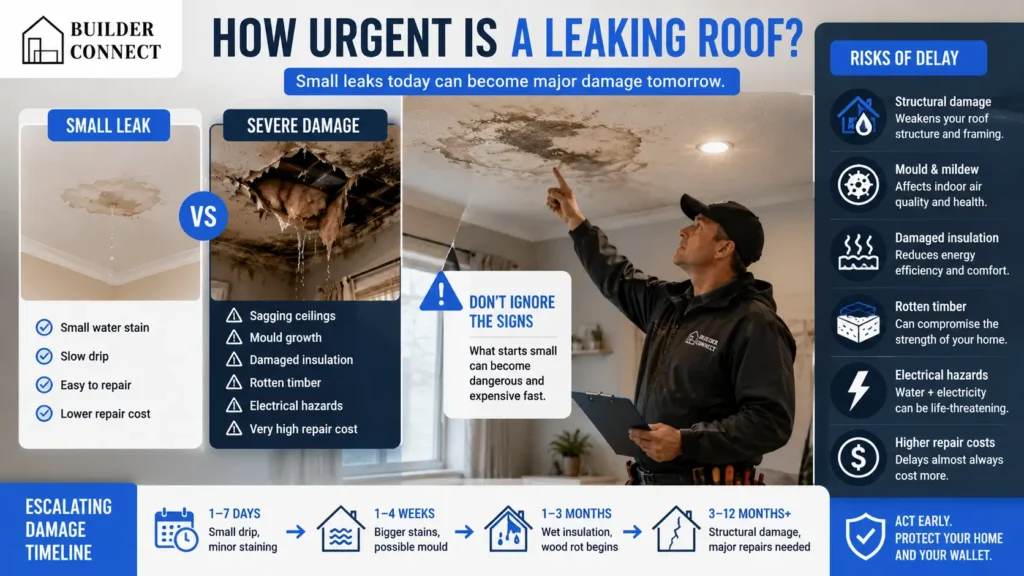
How Urgent Is A Leaking Roof?
A leaking roof should always be treated as a priority, even if the water appears to be coming through in only one place. What looks like a minor drip can quickly develop into a serious problem that affects your home’s structure, electrical system, insulation, and indoor air quality. The sooner you identify the source and arrange a professional inspection, the better your chances of limiting damage and reducing repair costs. Understanding the warning signs can help you decide when immediate action is needed and when a repair can be safely scheduled.
Warning Signs That Need Emergency Action
Some roof leaks require immediate professional attention because they pose a risk to your safety or could cause significant damage if left untreated. If you notice any of the following signs, contact a qualified roofing contractor as soon as possible and take steps to protect everyone inside the property.
- Sagging Ceilings: A ceiling that begins to bow or sag may be holding a large amount of trapped water. This increases the risk of the ceiling collapsing without warning, which can cause injury and extensive property damage.
- Water Near Electrical Fittings: Water around ceiling lights, power outlets, switchboards, or electrical wiring creates a serious safety hazard. If it is safe to do so, isolate the affected electrical circuit and contact both a licensed electrician and a roofing professional immediately.
- Rapid Water Entry: A steady stream of water entering the home during heavy rain usually indicates significant roof damage rather than a small defect. Quick action can help reduce damage to ceilings, flooring, furniture, and personal belongings.
- Fallen Roofing Materials: Missing roofing sheets, broken tiles, damaged ridge capping, or loose flashing can expose the roof structure to further water penetration. Strong winds can also turn loose roofing materials into safety hazards.
- Structural Movement: Cracks appearing around ceilings, walls, or roof framing after a leak may indicate movement within the structure. This requires prompt assessment to determine whether water has weakened important structural components.
- Large Areas of Mould or Soaked Insulation: Extensive mould growth or saturated insulation suggests the leak may have been present for some time. Wet insulation loses much of its thermal performance and creates conditions that encourage further mould growth.
- Storm or Tree Damage: Roof damage caused by severe weather or falling branches should always be inspected promptly. Even if the visible damage appears minor, hidden cracks or punctures can allow water to enter the roof cavity.
What Happens If You Delay Repairs?
Delaying roof repairs rarely saves money. In many cases, the longer water continues entering the home, the more expensive the eventual repair becomes. Moisture can spread far beyond the point where it first becomes visible, affecting areas that cannot be seen without a professional inspection.
- Damage to Insulation and Ceilings: Wet insulation becomes less effective at retaining heat and may need complete replacement. Ceiling linings can stain, soften, and eventually collapse if water continues to collect above them.
- Timber Decay: Roof framing, battens, and other timber components can begin to deteriorate after prolonged exposure to moisture. Rot weakens structural elements and often increases the overall repair cost.
- Mould Growth: Damp building materials provide ideal conditions for mould to develop. Once mould spreads behind walls or ceilings, remediation can become far more involved than fixing the original leak.
- Electrical Risks: Water entering roof cavities may reach wiring, light fittings, or electrical equipment. This increases the risk of electrical faults and should always be assessed by qualified professionals.
- Damage to Walls and Flooring: Water does not always remain in the ceiling area. It can travel through wall cavities and eventually damage plasterboard, timber flooring, carpets, cabinetry, and interior finishes.
- Higher Repair Costs: A repair that may have involved replacing a small section of flashing or roofing material can become a much larger project if water is allowed to damage surrounding building components.
- Possible Insurance Complications: Some insurance policies distinguish between sudden accidental damage and problems that worsen because maintenance or repairs were delayed. Reporting the issue promptly and taking reasonable steps to reduce further damage may help support your claim.
When a Small Leak May Still Signal a Larger Problem
One of the biggest misconceptions about roof leaks is that the visible water stain always identifies the location of the problem. In reality, water often travels along roof framing, under roofing materials, or through insulation before it finally appears inside the home. This means the source of the leak may be several metres away from where you first notice the damage.
A small ceiling stain may also represent a leak that has been developing slowly over many months. During dry weather, the problem can appear to stop completely, only to return during heavy rain or strong winds. This intermittent pattern often leads homeowners to believe the issue has resolved when moisture is actually continuing to affect hidden parts of the roof structure.
Professional roof inspections are valuable because experienced roofers look beyond the obvious signs of water entry. They assess roofing materials, flashing, valleys, gutters, penetrations around vents and chimneys, and the roof cavity itself to locate the true source of the leak. They can also identify early signs of deterioration that have not yet caused visible damage inside the home.
Receiving an accurate diagnosis before approving repairs helps ensure the underlying problem is addressed rather than simply treating the visible symptoms. This approach often prevents repeat leaks, avoids unnecessary spending, and provides greater confidence that the repair will last.
Even if your roof leak seems small today, it is worth arranging a professional inspection as soon as possible. Acting early can protect your home from more extensive damage, reduce long term repair costs, and give you a clearer understanding of the safest and most cost effective solution.
First Determine Who Is Responsible For The Repair
Before spending money on a leaking roof, it is important to determine who is legally and financially responsible for the repair. The answer depends on whether you own the property, rent it, live in a unit title development, or recently had roofing work completed. Identifying the responsible party early can save time, prevent unnecessary expenses, and help you access insurance, warranties, or legal protections that may already be available.
If You Own the Home
As the homeowner, you are generally responsible for arranging roof inspections and repairs. That does not always mean you have to pay the full cost yourself. Insurance, warranties, or other forms of financial assistance may reduce your out-of-pocket expenses depending on what caused the leak.
Start by reviewing your home insurance policy to understand what is covered. Many policies may provide cover for sudden and accidental damage, such as storm damage or falling trees, while damage caused by gradual wear and tear, corrosion, or poor maintenance is often excluded. If you are unsure how your policy applies, contact your insurer before approving major repair work.
If the leak is severe enough to threaten the structural integrity or value of your home, it is also worth speaking with your mortgage provider. Some lenders offer hardship assistance or temporary repayment arrangements for homeowners facing unexpected repair costs. While this will not be the right solution for everyone, it can provide breathing room while urgent repairs are completed.
Rather than accepting the first recommendation you receive, ask roofing contractors to provide separate quotations for different levels of work.
- Temporary repair: Stops active water entry and protects the home until permanent repairs can be arranged.
- Targeted repair: Fixes the specific damaged section when the rest of the roof remains in good condition.
- Full replacement: Recommended when the roof has widespread deterioration or has reached the end of its expected service life.
Comparing these options gives you a clearer understanding of what work is genuinely necessary and what can safely wait.
If your roof is relatively new or the leak developed shortly after previous building work, ask whether the problem could be linked to defective workmanship, faulty materials, or product failure. In some cases, warranties or guarantees may reduce or eliminate your repair costs if the defect falls within the warranty period.
If You Rent the Home
If you are renting, do not assume you are responsible for paying for roof repairs. In most situations, your responsibility is to report the problem promptly so the landlord or property manager can arrange appropriate repairs.
Notify them as soon as you discover the leak, preferably in writing by email or another method that creates a record. Include clear photographs showing the leak, any visible damage, and areas where water is entering the property. If the leak creates safety concerns, such as water near electrical fittings or a collapsing ceiling, explain these risks clearly so the urgency is understood.
Keep copies of everything you send and receive throughout the process.
- Written reports: Record when you first noticed the leak and when you informed the landlord.
- Photographs: Document the damage before temporary repairs or clean-up begins.
- Communication records: Save emails, text messages, inspection notices, and maintenance updates.
- Repair documentation: Keep copies of any invoices or reports if emergency work is approved.
Maintaining accurate records can help resolve disputes if questions arise later about when the damage occurred or how quickly it was reported.
Under New Zealand tenancy law, landlords are responsible for maintaining rental properties in a reasonable state of repair, including fixing roof leaks that are not caused by tenant damage. Tenants, on the other hand, are expected to notify the landlord promptly when maintenance issues arise so repairs can be arranged before the damage becomes worse.
If You Live in a Unit Title or Body Corporate Property
Roof repairs can be more complicated in apartments, townhouses, and other unit title developments because responsibility is often shared between individual owners and the body corporate.
Before arranging repairs yourself, determine whether the damaged roof forms part of the common property or belongs exclusively to your unit. This distinction affects who is responsible for organising repairs, paying for the work, and making insurance claims.
Notify the body corporate or building manager immediately after discovering the leak. Provide photographs, explain where the leak is occurring, and describe any internal damage that has already developed.
It is also important to review the property’s operational rules and insurance arrangements.
- Common property: The body corporate may organise repairs and insurance claims.
- Private property: Individual owners may be responsible for repairs within their own unit.
- Insurance responsibilities: Building insurance and personal contents insurance often cover different types of damage.
- Approval requirements: Some repair work may require body corporate approval before contractors begin.
Avoid hiring contractors or approving significant work until responsibility has been confirmed. Carrying out repairs without proper authorisation may complicate insurance claims or create disputes over who should pay the costs.
If the Leak Followed Recent Roofing Work
A roof that begins leaking shortly after installation or repair should not automatically be treated as normal wear and tear. The problem may be related to defective workmanship, installation errors, or faulty materials.
Contact the roofing contractor or building company that completed the work as soon as possible. Explain the issue, provide photographs, and request an inspection before arranging another contractor to carry out permanent repairs.
Review all documentation connected with the original project.
- Written contract: Confirms the agreed scope of work.
- Warranty documents: Explain what defects or workmanship issues are covered.
- Invoices: Show when the work was completed.
- Inspection reports: Help identify whether the leak relates to recently completed work.
Ask the contractor to inspect the roof and explain whether the leak results from workmanship, product failure, or another unrelated issue. A professional inspection can often resolve misunderstandings before additional repair costs are incurred.
If paid roofing services were not completed with reasonable care and skill, homeowners may have rights under New Zealand’s Consumer Guarantees Act. Depending on the circumstances, the contractor may be required to correct defective work within a reasonable time or provide another suitable remedy. If an agreement cannot be reached, Consumer Protection provides guidance on the options available for resolving disputes.
Taking the time to identify who is responsible before approving repairs can prevent unnecessary expenses and help you make better decisions during an already stressful situation. Whether the responsibility lies with an insurer, landlord, body corporate, or contractor, understanding your rights and documenting the problem carefully will put you in a stronger position to resolve the leak quickly and protect your home from further damage.

Will Home Insurance Cover A Leaking Roof In New Zealand?
Home insurance may cover a leaking roof in New Zealand, but the outcome usually depends on what caused the damage, how quickly it occurred, and the exact wording of your policy. Insurers often treat sudden storm-related damage differently from leaks caused by ageing materials, corrosion, poor maintenance, or long-term water entry. You should never assume that a roof leak is automatically covered or excluded. Contact your insurer, provide clear evidence, and ask for a written claim decision based on your policy.
Sudden Damage Versus Gradual Deterioration
The main question an insurer will investigate is whether the roof damage resulted from a sudden event or developed gradually over time. Home insurance is generally designed to respond to sudden and unexpected events, while wear, corrosion, rust, rot, and gradual deterioration commonly appear as policy exclusions.
For example, a claim may have a stronger basis when high winds lift roofing sheets, hail breaks tiles, or a falling tree damages the roof and rain enters soon afterward. These events happen within a short and identifiable period. The insurer may assess both the damaged roof and the resulting water damage inside the home.
A different outcome may apply when roofing iron has slowly rusted, flashings have deteriorated, tiles have remained cracked for months, or an existing leak has repeatedly allowed water into the roof cavity. Discovering the damage suddenly does not always mean the damage itself occurred suddenly. New Zealand insurance guidance distinguishes between when a homeowner notices the problem and how long the underlying damage has been developing.
Common factors an insurer may examine include:
- Cause of damage: The insurer will assess whether a storm, impact, accident, construction defect, wear, corrosion, or another issue allowed water to enter.
- Time-frame: Evidence that the damage occurred within minutes or hours may support a sudden-damage claim, while damage developing over days, weeks, or longer may be treated as gradual.
- Roof condition: Rust, decayed timber, failed coatings, blocked drainage, and long-standing defects may indicate that maintenance contributed to the loss.
- Previous warning signs: Earlier ceiling stains, repeated leaks, repair recommendations, or known roof defects may affect the insurer’s assessment.
- Resulting damage: Even when the damaged roof section is excluded, some policies may respond differently to internal damage. This depends on the policy wording, exclusions, limits, and circumstances.
Every insurance policy differs. Check the policy schedule, full wording, exclusions, excess, special benefits, and claim conditions. Ask your insurer to confirm its position in writing rather than relying only on a phone conversation.
What to Do Before Making Permanent Repairs
Contact your insurer as soon as you discover the leak, especially when it follows a storm, falling tree, impact, or another sudden event. New Zealand Consumer Protection guidance recommends contacting your insurer before carrying out major repairs to weather-damaged property. It also recommends taking photographs and videos of the damage.
You still have a responsibility to take reasonable steps to prevent further damage when it is safe to do so. This may include placing containers beneath drips, moving furniture, isolating unsafe areas, and arranging temporary weatherproofing. Do not climb onto a wet, unstable, or storm-damaged roof.
Before authorising permanent work:
- Notify the insurer: Explain when you discovered the leak, what happened before it appeared, and whether water is still entering the home.
- Photograph the damage: Record the roof where safely visible, ceiling stains, wet insulation, damaged walls, flooring, furniture, and personal belongings.
- Record the conditions: Note the date, time, recent weather, wind conditions, fallen branches, hail, or other events that may have caused the damage.
- Ask about emergency work: Confirm whether you can arrange temporary covering, water extraction, electrical checks, or emergency call-out work before the claim assessment.
- Request claim instructions: Ask whether the insurer needs its own assessor, an approved roofing contractor, written quotations, or a roof-condition report.
- Keep damaged materials: Where practical and safe, retain removed roofing pieces or other damaged items until the insurer confirms they can be discarded.
- Save every invoice: Keep receipts for emergency repairs, accommodation, water removal, electrical work, and damage-prevention costs.
- Avoid unnecessary permanent work: Major repairs completed before assessment may make it harder for the insurer to verify the cause, extent, and timing of the damage.
If immediate work is required to make the property safe, explain the urgency to the insurer and ask for written approval. When waiting would expose the home to further serious damage, document the condition carefully before work begins and keep a full record of what the contractor completed.
Questions to Ask Your Insurer
A clear set of questions can help you understand what the policy may cover and prevent confusion during the claim process. Take notes during each conversation and request important answers by email.
Ask your insurer:
- Is the roof damage covered?: Ask whether the suspected cause falls within the insured events listed in your policy.
- Is the water-entry source covered?: The damaged roofing material and the resulting internal damage may be assessed separately.
- Are emergency call-out costs covered?: Confirm whether the policy contributes to temporary roof coverings, after-hours roofing work, water removal, or electrical safety checks.
- Does the policy cover internal damage?: Ask about ceilings, insulation, wall linings, flooring, built-in fittings, and damaged contents.
- What excess applies?: Confirm how much you must contribute and whether separate excesses apply to the building and contents claims.
- Do I need an approved contractor?: Some insurers appoint their own repairers, while others allow the policyholder to obtain quotations.
- Can temporary repairs begin now?: Get clear approval before arranging work and ask whether there is a spending limit.
- What evidence is required?: Ask whether the insurer needs photographs, weather reports, maintenance records, purchase receipts, quotations, or a roofer’s written findings.
- Will an assessor inspect the roof?: Confirm who will investigate the cause and how soon the inspection may occur.
- Does the policy contain gradual-damage cover?: Some policies may include limited cover for specific hidden or gradual water damage, but the limits and conditions vary. (ICNZ | Insurance Council of New Zealand)
- Will the claim affect future cover?: Ask whether the damage must be repaired before renewal and what documents will prove that the work has been completed.
Do not accept broad verbal statements such as “roof leaks are never covered” or “storm damage is always covered.” Ask the insurer to assess the specific event against your policy.
What If the Insurance Claim Is Declined?
A declined claim does not always mean the matter is finished. Start by asking the insurer for the full reason in writing, including the evidence considered and the exact policy clause, exclusion, or condition used to decline the claim.
Review the decision alongside your policy documents. Check whether the insurer has accurately identified the cause of the leak, the period over which the damage developed, and the difference between the roof defect and the resulting internal damage.
Take the following steps:
- Request a written explanation: Ask the insurer to explain which parts of the claim were declined and whether any parts remain covered.
- Ask for supporting evidence: Request copies of assessor reports, photographs, technical findings, and other information used to reach the decision.
- Check the policy clause: Compare the insurer’s explanation with the wording in your policy, including definitions, exclusions, benefits, and claim conditions.
- Provide new evidence: A roofing report, maintenance records, storm photographs, witness details, or an independent assessment may support a review.
- Use the internal complaints process: Ask the insurer to formally review the claim through its complaints team. The Insurance and Financial Services Ombudsman advises consumers to use the insurer’s internal complaints process before escalating an unresolved dispute.
- Escalate the complaint: If you remain dissatisfied after the insurer’s final response, you may be able to approach the insurer’s independent dispute-resolution scheme. The Insurance and Financial Services Ombudsman provides a free service for eligible insurance and financial-service complaints.
- Seek consumer support: A consumer adviser, community-law service, insurance adviser, or qualified building professional may help you understand the decision and prepare supporting evidence.
- Address the leak promptly: Continue exploring temporary repairs, staged work, payment arrangements, financial assistance, or a targeted repair while the dispute is being reviewed.
Do not leave an active leak unresolved simply because the insurance claim has been declined. Ask a qualified roofer to identify the minimum safe work required to stop further water entry, then request a separate plan for any long-term repair or roof replacement.
Home insurance can provide useful protection when a roof leak follows a sudden insured event, but cover depends on the cause, policy wording, evidence, and condition of the roof. Report the damage quickly, document everything, obtain written decisions, and challenge unclear outcomes through the proper complaints process.

Can Work And Income Help Pay For Roof Repairs?
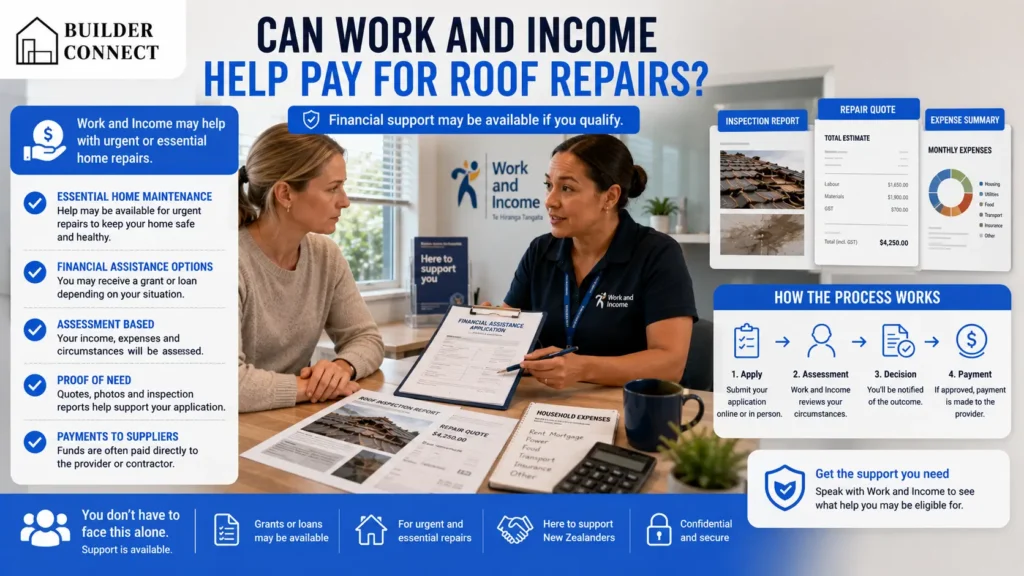
If your roof is leaking and you do not have enough money to pay for repairs, Work and Income may be able to provide financial assistance depending on your personal circumstances. It is important to understand that this is not automatic funding, and eligibility is assessed on a case-by-case basis. The type of support available depends on factors such as your income, assets, whether you receive a benefit, and the urgency of the repair. If the leak is creating a health or safety risk, it is worth contacting Work and Income as soon as possible to discuss your options before the damage becomes more severe.
Home Repairs and Maintenance Assistance
Work and Income offers assistance for certain essential home repairs and maintenance costs for eligible people receiving a benefit. This support is intended to help keep a home safe and habitable rather than cover cosmetic improvements or optional upgrades.
If your leaking roof is allowing water into your home, causing damage, or creating safety concerns, you may be able to discuss whether emergency weatherproofing or necessary repairs qualify for assistance. The exact type of help available depends on your individual financial situation and whether you meet the eligibility requirements.
Keep in mind that some forms of assistance may be provided as a recoverable payment, which means you could be required to repay the money over time. Before arranging major repair work, ask Work and Income what assistance may be available and whether temporary repairs needed to protect your home could be considered an eligible expense.
Help With Urgent or Unexpected Costs
A leaking roof often becomes an unexpected expense that cannot be delayed. Heavy rain can quickly turn a small leak into widespread water damage affecting ceilings, insulation, walls, flooring, and electrical systems.
Work and Income may be able to assist with certain urgent or unexpected costs where people cannot reasonably pay for essential expenses themselves. Depending on your circumstances, assistance may also be available even if you are currently working and not receiving a main benefit.
Rather than delaying repairs because of financial concerns, contact Work and Income before committing to work you cannot afford. They can explain whether any assistance is available and help you understand your options before repair costs continue to increase.
When discussing your situation, be prepared to explain why the repair cannot safely wait. For example, an active roof leak during winter or severe weather may present a stronger case for urgent assistance than maintenance that can reasonably be scheduled later.
Recoverable Assistance Payments and Special Needs Grants
Work and Income provides different types of financial assistance depending on a person’s individual circumstances. There is no single payment designed specifically for roof repairs, so it is important not to assume that every leaking roof will qualify for funding.
Some assistance may be offered as a Recoverable Assistance Payment, which generally needs to be repaid. Other forms of financial support may have different eligibility rules and repayment requirements depending on the applicant’s income, assets, and financial hardship.
The most effective approach is to explain your situation clearly and ask which type of assistance best matches your circumstances. Work and Income staff can assess your application and advise whether any available support may help with urgent roof repairs, temporary weatherproofing, or other essential housing-related costs.
Because assistance programs and eligibility criteria can change over time, always rely on the latest information provided directly by Work and Income before making financial decisions.
Information to Prepare Before Applying
Preparing the right information before contacting Work and Income can help speed up the assessment process and allow staff to better understand your circumstances. Having supporting documents ready also demonstrates why the repair is necessary and why financial assistance may be appropriate.
Before applying, gather the following information where possible:
- Proof of Income: Recent payslips, benefit statements, or other evidence showing your current income.
- Bank Balances: Recent bank statements that reflect your available savings and financial position.
- Identification: Valid photo identification and any documents required to verify your identity.
- Home Ownership Details: Documents confirming that you own the property, if applicable.
- Photos of the Damage: Clear photographs showing the roof leak and any resulting damage inside or outside the home.
- Inspection Report: A written report from a qualified roofing professional identifying the source of the leak and recommending the necessary repairs.
- Written Repair Quotes: One or more written quotations outlining the expected cost and scope of the repair work.
- Insurance Decision: Any correspondence from your insurer confirming whether your claim has been approved, declined, or is still under assessment.
- Evidence of Urgency: Information showing why the repair cannot reasonably be delayed, such as active water entry, structural concerns, electrical hazards, or health risks from mould.
Providing complete and accurate information from the beginning can reduce delays and help Work and Income make a more informed assessment of your application.
If you are facing a leaking roof and limited finances, do not assume that paying for repairs entirely on your own is your only option. Taking the time to speak with Work and Income, gather the necessary documents, and understand the assistance available may help you protect your home while making informed financial decisions based on your individual circumstances.
Other Ways To Get Help With A Roof Repair In NZ
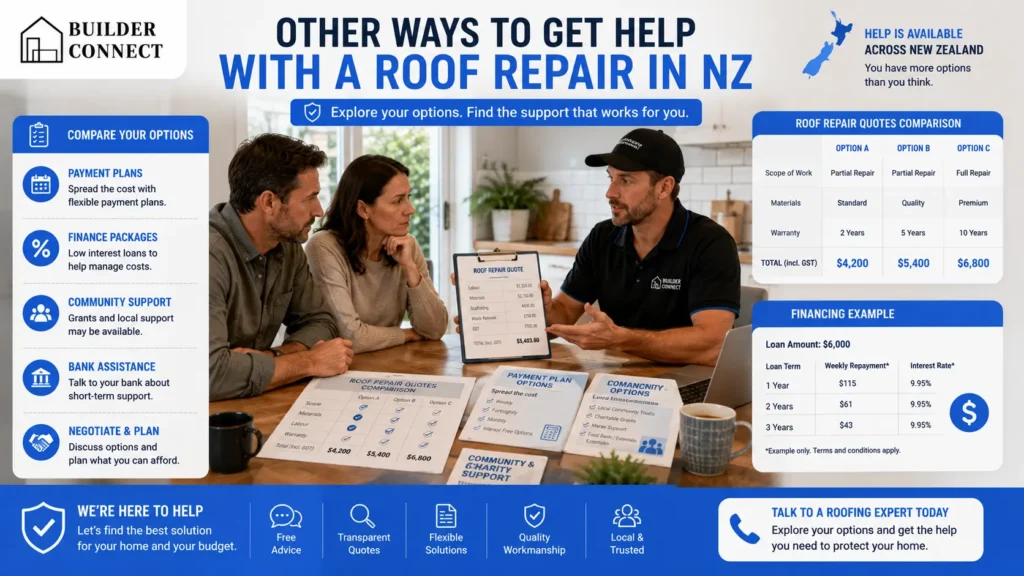
If you cannot afford an immediate roof repair, it is worth exploring every practical option before taking on expensive debt. A leaking roof can quickly cause more damage if left untreated, but that does not always mean you need to pay for a full roof replacement straight away. In many cases, you may be able to reduce costs by prioritising urgent repairs, comparing multiple quotes, arranging manageable payment options, or seeking financial assistance that suits your circumstances. The key is to make informed decisions that protect both your home and your long-term financial wellbeing.
Ask the Roofer to Separate Urgent Work From Full Replacement
A leaking roof does not automatically mean you need a complete reroof. The first step is to ask the roofing contractor to identify the immediate work required to stop water entering your home and then separate that from any recommended long-term repairs or replacement.
Many roof leaks are caused by isolated issues such as damaged flashing, loose fasteners, cracked roofing materials, or failed seals around penetrations. Addressing these problems promptly can often prevent additional damage while giving you more time to plan and budget for larger work if it is eventually needed.
Ask the roofer to provide separate pricing for emergency repairs and long-term recommendations. This allows you to understand exactly what must be completed now and what can safely be scheduled for a later date.
When discussing your options, consider asking the contractor:
- Emergency repairs: Can the active leak be stopped without replacing the entire roof?
- Work priority: Which repairs are essential now, and which can safely wait without increasing the risk of further damage?
- Staged approach: Can the project be completed in stages over several months if necessary?
- Warranty impact: Will temporary repairs affect future warranties or any later replacement work?
- Expected lifespan: How long is the temporary repair expected to remain effective under normal weather conditions?
A clear repair strategy helps you avoid paying for unnecessary work while ensuring your home remains protected.
Request Two or Three Written Quotes
Obtaining multiple written quotes is one of the most effective ways to understand the true cost of your roof repair. Comparing contractors helps you identify differences in workmanship, materials, warranties, and the overall scope of work rather than simply choosing the lowest price.
A significantly cheaper quote may exclude important items that will later become additional charges, while a higher quote may include work that is not immediately necessary. Reviewing each proposal carefully gives you a better understanding of what you are actually paying for.
When comparing quotes, check whether they include:
- Scaffolding or access equipment: Temporary structures or elevated work platforms required to complete the job safely.
- Roofing materials: All replacement materials, flashings, sealants, and fixings.
- Labour: Installation, repair, and cleanup costs.
- Waste disposal: Removal and disposal of damaged roofing materials.
- GST: Whether Goods and Services Tax is included in the total price.
- Internal repairs: Ceiling, insulation, or water-damaged interior repairs if applicable.
- Warranty: Details of workmanship and material warranties.
- Exclusions: Any work specifically excluded from the quoted price.
It is also important to understand the difference between a quote and an estimate.
A fixed quote is generally an agreed price for the specified work, while an estimate is an approximate cost that may change if unexpected issues are discovered during the project. Under New Zealand consumer law, a business generally cannot charge more than an accepted fixed quote unless the scope of work changes or you agree to additional work.
If one contractor recommends a full roof replacement while another recommends a targeted repair, ask each roofer to explain the reasons behind their recommendation and provide supporting photographs where possible.
Ask About Payment Plans or Staged Payments
Many roofing companies understand that emergency roof repairs are unexpected expenses and may offer payment plans or staged payment arrangements to help customers manage the cost.
Rather than delaying essential repairs, ask whether flexible payment options are available before ruling out professional work.
Before agreeing to any payment arrangement, make sure you understand the full financial commitment. The lowest monthly payment is not always the least expensive option if interest charges or administration fees apply.
Questions worth asking include:
- Instalments: Are regular payment options available?
- Interest charges: Is interest applied to the outstanding balance?
- Additional fees: Are there setup, administration, or late-payment fees?
- Repayment period: How long will the payments continue?
- Ownership conditions: Does ownership of materials or warranties depend on completing all payments?
- Early repayment: Can the balance be paid off early without penalty?
Compare the total repayment amount rather than focusing only on the weekly or monthly payment.
If finance is offered through an external lender, take time to review the agreement carefully and consider whether the repayments fit comfortably within your household budget. High-cost credit should never become the default solution when other forms of assistance or staged repair options may be available.
Contact Your Bank or Mortgage Provider
If you own your home, your bank or mortgage provider may be able to help you manage the financial impact of urgent roof repairs.
Many lenders offer support for customers experiencing temporary financial hardship or unexpected property maintenance costs. Speaking with your lender early may provide more options than waiting until repayments become difficult.
Depending on your circumstances, you may wish to discuss:
- Mortgage variation: A temporary adjustment to your existing repayment schedule.
- Home-loan top-up: Additional borrowing to fund essential repairs if the repayments remain affordable.
- Hardship assistance: Short-term support if you are already experiencing financial difficulty.
- Alternative repayment options: Changes that may reduce financial pressure while repairs are completed.
Before increasing your borrowing, carefully assess the long-term impact on your finances. Even relatively small increases in mortgage debt can result in substantially higher repayments over time.
If you are uncertain about your financial position, consider seeking independent budgeting advice before committing to additional debt. An independent adviser can help you understand whether borrowing is the most appropriate solution or whether other assistance options should be explored first.
Ask Family, Whānau, or Community Organisations for Short-Term Support
If formal financial assistance is unavailable or delayed, support from family, whānau, or trusted community organisations may help you address the most urgent repairs before the situation worsens.
Rather than asking for funding for an entire roof replacement, focus on raising enough money to complete emergency weatherproofing or essential repairs that prevent further damage. Stopping an active leak early is often far less expensive than repairing widespread structural damage later.
Community organisations may also provide practical assistance beyond financial support.
This could include:
- Emergency referrals: Recommendations for trusted roofing contractors or local assistance programmes.
- Building materials: Help sourcing donated or discounted materials where available.
- Practical support: Assistance with temporary weather protection following severe weather events.
- Community services: Information about local charities or hardship programmes.
If borrowing money from family or friends, create a simple written agreement outlining the repayment expectations. A clear written record helps prevent misunderstandings and protects personal relationships.
Check Council, Local Trust, or Community Grant Options
Depending on where you live in New Zealand, local councils, charitable trusts, and community organisations may provide financial assistance or support programmes for essential home repairs.
These programmes vary significantly between regions, so it is important to research the options available in your local area rather than assuming assistance is unavailable.
Some organisations may prioritise support for:
- Older homeowners: Assistance for seniors maintaining safe housing.
- People with disabilities: Home repair programmes that improve health and safety.
- Low-income households: Financial support for essential property maintenance.
- Storm-affected properties: Emergency assistance following severe weather events.
- Community hardship cases: Grants or practical support delivered through local charitable organisations.
Before relying on any programme, contact the organisation directly to confirm:
- Eligibility: Whether your circumstances meet the programme requirements.
- Available funding: Current funding availability and application timeframes.
- Required documentation: Quotes, photographs, proof of income, or insurance information.
- Repayment conditions: Whether the assistance is a grant or requires repayment.
- Application deadlines: Important dates that could affect your eligibility.
Taking time to research local support options may uncover assistance that helps reduce the financial pressure of urgent roof repairs while allowing you to make informed decisions about the work your home needs.
When money is tight, the goal is not simply to find the cheapest solution but to find the safest and most practical one. By exploring several support options, comparing professional advice, and prioritising urgent repairs, you can reduce further damage to your home while choosing a path that fits your financial circumstances without creating unnecessary long-term debt.
What Is The Cheapest Safe Way To Stop A Roof Leak?
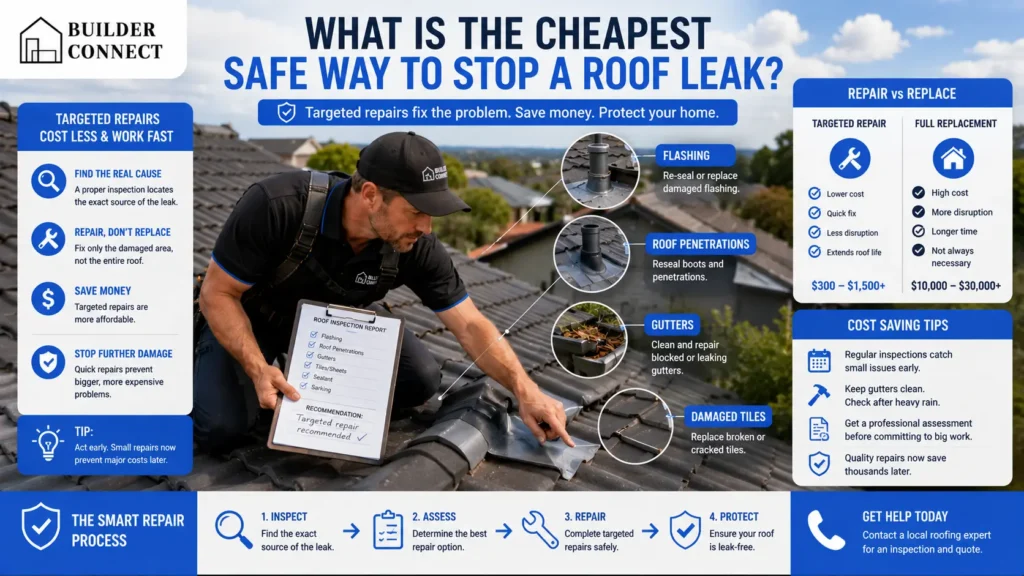
When your roof starts leaking, it is natural to look for the lowest-cost solution, especially if money is tight. The cheapest option, though, is not always the one with the lowest upfront price. A temporary fix that fails after the next rainfall can lead to more damage, higher repair costs, and additional problems such as mould, timber rot, or damaged insulation. The safest and most cost-effective approach is to identify where the water is entering and repair the actual cause rather than simply covering the visible leak. In many cases, a targeted repair is far more affordable than replacing the entire roof, but that decision should always be based on a proper inspection rather than guesswork.
Pay for a Roof Inspection Before Assuming You Need Replacement
Many homeowners assume that a leaking roof automatically means they need a complete replacement. In reality, a leak can originate from a small fault that is relatively inexpensive to repair. Water often travels beneath roofing materials before it becomes visible inside your home, making it difficult to identify the true source without a professional assessment.
Common sources of roof leaks include:
- Damaged flashings: Metal flashings around chimneys, skylights, vents, and roof junctions can loosen, rust, or deteriorate over time.
- Loose fixings: Screws and nails may work loose through weather exposure or natural roof movement, creating small openings for water.
- Roof penetrations: Pipes, vents, solar panel mounts, and aerial installations can develop leaks if seals fail.
- Blocked gutters: Overflowing gutters can force water beneath roofing materials and create symptoms similar to a roof leak.
- Isolated roofing damage: Broken tiles, cracked sheets, or damaged shingles may affect only a small section of the roof.
A professional inspection provides a clearer understanding of your roof’s condition and helps you avoid paying for unnecessary work.
When arranging an inspection, ask the roofing contractor to provide:
- Clear photographs: Images showing the damaged areas and the source of the leak.
- Written findings: A simple explanation of what caused the leak and how serious the problem is.
- Repair recommendations: A detailed description of the repairs required.
- Replacement assessment: Separate advice explaining whether replacement is necessary or if repairs are still a practical option.
- Estimated lifespan: An opinion on how much useful life remains in the existing roof after repairs.
Having written documentation also makes it easier to compare quotes, discuss insurance claims, or seek financial assistance if required.
Repair Only the Failed Area When Appropriate
Not every leaking roof needs extensive repairs. If the rest of the roof remains in good condition, repairing only the damaged section is often the most affordable and sensible solution.
A professional roofer may recommend a localized repair when the damage is limited to specific components, such as:
- Broken roof tiles: Individual cracked or displaced tiles that allow water inside.
- Failed flashings: Damaged flashing around roof penetrations or roof joins.
- Loose fasteners: Screws or fixings that have loosened over time.
- Damaged sealant: Perished sealant around vents, skylights, or flashing details.
- Small damaged roofing sections: Localized corrosion, impact damage, or isolated material failure.
Targeted repairs can restore the roof’s weather protection while extending its service life without the cost of a full replacement.
However, patch repairs are not always the right solution. A roof may require replacement when:
- Widespread corrosion: Large areas of roofing have deteriorated beyond repair.
- Structural damage: Roof framing or supporting components have been compromised.
- Repeated leaks: Multiple repairs have failed to solve ongoing water entry.
- End of service life: Roofing materials have reached the point where repairs provide only short-term relief.
- Extensive deterioration: Damage affects large sections rather than isolated areas.
A reputable roofing contractor should explain why repair or replacement is the better long-term investment based on the roof’s actual condition rather than recommending replacement as the default option.
Clear Blocked Gutters and Downpipes Safely
Blocked gutters and downpipes are a common cause of water entering a home, particularly during heavy rainfall. Overflowing water can run beneath roofing materials, behind fascia boards, or into wall cavities, creating symptoms that closely resemble a roof leak.
Leaves, moss, dirt, and debris can prevent rainwater from draining properly. As water backs up, it may overflow into areas that were never designed to handle constant moisture.
If your gutters are visibly overflowing during rain, cleaning them may reduce the problem. Even so, it is important not to assume that gutter maintenance alone has fixed the issue.
Keep these points in mind:
- Overflow symptoms: Water running over gutter edges does not always mean the roof itself is leaking.
- Roof condition: Damaged flashing, roofing materials, or valleys may still require repair even after gutters are cleaned.
- Safe access: Avoid climbing ladders or walking on roofs if conditions are wet, windy, or unsafe.
- Professional assistance: Hire a qualified contractor when the roof is steep, multi-storey, or difficult to access.
Regular gutter maintenance helps reduce the risk of water damage, but it should never replace a proper roof inspection if leaks continue after cleaning.
Use Temporary Tarps Only as Short-Term Protection
Temporary tarps can provide emergency protection by reducing water entry until permanent repairs can be completed. They should only be viewed as a short-term measure rather than a permanent solution.
A tarp can help protect ceilings, insulation, furniture, and flooring from further water damage while you arrange professional repairs. For it to work effectively, it must be securely fastened so that wind cannot lift or displace it.
Important considerations include:
- Secure installation: The tarp should be tightly secured to prevent movement during wind or rain.
- Weather limitations: Never attempt to install a tarp during heavy rain, thunderstorms, or strong winds.
- Personal safety: Avoid climbing onto wet or unstable roofing because falls are one of the most common causes of roofing injuries.
- Temporary protection: A tarp reduces water entry but does not repair damaged roofing materials or stop future deterioration.
- Professional follow-up: Arrange a roof inspection as soon as possible so the underlying cause can be identified and repaired.
Delaying permanent repairs after installing a tarp can allow hidden moisture to spread through insulation, timber framing, and ceiling linings, leading to more extensive repairs later.
Choosing the cheapest safe solution means spending money where it delivers the greatest long-term value. A professional inspection, targeted repairs when appropriate, safe maintenance, and timely permanent repairs often cost far less than allowing a small leak to become a major structural problem.
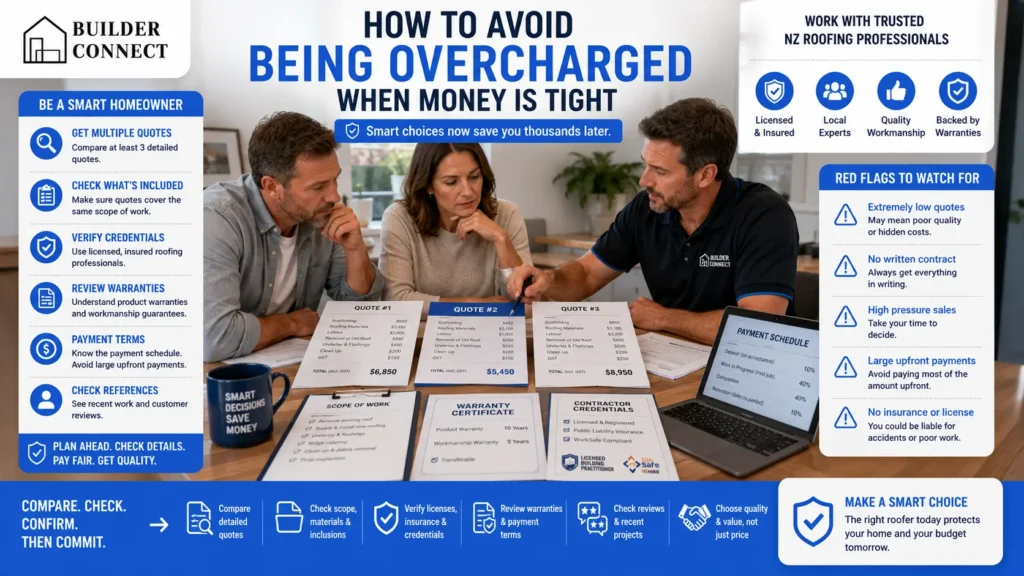
How To Avoid Being Overcharged When Money Is Tight
When you’re dealing with a leaking roof and limited finances, every dollar matters. Unfortunately, urgent situations can make homeowners feel pressured into accepting the first quote they receive or agreeing to repairs they do not fully understand. Taking a little extra time to review quotations, ask questions, and verify the contractor can help you avoid unnecessary expenses while ensuring the repair is completed properly. A trustworthy roofing contractor should be willing to explain their recommendations, provide clear documentation, and answer your questions before any work begins.
Ask for a Written Scope of Work
A written scope of work is one of the best ways to protect yourself from unexpected costs and misunderstandings. It outlines exactly what the contractor plans to do, what is included in the quoted price, and what may result in additional charges. Without a detailed scope, it can be difficult to compare quotes or hold a contractor accountable if the completed work differs from what you expected.
Before accepting any quote, ask for a written document that clearly explains every part of the proposed repair. This helps you understand where your money is going and reduces the risk of hidden costs appearing later.
A comprehensive scope of work should include:
- Suspected Cause: A clear explanation of what the roofer believes is causing the leak, such as damaged flashing, cracked roofing materials, blocked gutters, or deteriorated sealant.
- Repair Area: The exact section of the roof that requires attention, including any surrounding areas that may also need inspection or repair.
- Materials: A list of the roofing materials, fasteners, sealants, flashing, and replacement components that will be used during the repair.
- Labour: Details of the labour involved, including the work to be completed and whether the quoted price includes all installation and cleanup.
- Access Equipment: Confirmation of whether scaffolding, roof-edge protection, ladders, or elevated work platforms are required and whether these costs are included.
- Disposal: Information about the removal and disposal of damaged roofing materials, rubbish, and construction waste.
- GST: Confirmation that Goods and Services Tax is included in the total quoted price so there are no surprises when the invoice arrives.
- Warranty: A written explanation of any workmanship warranty and manufacturer warranties covering the materials used.
- Exclusions: Any work that is specifically not included, such as internal ceiling repairs, painting, insulation replacement, or electrical work.
- Possible Extra Costs: Situations that could increase the price, such as hidden structural damage, rotten timber, asbestos, or additional water damage discovered after work begins.
A detailed scope not only helps you compare contractors more accurately but also creates a written record that both parties can refer to if questions arise during the project.
Compare Like-for-Like Quotes
Choosing the cheapest quote is not always the most affordable option. Roofing quotes often vary because contractors may recommend different repair methods, materials, or levels of work. Comparing prices without comparing the scope can lead to incorrect decisions.
Request at least two or three written quotes from reputable roofing companies. Make sure each contractor has inspected the same problem so the recommendations are based on similar information.
When reviewing quotes, pay attention to more than the total price.
- Repair Method: Check whether each contractor is proposing the same type of repair or whether one is suggesting replacement while another recommends repairing only the damaged area.
- Materials: Compare the quality and specifications of the roofing materials being used rather than assuming they are identical.
- Included Services: Confirm whether scaffolding, waste removal, permits, travel, and GST are included in every quote.
- Warranty Coverage: Compare both workmanship warranties and manufacturer warranties to understand the level of protection offered after the repair.
- Timeframe: Review how quickly the contractor can complete both temporary weatherproofing and permanent repairs.
If one contractor recommends replacing the entire roof while the others suggest a targeted repair, ask for clear evidence supporting that recommendation. A reputable roofer should be able to explain why replacement is necessary using photographs, inspection findings, or a written condition report rather than relying on general statements or pressure.
If the recommendations differ significantly, consider arranging an independent roof inspection before making a final decision. An objective assessment can help you understand whether extensive work is genuinely required.
Check the Roofer’s Credentials and Insurance
Hiring a qualified roofing contractor helps reduce the risk of poor workmanship, incomplete repairs, and future disputes. A professional contractor should have no hesitation providing information about their business, experience, and insurance coverage.
Before accepting a quote, spend a few minutes verifying the company’s background. This simple step can prevent expensive problems later.
Things to check include:
- Business Details: Confirm the company operates as a legitimate business with current contact information and a physical presence where appropriate.
- Trade Experience: Ask how long the contractor has been completing roofing repairs and whether they regularly work with your roof type and roofing material.
- Comparable Projects: Request examples of recent projects involving similar roof leaks or repairs so you can understand the contractor’s experience with comparable situations.
- Written Warranties: Review the workmanship warranty in writing and ask what is covered, how long the warranty lasts, and how warranty claims are handled.
- Public Liability Insurance: Confirm the contractor carries public liability insurance where appropriate to protect against accidental property damage or third-party claims during the project.
Reading customer reviews and asking for local references can also provide useful insight into how the contractor communicates, manages projects, and responds if problems occur after the work has been completed.
Avoid Large Upfront Payments
It is reasonable for a roofing contractor to request a deposit before ordering materials or scheduling work, particularly for larger projects. However, large upfront payments can expose homeowners to unnecessary financial risk if the work is delayed, incomplete, or never starts.
Before paying any deposit, ask the contractor to explain exactly what the payment covers and when additional payments will become due.
A safer payment approach includes:
- Deposit Linked to Materials: The initial payment should generally cover the purchase of roofing materials or secure your booking in the contractor’s schedule.
- Staged Payments: For larger projects, divide payments into agreed milestones that reflect completed work rather than paying most of the contract price in advance.
- Final Inspection: Retain the final payment until the agreed work has been completed, inspected, and any outstanding issues have been addressed.
- Written Payment Schedule: Ensure the contract clearly lists payment amounts, due dates, and the work associated with each stage.
- Receipts and Documentation: Keep copies of invoices, payment confirmations, contracts, warranties, and any changes agreed during the project.
If a contractor insists on receiving the full payment before work begins or pressures you into making an immediate decision, treat this as a warning sign. A reputable roofing company should be comfortable working under a clear written agreement that protects both parties.
Taking the time to compare quotes, verify contractors, and understand exactly what you are paying for can make a significant difference when money is already tight. Careful planning helps you avoid unnecessary costs, reduces the risk of disputes, and gives you greater confidence that your roof repair will solve the problem without creating new financial stress.
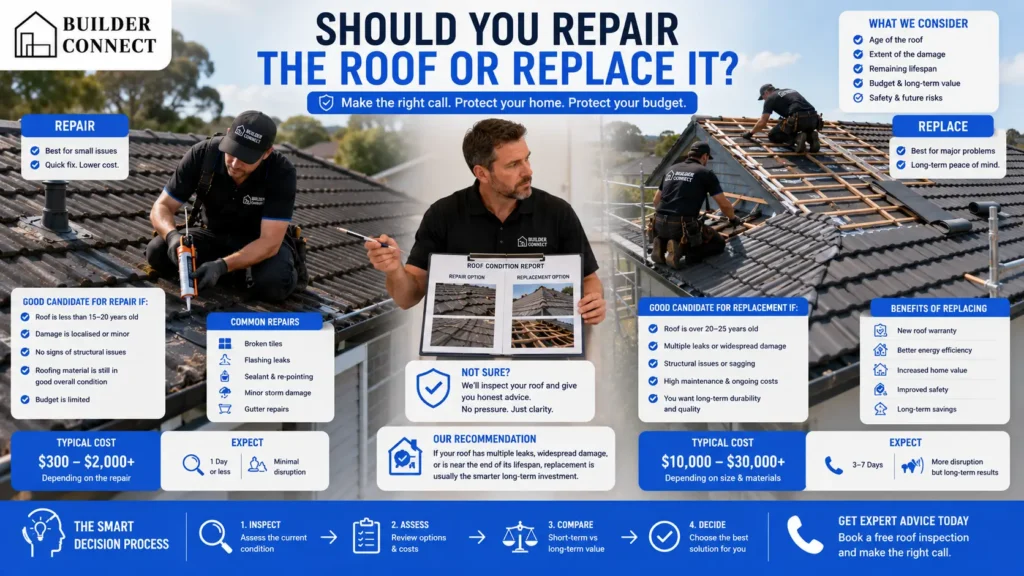
Should You Repair The Roof Or Replace It?
Choosing between repairing or replacing a leaking roof is not always straightforward. While a small leak may be resolved with a targeted repair, ongoing problems or widespread deterioration can make a full replacement the better long-term investment. The right decision depends on the roof’s overall condition, the cause of the leak, the age of the roofing materials, and the expected cost of future maintenance. A professional roof inspection can help you understand whether a repair will provide a lasting solution or whether replacing the roof will save money over time by preventing repeated problems.
Repair May Make Sense When
Not every leaking roof needs to be replaced. In many cases, a well-executed repair can restore the roof’s performance and extend its service life for many years. This option is often more affordable and practical when the damage is limited to a specific area and the rest of the roof remains in good condition.
A repair is generally worth considering when the roof structure is still sound and the problem can be traced to a clear cause rather than widespread deterioration.
- Damage Is Localised: If the leak comes from a single section of the roof, such as a damaged sheet, broken tile, or loose fixing, repairing only the affected area may be enough to stop water entering the home.
- The Roof Is Still in Good Condition: Roofing materials that remain structurally sound, free from widespread corrosion, and capable of protecting the home for many more years are often suitable candidates for repair instead of replacement.
- Flashings or Roof Penetrations Have Failed: Many roof leaks occur around chimneys, skylights, vents, valleys, and roof-mounted equipment rather than through the roofing material itself. Replacing damaged flashings or resealing penetrations can often resolve the issue without replacing the entire roof.
- Replacement Is Not Financially Practical: If the roof still has useful life remaining and your budget is limited, repairing the immediate problem may provide valuable time to plan and save for a future replacement.
- The Repair Comes With a Warranty: A reputable roofing contractor should explain what the repair covers and provide a written workmanship warranty where appropriate. This gives you confidence that the repair has been completed to a professional standard and outlines what support is available if the same issue reappears.
Even when a repair seems appropriate, ask your roofer whether other areas of the roof are showing signs of deterioration. Understanding the roof’s overall condition helps you avoid unexpected repair costs in the near future.
Replacement May Be Necessary When
There comes a point where repairing individual leaks is no longer the most practical or cost-effective solution. If multiple parts of the roof have reached the end of their service life, replacing the roof may reduce ongoing maintenance costs and provide greater peace of mind.
A full replacement is often recommended when repairs are unlikely to deliver reliable long-term performance.
- Leaks Are Appearing in Multiple Areas: Several leaks developing across different sections of the roof usually indicate broader deterioration rather than a single isolated defect. Repairing one area at a time can become expensive without addressing the underlying problem.
- Roofing Materials Are Worn Out: Extensive corrosion, cracked tiles, deteriorated roofing membranes, or widespread material failure can reduce the roof’s ability to keep water out. Once the damage becomes widespread, replacing the roof is often the safer option.
- Repairs Have Become Frequent: If you have paid for several repairs over recent years and new leaks continue to appear, the cumulative repair costs may soon exceed the value of investing in a new roof.
- Structural Components Are Damaged: Water can eventually affect roof framing, battens, underlay, and other structural components. If these elements have deteriorated, replacing the roof allows damaged materials to be repaired properly while restoring the roof system as a whole.
- The Roof Has Reached the End of Its Practical Service Life: Every roofing material has an expected lifespan. If your roof is approaching the end of that lifespan and major repairs are required, replacement often provides better long-term value than continuing to patch ageing materials.
A professional roofer should explain why replacement is being recommended and support that recommendation with clear evidence rather than relying on age alone. Photographs, inspection findings, and a written explanation help you make an informed decision.
Ask for a Written Condition Report
Before approving major roofing work, ask for a written condition report. This document provides an objective assessment of your roof and helps you compare repair and replacement options with confidence. It also creates a useful record if you are making an insurance claim, seeking financial assistance, or requesting additional quotations.
A thorough roof condition report should include the following information.
- Photographs: Clear images showing the damaged areas, surrounding roof sections, and any defects identified during the inspection. Photographs help explain the findings and provide evidence for future reference.
- Leak Source: A description of where water is entering the roof and whether the visible leak matches the actual point of entry. Since water can travel before becoming visible indoors, identifying the true source is essential.
- Roof Condition: An assessment of the overall state of the roofing materials, flashings, fixings, gutters, and other important components. This helps determine whether the leak is an isolated issue or part of a larger maintenance problem.
- Safety Concerns: Any structural weaknesses, electrical hazards, unstable roofing materials, or other issues that require immediate attention should be clearly documented so they can be addressed without delay.
- Repair Options: Practical recommendations for repairing the roof, including which defects should be fixed immediately and which maintenance items can be planned for later.
- Expected Repair Life: An estimate of how long the recommended repair is likely to remain effective under normal conditions. This allows you to compare the value of repairing versus replacing the roof.
- Replacement Urgency: An opinion on whether roof replacement is immediately necessary or whether repairs are likely to provide a reliable short-term or medium-term solution.
- Estimated Costs: Itemised estimates for repair work and, where appropriate, a separate estimate for complete replacement. Comparing both options allows you to understand the long-term financial impact before making a decision.
A detailed written condition report gives you a stronger basis for making one of the most important decisions about your home. It reduces uncertainty, helps you compare contractors fairly, and ensures that any recommendation to repair or replace the roof is supported by clear evidence rather than assumptions.
Taking the time to understand your roof’s true condition before committing to major work can save you money and prevent unnecessary repairs. Whether the best solution is a targeted repair or a complete replacement, making your decision based on a professional assessment gives you greater confidence that the work will protect your home for years to come.
What Should You Do If You Cannot Afford Any Repair Right Now?
Finding out your roof is leaking when you do not have enough money for repairs can feel overwhelming, but delaying action usually leads to more damage and higher costs. Even if a complete repair or roof replacement is out of reach today, there are practical steps you can take to protect your home, reduce further damage, and start working toward a long-term solution. The goal is to keep your household safe, prevent the leak from becoming worse, and connect with the right people and support services as quickly as possible.
Prioritise Safety and Water Containment
Your first priority is protecting the people inside your home. While repairing the roof may have to wait, reducing the immediate risks can help prevent injuries and limit expensive water damage.
If the leak has caused the ceiling to sag, avoid entering that room until it has been assessed. A sagging ceiling may indicate that water has collected above the plasterboard, increasing the risk of collapse. Close the room if possible and keep children and pets away from the affected area.
Water and electricity are a dangerous combination. If the leak is close to light fittings, power outlets, switches, or your switchboard, avoid touching electrical equipment in the affected area. If it is safe to do so, turn off the power to that section of the home and seek advice from a qualified electrician if you suspect water has reached the wiring.
Move furniture, electronics, rugs, important documents, and other valuable belongings away from the leak. If larger items cannot be moved, cover them with waterproof plastic sheeting to reduce further damage. Place buckets or containers beneath active drips and use towels to soak up standing water to help protect flooring.
Even if you cannot afford permanent repairs today, it is still worth contacting a roofing professional for emergency advice. Many roofing companies can identify the source of the leak, recommend temporary weatherproofing, or provide a written assessment that you can use when speaking with your insurer or applying for financial assistance.
- Close unsafe areas: Keep everyone out of rooms with sagging ceilings, falling debris, or significant water damage until they have been inspected.
- Protect electrical safety: Stay clear of wet electrical fixtures and seek professional advice if water has reached wiring or electrical equipment.
- Reduce water damage: Use buckets, towels, and protective coverings to minimise damage to furniture, flooring, and personal belongings.
- Seek emergency guidance: Even if you cannot pay for permanent repairs immediately, an emergency inspection can help identify urgent risks and prevent the problem from becoming more expensive.
Contact Every Relevant Party the Same Day
Once you have reduced the immediate risks, begin contacting the people or organisations that may be able to help. Acting quickly creates a record of the problem and may improve your chances of receiving timely assistance.
If you rent the property, notify your landlord or property manager immediately. Report the issue in writing, include photographs of the damage, and explain when you first noticed the leak. Written communication provides a clear record if questions arise later.
Homeowners should contact their insurance company as soon as possible if there is any possibility the damage may be covered under their policy. The insurer can explain what information they need and whether emergency work can begin before the claim is assessed.
Arrange for an emergency roofer to inspect the property. Even if you cannot proceed with full repairs, a professional inspection can identify whether temporary weatherproofing is possible and provide an estimate of the work required.
If paying for repairs is not possible, contact Work and Income to discuss whether you qualify for assistance with urgent or essential home-related costs. Eligibility varies depending on your circumstances, so it is worth asking about all available options.
If you have a mortgage, speak with your bank or lender. Some financial institutions offer hardship support or temporary repayment arrangements that may help you manage unexpected repair costs without creating additional financial pressure.
Finally, consider contacting a local budgeting service or community organisation. These groups may help you create a realistic financial plan, identify local assistance programmes, or connect you with practical support.
- Landlord or body corporate: Notify them immediately if they are responsible for maintaining the roof and provide written evidence of the damage.
- Insurance company: Report the leak promptly, ask about emergency repairs, and confirm what documentation is required for your claim.
- Emergency roofer: Request an inspection, temporary weatherproofing if appropriate, and a written quote outlining the recommended work.
- Work and Income: Ask whether you qualify for financial assistance for urgent or essential home repair costs based on your circumstances.
- Bank or mortgage provider: Discuss hardship options or temporary repayment arrangements if the repair costs will affect your financial commitments.
- Community or budgeting support: Seek advice on budgeting, local grants, charitable assistance, or other services that may help bridge the funding gap.
Create a Written Action Plan
When money is limited, having a written plan helps you stay organised and avoid making rushed decisions. A simple checklist also makes it easier to keep track of conversations, quotes, applications, and deadlines while reducing unnecessary stress.
Start by writing down the immediate actions needed to keep your home safe. Record when you contacted your insurer, landlord, roofer, or support agencies, along with the outcome of each conversation. Keep copies of photographs, inspection reports, repair quotes, and any written advice you receive.
If you have applied for financial assistance or insurance, note the expected response dates and any additional documents you need to provide. This makes follow-up much easier and helps prevent delays.
As you receive repair estimates, compare them carefully. You may discover that an affordable temporary repair can safely stop the leak while you save for a larger repair or roof replacement later. Setting a realistic long-term goal allows you to focus on permanent repairs without losing sight of your current financial situation.
- Immediate safety actions: Record the steps taken to protect your household and minimise further property damage.
- Temporary repair cost: Keep estimates for emergency weatherproofing or short-term repairs so you understand your immediate financial needs.
- Insurance outcome: Document claim numbers, decisions, requested information, and any communication with your insurer.
- Assistance applications: Track applications submitted to government agencies, charities, or community support organisations, including expected response dates.
- Quotes requested: Keep multiple written quotes so you can compare the scope of work, pricing, and warranties before making a decision.
- Funding gap: Calculate the difference between available funds and the estimated repair costs so you can identify additional support if needed.
- Permanent repair target: Set a practical timeline for completing the full repair or replacement once funding becomes available.
Although financial pressure can make a leaking roof feel impossible to manage, taking small, organised steps today can prevent much larger problems tomorrow. By focusing on safety, contacting the right people quickly, and creating a clear action plan, you give yourself the best chance of protecting your home while working toward an affordable long-term solution.
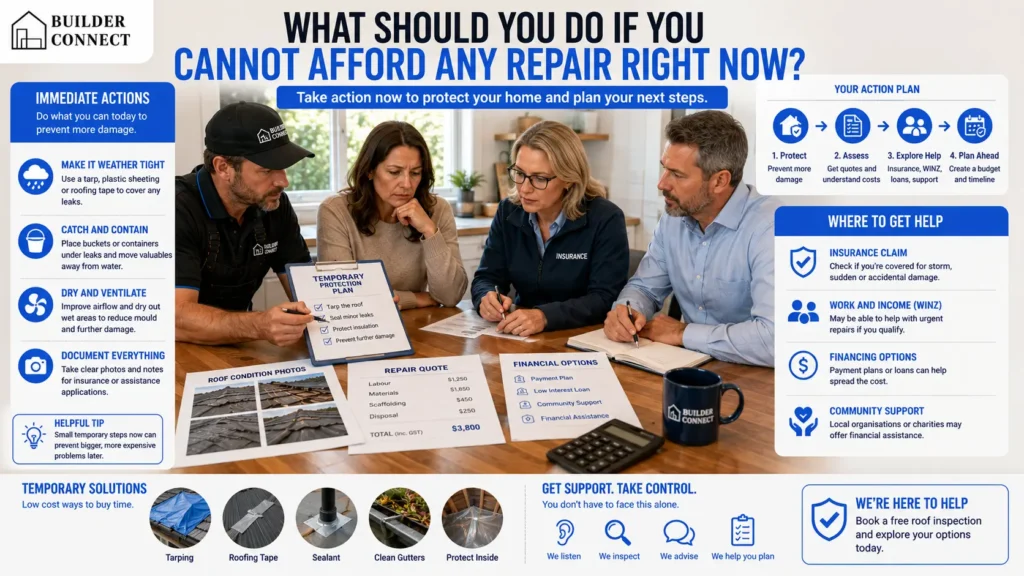
Common Mistakes To Avoid When Your Roof Is Leaking
When your roof starts leaking, it is easy to focus on stopping the water as quickly as possible. While acting fast is important, making the wrong decision can lead to higher repair costs, safety risks, and insurance complications. Understanding the most common mistakes can help you protect your home, avoid unnecessary expenses, and make informed decisions while arranging the right repair.
Ignoring A Small Ceiling Stain
A small water stain on the ceiling may seem harmless, but it is often the first visible sign of a larger roofing problem. Water can travel through roof framing, insulation, and ceiling cavities before becoming noticeable inside your home.
- Hidden damage: Moisture may already be affecting timber framing, insulation, or plasterboard before the stain appears.
- Increasing repair costs: Delaying repairs allows water to spread, leading to mould growth, timber decay, and more extensive restoration work.
- Insurance considerations: Some insurance policies may not cover damage that becomes worse because necessary repairs were delayed.
- Early inspection: Having the roof inspected as soon as you notice a stain can identify the source before the problem becomes more expensive to fix.
Climbing Onto A Wet Roof
Many homeowners are tempted to inspect the roof themselves after noticing a leak. While this may seem like a quick way to locate the problem, climbing onto a wet roof is one of the most dangerous mistakes you can make.
- Slip hazards: Wet roofing materials become extremely slippery, increasing the risk of serious falls.
- Hidden weaknesses: Water-damaged roofing materials may not safely support your weight.
- Further damage: Walking on damaged roofing can crack tiles, loosen flashings, or worsen existing leaks.
- Safer approach: Inspect the roof from ground level where possible and arrange for a qualified roofing professional to perform a safe inspection.
Paying For A Full Reroof Without An Inspection
Not every leaking roof needs to be replaced. In many cases, the problem may be limited to a damaged flashing, cracked tile, loose fastener, or another isolated defect.
- Accurate diagnosis: A professional inspection identifies the actual cause of the leak before major decisions are made.
- Cost savings: A targeted repair may resolve the problem at a fraction of the cost of a complete roof replacement.
- Better planning: If replacement is eventually required, an inspection helps you understand the urgency and prepare financially.
- Written evidence: A condition report provides useful documentation when comparing quotes or discussing insurance claims.
Assuming Insurance Will Automatically Cover The Damage
Many homeowners expect their insurance policy to pay for every roof leak, but cover depends on the cause of the damage and the policy wording.
- Covered events: Sudden storm damage or accidental impacts may be covered, depending on your policy.
- Common exclusions: Gradual wear, corrosion, ageing, and poor maintenance are often excluded.
- Claim process: Contact your insurer before starting major repairs whenever possible and follow their instructions for documenting the damage.
- Policy review: Read your policy carefully and ask questions if you are unsure what is included.
Failing To Notify The Landlord In Writing
If you rent your home, reporting a leaking roof by phone alone may not provide enough evidence if problems arise later.
- Written records: Send an email or written message describing the leak and include photographs where possible.
- Clear timeline: Record the date you first noticed the problem and when you notified the landlord or property manager.
- Follow up: Keep copies of all responses and repair updates.
- Tenant protection: Written communication helps demonstrate that you reported the issue promptly.
Hiring An Unverified Contractor
Choosing the first available contractor without checking their background can result in poor workmanship, unexpected costs, or unfinished repairs.
- Business credentials: Confirm that the roofing company operates as a legitimate business.
- Relevant experience: Look for contractors with experience repairing the type of roofing installed on your home.
- Customer feedback: Read recent reviews and ask for examples of similar completed projects.
- Insurance and warranties: Ask whether the contractor carries appropriate insurance and provides written workmanship warranties.
Accepting A Verbal Quote
Verbal estimates can easily lead to misunderstandings about what work is included and how much the project will cost.
- Detailed scope: Request a written quote outlining labour, materials, access equipment, disposal costs, and GST.
- Included work: Confirm exactly which repairs will be completed and what is excluded.
- Additional charges: Ask how unexpected repairs will be handled if hidden damage is discovered.
- Comparison: Written quotes make it much easier to compare different contractors fairly.
Using Indoor Sealant As A Permanent Fix
Applying sealant inside the ceiling or around visible water stains rarely solves the actual roofing problem.
- Temporary relief: Indoor sealants may reduce visible dripping for a short time but do not stop water entering through the roof.
- Hidden moisture: Water can continue spreading behind walls and ceilings without being immediately visible.
- Delayed repairs: Relying on sealants may allow structural damage and mould to worsen.
- Proper solution: The source of the leak should always be identified and repaired from the outside where appropriate.
Borrowing Without Checking The Total Repayment Cost
When dealing with an emergency roof leak, it can be tempting to accept the first finance option available. Taking time to understand the full financial commitment can prevent additional stress later.
- Interest charges: Compare the total amount you will repay, not just the weekly or monthly payment.
- Extra fees: Check for establishment fees, late-payment charges, and early repayment conditions.
- Alternative options: Ask about staged repairs, payment plans, insurance, or financial assistance before committing to expensive borrowing.
- Long-term affordability: Choose a repayment option that fits comfortably within your household budget.
Repairing Visible Damage Without Finding The Source
The location where water appears inside your home is not always where it enters the roof. Water can travel a considerable distance before becoming visible.
- Hidden entry points: Damaged flashings, roof penetrations, valleys, gutters, or ridge cappings may be responsible even when they are far from the visible leak.
- Professional inspection: Roofers often use moisture tracing, visual inspections, and testing methods to identify the true source.
- Lasting repairs: Repairing the actual entry point prevents recurring leaks and repeated repair costs.
- Complete assessment: Addressing both the leak source and any internal water damage helps restore the home properly.
Taking a careful, informed approach can save you money, reduce stress, and prevent a minor roof leak from becoming a major structural problem. By avoiding these common mistakes and seeking professional advice early, you can make better decisions that protect both your home and your budget.
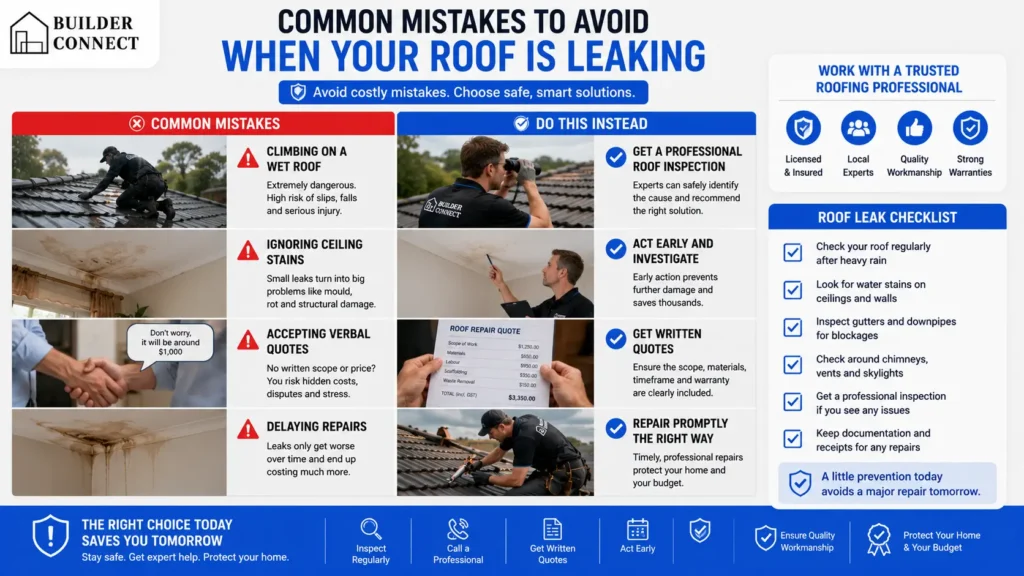
A Practical Action Plan For The Next 24 Hours
When your roof starts leaking, acting quickly can make a significant difference to the amount of damage your home suffers and the total cost of repairs. The first 24 hours should focus on protecting your household, reducing further water damage, and starting the process of arranging repairs and financial support. Following a clear action plan can help you stay organized during a stressful situation and prevent small problems from becoming much larger ones.
During the First Hour
The first hour is all about safety and damage control. Your goal is to protect everyone inside the home while limiting further damage until professional help can assess the problem.
- Protect People: Keep family members away from areas where water is dripping, ceilings are sagging, or plaster appears cracked. If the ceiling looks swollen or unstable, avoid standing underneath it because accumulated water can cause sections of the ceiling to collapse without warning.
- Isolate Electrical Risks: Water and electricity are a dangerous combination. If water is approaching light fittings, electrical outlets, appliances, or your switchboard, turn off power to the affected area if it is safe to do so. If you are unsure or cannot safely access your electrical panel, contact an electrician or emergency services for assistance.
- Contain Water: Place buckets, containers, or large bowls beneath active leaks to catch dripping water. Lay towels around containers to reduce splashing and protect flooring. Plastic sheets or waterproof tarps can also help shield furniture and flooring from additional water damage.
- Move Belongings: Remove furniture, electronics, important documents, clothing, rugs, and valuable personal items from the affected area. If large furniture cannot be moved, cover it with plastic sheeting to reduce the risk of water damage.
- Take Photographs: Document the damage before cleaning up whenever possible. Take clear photographs of ceiling stains, active leaks, damaged belongings, and any visible exterior damage if it can be done safely from the ground. Record the date and weather conditions, as these details may help support insurance claims or repair assessments later.
During the Same Day
Once the immediate risks have been managed, focus on notifying the appropriate people and arranging the next steps. Acting promptly can help speed up repairs and improve your chances of receiving financial or insurance assistance.
- Notify the Responsible Party: If you rent the property, inform your landlord or property manager in writing as soon as possible and include photographs of the damage. Homeowners should contact their insurance company to report the incident, while owners of apartments or unit-title properties should notify the body corporate if the roof forms part of the shared building structure.
- Contact a Professional Roofer: Arrange for an experienced roofing contractor to inspect the roof and identify the source of the leak. Ask whether temporary weatherproofing can be completed immediately to prevent additional water entering the property while permanent repairs are being planned.
- Request Temporary Repair and Inspection Pricing: Ask for separate pricing for emergency leak control, inspection, and permanent repairs. This helps you understand your immediate costs and determine whether a smaller repair can safely address the issue until you are in a better financial position.
- Start Gathering Financial Documents: Collect any documents that may be required for insurance claims or financial assistance applications. These may include insurance policy information, identification, recent bank statements, proof of income, photographs, inspection reports, and written repair estimates.
Within the Next Few Days
After the immediate emergency has been stabilized, you can focus on making informed decisions about repairs, funding, and the long-term condition of your roof.
- Compare Written Quotes: Obtain at least two or three detailed written quotations from reputable roofing contractors. Compare the scope of work, materials, warranties, labour, and any exclusions rather than choosing based on price alone. A thorough quote helps you understand exactly what is included and reduces the risk of unexpected costs later.
- Apply for Eligible Assistance: If paying for repairs is difficult, explore financial assistance that may be available through Work and Income, community organizations, local support programmes, or payment plans offered by roofing companies. Applying early can reduce delays if funding is approved.
- Review the Insurance Response: Carefully read your insurer’s decision once it arrives. If your claim is approved, confirm what repairs are covered, what excess applies, and whether you must use approved contractors. If the claim is declined, ask for the reasons in writing and discuss the available review or dispute process if you believe the decision should be reconsidered.
- Decide Whether Repair, Staged Work, or Replacement Is Required: Use the roofer’s inspection findings to determine the most appropriate solution. A localized leak may only require targeted repairs, while widespread deterioration or multiple leaks could indicate that staged work or full roof replacement is the more practical long-term investment.
- Confirm All Work and Payment Terms in Writing: Before authorizing any work, ensure the contractor provides a written agreement outlining the scope of work, estimated timeline, payment schedule, warranties, materials, and any conditions that could affect the final price. Having everything documented helps prevent misunderstandings and provides protection for both parties.
Taking organized action during the first 24 hours can reduce property damage, improve your chances of receiving financial or insurance support, and help you make informed decisions about repairing your roof. Even if your budget is limited, responding quickly and following a structured plan can prevent a small leak from becoming a much more expensive problem.
A leaking roof should never be ignored, even if money is tight. Getting a professional roof assessment can help you identify the true cause of the leak, avoid unnecessary repairs, and understand the most affordable solution for your situation. Contact our experienced roofing team today to arrange a thorough inspection and receive honest advice, clear recommendations, and a detailed quote that helps you make the right decision with confidence.
References
- Home Repairs and Maintenance | Work and Income New Zealand
https://www.workandincome.govt.nz/eligibility/urgent-costs/house-maintenance.html - Damage and Repairs | Tenancy Services New Zealand
https://www.tenancy.govt.nz/maintenance-and-inspections/damage-and-repairs/ - Solving Issues With Your Landlord or Property Manager | Consumer Protection New Zealand
https://www.consumerprotection.govt.nz/help-product-service/buying-or-renting-a-house/solving-issues-landlord-property-manager - Poor Quality or Incomplete Work | Consumer Protection New Zealand
https://www.consumerprotection.govt.nz/general-help/common-consumer-issues/poor-quality-or-incomplete-work - Insurance | Consumer Protection New Zealand
https://www.consumerprotection.govt.nz/help-product-service/managing-money/insurance
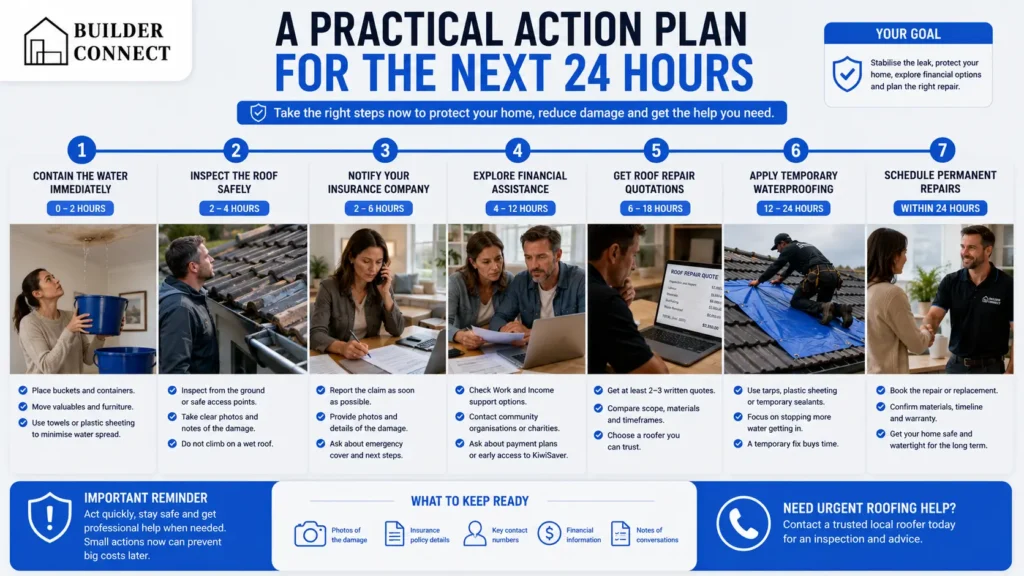
FAQs: About My Roof Is Leaking And I Have No Money In NZ
Conclusion
A leaking roof does not always mean you need an immediate full roof replacement. In many cases, a professional inspection can identify whether the problem is limited to damaged flashing, loose roofing materials, blocked drainage, or another repairable issue. Starting with a safe inspection and a written roof condition report gives you a clearer understanding of the leak source, the urgency of the repairs, and the most cost-effective solution for your situation. It is also a good idea to separate urgent weatherproofing work that prevents further water damage from any larger repairs or replacement that can be planned when your finances allow. If you rent your home, report the leak to your landlord or property manager in writing and keep copies of your communication and any supporting photographs. If you own the property, contact your insurer as soon as possible to determine whether any part of the damage may be covered under your policy, and if money is a concern, speak with Work and Income to see whether you qualify for financial assistance or support for essential home repairs. Taking these practical steps helps you make informed decisions, avoid unnecessary expenses, and protect your home from further damage. Arrange a professional roof inspection to identify the leak source, understand what must be repaired now, and compare the safest options within your budget.
Find A Professional Roofing Company Near You!
- Auckland Roofing Company
- Cambridge Roofing NZ
- Central Otago Roofing Services
- Hamilton Roofing Services
- Hastings Roofing Company
- Hawkes Bay Roofing Company
- Kapiti Coast Roofing Services
- Lower Hutt Roofing Services
- Napier Roofing Company
- Nelson Roofing Company
- New Plymouth Roofing Company Taranaki
- North Shore Roofing Company
- Orewa Roofing Company
- Porirua Roofing Services
- Roof Painting Company Auckland
- Roof Repairs Manukau
- Roof Repairs Takanini
- Roofers Papakura
- Roofing Company Invercargill
- Roofing Contractors Northland
- Roofing Contractors South Auckland
- Roofing Contractors Whangarei
- Roofing Palmerston North
- Roofing Waikato
- Roofing Walkworth
- Roofing Wellington
- Te Awamutu Roofing
- Tile Roofing Christchurch
- Upper Hutt Roofing Services
- Warkworth Roofing Company

About the Author:
Mike Veail is a recognized digital marketing expert with over 6 years of experience in helping tradespeople and small businesses thrive online. A former quantity surveyor, Mike combines deep industry knowledge with hands-on expertise in SEO and Google Ads. His marketing strategies are tailored to the specific needs of the trades sector, helping businesses increase visibility and generate more leads through proven, ethical methods.
Mike has successfully partnered with numerous companies, establishing a track record of delivering measurable results. His work has been featured across various platforms that showcase his expertise in lead generation and online marketing for the trades sector.
Learn more about Mike's experience and services at https://theleadguy.online or follow him on social media: