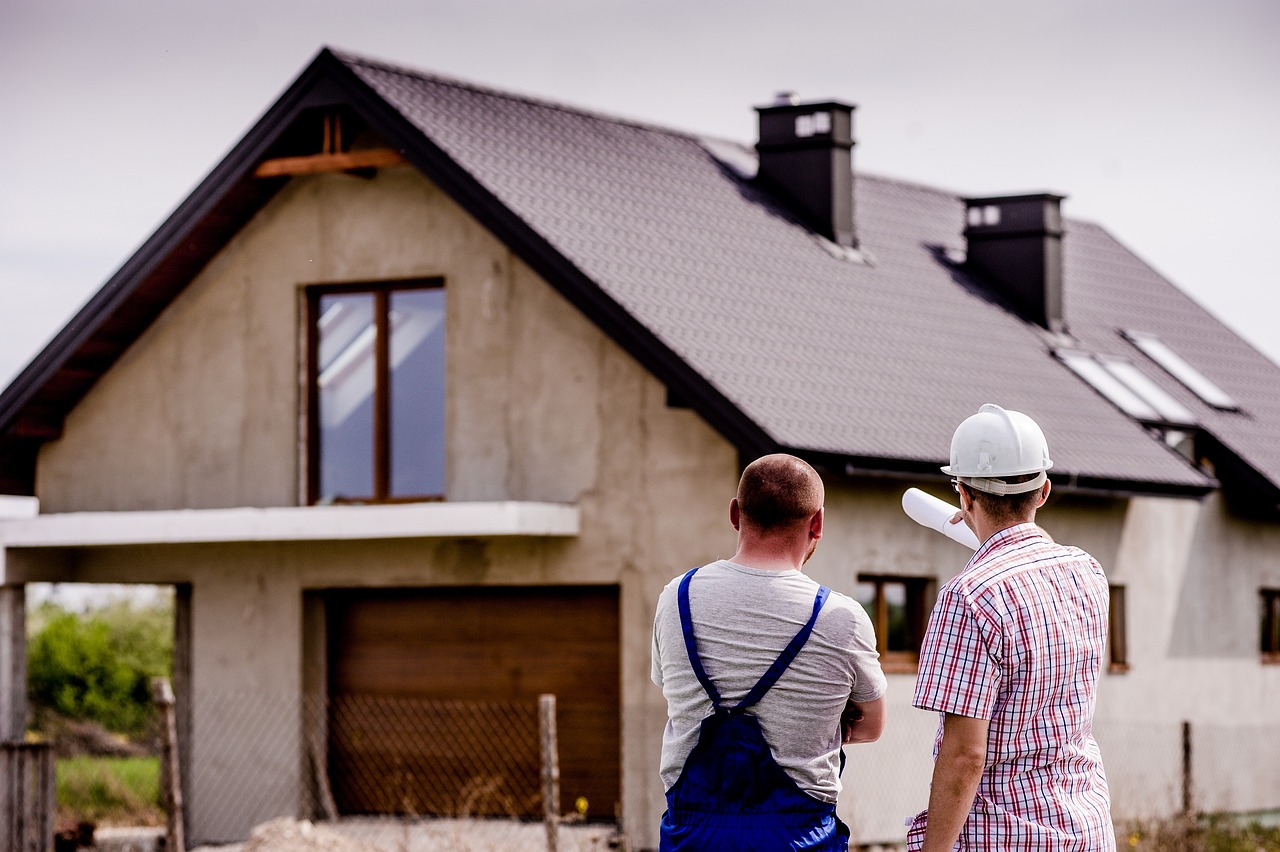
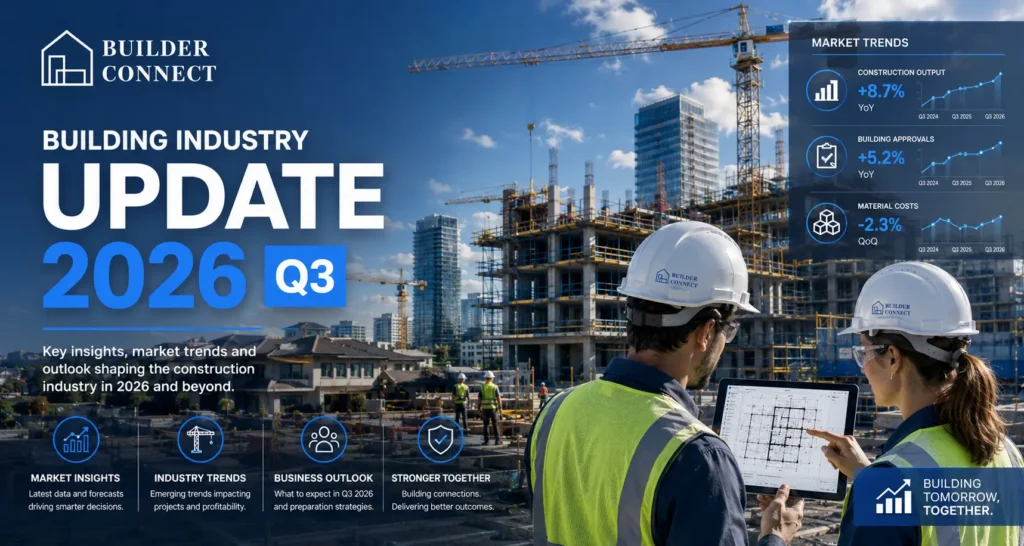
Welcome to our Building Industry Update 2026 Q3, where we break down the latest developments shaping the construction sector and explain what they mean for homeowners, builders, developers, and property investors. This guide covers the key market trends, construction costs, material pricing, labour availability, housing demand, emerging technologies, and industry challenges influencing projects during the third quarter of 2026. Whether you are planning to build, renovate, or simply stay informed, you will gain practical insights, reliable context, and forward-looking guidance to help you make confident decisions in a changing building market.
The Building Industry Update 2026 Q3 highlights the major trends affecting the construction sector during the third quarter of 2026, including changes in material costs, labour availability, housing demand, technology adoption, and market conditions. It helps homeowners, builders, and investors understand current challenges, opportunities, and what to expect moving forward.
- Overview Of The Building Industry In Q3 2026
- Construction Costs And Material Price Trends
- Housing Market And Building Demand
- Industry Challenges Builders Are Facing
- Technology And Innovation Shaping Construction
- Sustainability And Environmental Developments
- What Property Owners Should Consider Before Starting A Project
- Industry Outlook For The Rest Of 2026
- References
- FAQs: About Building Industry Update 2026 Q3
- Conclusion
- Find A Professional Builders Company Near You!
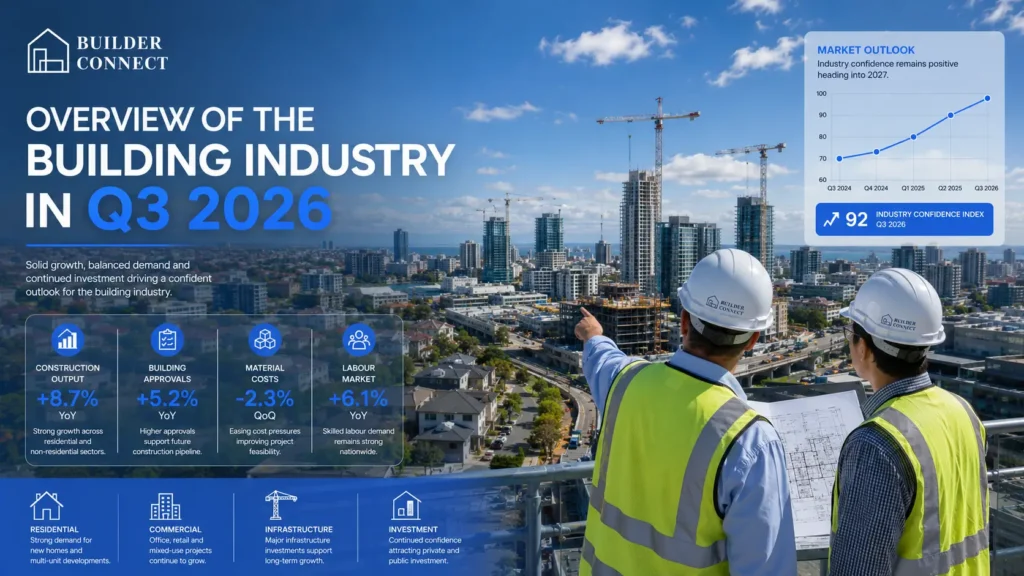
Overview Of The Building Industry In Q3 2026
The building industry in Q3 2026 continues to adapt to changing economic conditions, evolving customer expectations, and ongoing investment across residential and commercial construction. While some areas are experiencing steady growth, others remain cautious because of fluctuating material costs, labour availability, and financing conditions. Understanding these trends provides valuable context for homeowners, builders, developers, and investors who want to make informed decisions. Looking at the broader building market also helps explain why construction activity varies between regions and where the strongest opportunities are emerging.
A Snapshot Of The Current Market
The building market in the third quarter of 2026 reflects a mix of stability and adjustment. Many projects that were delayed during previous periods have moved forward, while new developments continue to respond to changing demand and economic conditions. Although growth has moderated in some sectors, the construction industry remains an important contributor to employment, infrastructure, and housing supply.
Residential construction continues to play a significant role, particularly in communities experiencing population growth and ongoing demand for new housing. Homeowners are also investing in renovations, extensions, and energy-efficient upgrades as they seek to improve existing properties rather than relocate.
Commercial construction activity remains active in selected sectors where long-term demand supports investment. Industrial developments, healthcare facilities, education projects, and logistics centres continue to generate work, while some office and retail developments are progressing more cautiously depending on local market conditions.
Regional differences remain an important part of the overall industry outlook. Areas experiencing strong population growth and public infrastructure investment generally continue to see higher levels of construction activity. In contrast, regions with slower economic growth or lower housing demand may experience a more measured pace of development. These local conditions often influence project timelines, contractor availability, and overall market confidence.
Key observations across the current market include:
- Residential Construction: New housing, home renovations, and property improvements continue to support steady demand across many communities.
- Commercial Development: Industrial facilities, healthcare buildings, schools, and infrastructure-related projects remain important sources of construction work.
- Regional Growth: Construction activity varies by location, with expanding regions generally experiencing stronger building demand than slower-growing areas.
- Market Stability: Despite ongoing challenges, many businesses are adapting through improved planning, efficient project management, and careful budgeting.
What’s Driving The Industry This Quarter?
Several factors are shaping the building industry during Q3 2026. Rather than relying on a single influence, the market reflects the combined impact of economic conditions, consumer confidence, infrastructure investment, and housing demand. Together, these drivers help determine the pace of new construction, renovation activity, and future development opportunities.
Economic Conditions
Economic conditions continue to influence both construction businesses and property owners. Interest rates, inflation, borrowing costs, and general business confidence all affect whether projects move ahead or are postponed. Builders are placing greater emphasis on accurate estimating and cost management to help clients plan projects with greater certainty, while property owners are taking more time to compare options before making significant financial commitments.
Consumer Confidence
Consumer confidence remains an important factor across the housing sector. When households feel financially secure, they are generally more willing to invest in building a new home, renovating an existing property, or undertaking major improvements. Periods of uncertainty can slow decision making, but homeowners with long-term plans often continue investing in projects that improve comfort, functionality, and property value.
Infrastructure Investment
Government and private infrastructure investment continues to support construction activity throughout many regions. Transport upgrades, schools, healthcare facilities, utilities, and public buildings create ongoing opportunities for contractors, suppliers, and skilled trades. These large-scale projects also contribute to employment, strengthen local economies, and help maintain consistent demand across different parts of the construction industry.
Housing Demand
Housing demand remains one of the strongest drivers of the building market. Population growth, changing household needs, and limited housing supply continue to encourage both new residential construction and renovation work. Many homeowners are choosing to improve their existing homes with extensions, additional living spaces, or modern upgrades rather than enter a competitive property market. This trend supports a steady pipeline of work for builders, designers, and specialist trades throughout Q3 2026.
As the building industry moves through the third quarter of 2026, success continues to depend on careful planning, realistic budgeting, and an understanding of changing market conditions. Staying informed about economic trends, construction activity, and housing demand allows property owners and industry professionals to make better decisions while preparing for opportunities and challenges in the months ahead.
Construction Costs And Material Price Trends
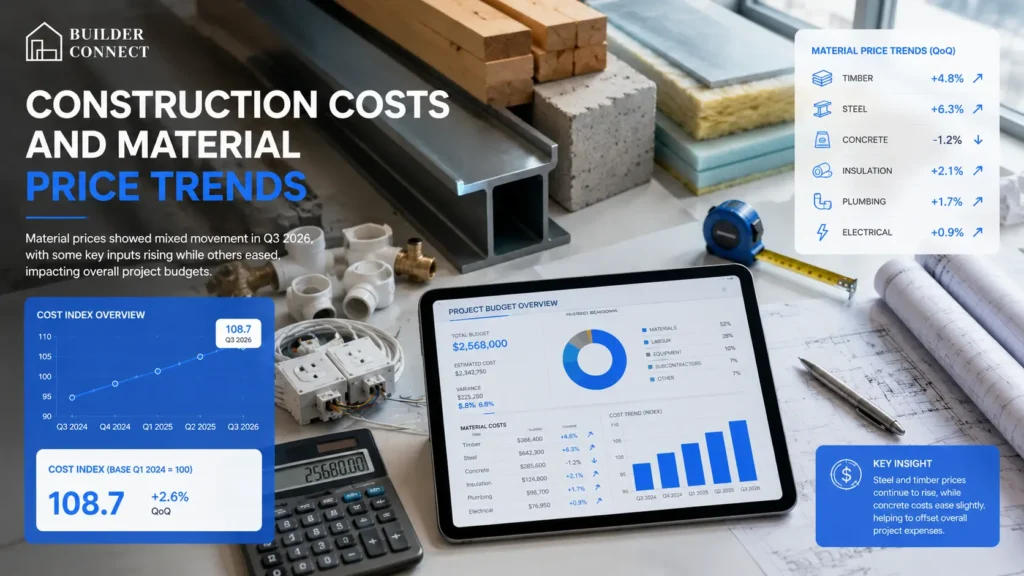
Construction costs continue to change as material prices, labour availability, transport expenses, and market demand influence the overall cost of building projects. While some products have become more stable compared to previous years, others remain affected by supply conditions and ongoing demand. Understanding these trends helps homeowners, builders, and developers make informed decisions, prepare realistic budgets, and reduce the risk of unexpected expenses throughout a project.
Which Building Materials Have Changed In Price?
Building material prices rarely move at the same pace. Some products experience significant price fluctuations because of manufacturing costs, import availability, or increased demand, while others remain relatively stable. Knowing which materials are changing can help with project budgeting and allow property owners to make practical choices before construction begins.
Timber
Timber remains one of the most commonly used building materials for residential construction, framing, decks, flooring, and interior finishes. Although timber prices have settled in some markets compared to previous years, premium grades and specialty products may still cost more because of limited supply and strong demand.
Several factors continue to influence timber pricing:
- Supply Availability: Weather events, harvesting limits, and production capacity can affect how much timber reaches the market.
- Construction Demand: Strong housing activity often increases demand for framing timber and structural products.
- Transportation Costs: Freight and fuel expenses contribute to the final cost paid by builders and suppliers.
Planning purchases early and confirming material availability before construction starts can help avoid delays and unexpected price increases.
Steel
Steel plays an essential role in commercial buildings, structural framing, roofing, reinforcing concrete, and many other construction applications. Steel prices are often influenced by global manufacturing, energy costs, and infrastructure demand.
Several factors affect steel pricing:
- Manufacturing Costs: Higher production and energy expenses can increase the cost of finished steel products.
- International Demand: Large infrastructure projects around the world can place additional pressure on supply.
- Shipping Expenses: Import and transport costs may influence local market prices.
Builders often monitor steel markets closely because even moderate price changes can significantly affect large-scale projects.
Concrete
Concrete continues to be a foundation material for residential, commercial, and infrastructure projects. While concrete remains widely available, the cost of cement, aggregates, transport, and fuel all contribute to changing building costs.
Common factors affecting concrete prices include:
- Raw Materials: Cement production and aggregate supply influence overall pricing.
- Fuel Costs: Ready mix concrete delivery depends heavily on transportation expenses.
- Project Demand: Higher construction activity may increase demand for concrete suppliers.
Accurate planning helps contractors schedule deliveries efficiently and minimise unnecessary costs.
Insulation
Energy-efficient construction has increased demand for modern insulation products. Homeowners are also placing greater importance on comfort and long-term energy savings, making insulation an important investment rather than simply a building requirement.
Price changes are commonly influenced by:
- Product Type: Premium insulation systems generally cost more than standard options.
- Manufacturing Costs: Raw material prices affect overall product pricing.
- Energy Regulations: Updated building standards may increase demand for higher-performing insulation products.
Choosing the right insulation should balance upfront cost with long-term energy efficiency.
Plumbing Materials
Plumbing materials include pipes, fittings, valves, fixtures, and drainage components that are essential to every building project. Prices can vary depending on the material used, product quality, and manufacturing costs.
Several influences include:
- Material Selection: Copper, stainless steel, and specialised plumbing systems often have higher costs than standard alternatives.
- Supply Conditions: Availability of imported products may affect local pricing.
- Product Quality: Higher-quality components generally provide better durability and lower maintenance over time.
Selecting reliable plumbing products can reduce future repair costs and improve long-term performance.
Electrical Components
Electrical systems continue to evolve as smart technology, energy efficiency, and modern safety standards become more common. Components such as wiring, switchboards, lighting, circuit protection devices, and smart controls may experience price changes depending on market demand.
Important pricing factors include:
- Copper Costs: Copper prices directly affect electrical wiring expenses.
- Technology Demand: Smart home products and energy-efficient systems often carry higher upfront costs.
- Compliance Standards: Updated electrical requirements may influence product selection and installation costs.
Investing in quality electrical components can improve safety, reliability, and future energy performance.
Labour Costs And Workforce Availability
Labour remains one of the largest contributors to overall construction costs. Even when material prices stabilise, limited workforce availability and increasing wages can significantly affect project budgets and completion times. Understanding current labour market conditions allows both homeowners and builders to plan projects more effectively.
Skilled Labour Shortages
Many regions continue to experience shortages of experienced tradespeople across multiple construction disciplines. Carpenters, electricians, plumbers, bricklayers, and other skilled workers remain in high demand, making it more difficult for contractors to secure qualified teams.
Labour shortages can result in:
- Longer Waiting Times: Projects may take longer to begin when qualified trades are fully booked.
- Higher Labour Costs: Strong demand often increases hourly rates for experienced professionals.
- Greater Competition: Builders may compete for limited skilled workers, especially during busy construction periods.
Working with established contractors who maintain reliable trade networks can help minimise scheduling issues.
Wage Trends
Construction wages continue to rise as employers compete to attract and retain experienced workers. Higher wages reflect increasing demand, inflation, training costs, and the specialised skills required for many construction roles.
Current wage trends may lead to:
- Higher Project Costs: Labour expenses become a larger share of the total project budget.
- Improved Workforce Retention: Competitive wages help businesses keep experienced employees.
- Greater Focus On Productivity: Contractors continue investing in technology and better project management to improve efficiency.
Although rising wages increase building costs, they also support a more skilled and stable workforce.
Hiring Challenges
Recruiting qualified workers has become more competitive across many parts of the construction industry. Builders often face longer recruitment periods and increased training requirements before new employees become fully productive.
Common hiring challenges include:
- Limited Candidate Pool: Experienced tradespeople remain in short supply.
- Training Requirements: New workers often require mentoring before working independently.
- Business Growth Pressure: Expanding workloads can make staffing more difficult for growing construction companies.
Successful businesses increasingly focus on apprenticeships, employee development, and long-term workforce planning.
What These Changes Mean For Homeowners And Builders
Changing construction costs affect nearly every stage of a building project, from the first estimate through to final completion. By understanding how material prices and labour shortages influence the market, homeowners and builders can make more informed decisions, reduce financial uncertainty, and better manage expectations.
Budget Planning
Accurate project budgeting has become more important than ever. Building costs may change between the initial design stage and the start of construction, making early financial planning essential.
Consider these practical approaches:
- Allow A Contingency: Setting aside additional funds helps manage unexpected cost increases.
- Compare Material Options: Discuss alternative products that provide similar performance within budget.
- Review Quotes Carefully: Ensure quotations clearly explain what is included and whether material prices are fixed or subject to change.
Careful planning provides greater financial confidence throughout the project.
Project Timelines
Construction schedules are influenced by both material availability and workforce capacity. Delays in sourcing products or securing skilled trades can extend completion dates even when planning has been thorough.
To improve scheduling:
- Order Materials Early: Securing key products in advance reduces supply risks.
- Maintain Clear Communication: Regular updates between builders, suppliers, and clients help manage expectations.
- Build Flexibility Into The Schedule: Allowing reasonable contingency time can reduce stress if unexpected delays occur.
Realistic planning often produces smoother project outcomes than overly optimistic schedules.
Quoting Expectations
Modern construction quotes often reflect current market conditions rather than long-term fixed pricing. Because material prices and labour costs can change over time, quotes may include validity periods or conditions that explain how pricing will be managed.
When reviewing quotations, pay attention to:
- Price Validity: Confirm how long the quoted price remains available.
- Scope Of Work: Make sure every stage of the project is clearly described.
- Possible Variations: Understand how additional work or material changes may affect the final cost.
Clear communication between homeowners and builders helps prevent misunderstandings and supports better project outcomes from start to finish.
Understanding how construction costs, material prices, and workforce availability continue to evolve allows both homeowners and builders to make informed decisions with greater confidence. By planning carefully, reviewing project budgets realistically, and staying aware of current market conditions, it becomes easier to manage risks while delivering successful building projects.
Housing Market And Building Demand
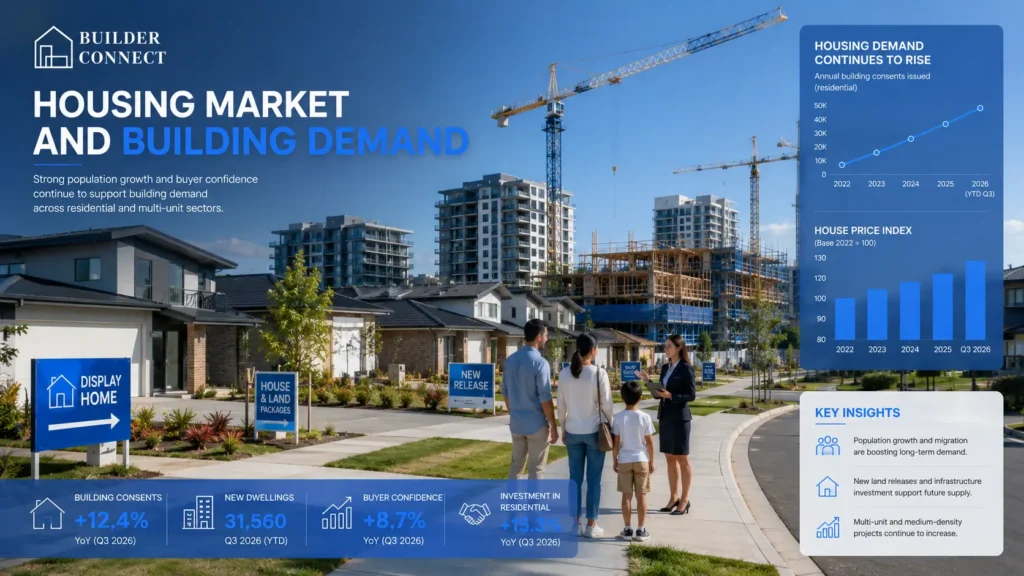
The housing market and the broader construction sector continue to influence each other, with changing economic conditions, population trends, and investment shaping the level of building activity. Understanding where demand is increasing and which sectors are growing helps homeowners, developers, and construction professionals make better decisions about future projects. While local conditions vary, keeping an eye on residential construction, commercial development, and regional growth patterns provides valuable insight into where opportunities may emerge.
Residential Construction Activity
Residential construction remains one of the strongest indicators of housing demand. Activity is influenced by factors such as population growth, housing affordability, interest rates, and the availability of land. As communities grow and housing needs change, builders are seeing demand across a range of residential projects, from new homes to renovations and extensions.
New Homes
New home construction continues to play an important role in meeting the demand for housing. In many areas, growing populations and changing household needs are driving interest in new developments that offer modern layouts, improved energy efficiency, and lower maintenance requirements.
Before construction begins, builders and homeowners typically consider several important factors.
- Site suitability: The land should be assessed for drainage, access, soil conditions, and any site-specific requirements that could affect construction.
- Building approvals: Obtaining the required permits before work begins helps prevent delays and ensures the project complies with local regulations.
- Budget planning: Construction costs should include materials, labour, council fees, and a contingency for unexpected expenses.
- Future needs: Designing a home that can adapt to changing family or lifestyle requirements can improve long-term value.
Renovations
Many homeowners are choosing renovations instead of moving, particularly when they want to improve comfort, functionality, or property value. Renovation projects often focus on updating kitchens, bathrooms, living spaces, and energy-efficient features while preserving the character of an existing home.
Successful renovation projects often begin with careful planning.
- Project priorities: Identifying the most important improvements helps manage costs and keeps the renovation focused on practical goals.
- Existing conditions: Older homes may require structural repairs, electrical upgrades, or plumbing improvements before cosmetic work begins.
- Quality materials: Durable products can reduce future maintenance and improve the overall lifespan of the renovation.
- Professional advice: Working with experienced builders and designers helps identify potential challenges before construction starts.
Extensions
Home extensions provide additional living space without the need to relocate. Whether adding extra bedrooms, expanding living areas, or creating a home office, extensions allow homeowners to make better use of their existing property while adapting to changing family needs.
Planning is particularly important for extension projects.
- Design integration: The new space should blend naturally with the original home in both appearance and function.
- Structural considerations: Foundations, roofing, and load-bearing elements may require modification to support the extension safely.
- Council requirements: Some extensions require additional approvals depending on their size, location, and design.
- Property value: Well-designed extensions often improve both everyday living and long-term resale appeal.
Commercial Construction Outlook
Commercial construction supports business growth, employment, and local economic development. Demand across retail, industrial, office, and public sectors often reflects wider economic confidence and investment levels. As businesses adapt to changing consumer behaviour and operational needs, commercial construction continues to evolve with new design priorities and building technologies.
Retail
Retail developments are increasingly focused on creating flexible spaces that support changing shopping habits. Modern retail buildings often incorporate energy-efficient systems, accessible layouts, and adaptable floor plans that allow businesses to respond to future market demands.
Common priorities for retail projects include:
- Customer experience: Attractive layouts, convenient access, and comfortable environments encourage visitors to spend more time in the space.
- Operational efficiency: Well-planned storage, service areas, and utility systems improve daily business operations.
- Flexible design: Adaptable spaces allow future tenants to customise premises with fewer structural changes.
- Sustainability: Energy-efficient lighting, insulation, and ventilation can reduce long-term operating costs.
Industrial
Industrial construction continues to benefit from growth in manufacturing, warehousing, logistics, and distribution. Businesses require facilities that support efficient operations while allowing room for future expansion as demand increases.
Key considerations for industrial developments include:
- Functional layouts: Efficient floor plans improve workflow, storage capacity, and equipment movement.
- Transport access: Good connections to major roads, ports, and transport networks improve logistics.
- Building durability: Strong materials and practical designs help facilities perform well under demanding conditions.
- Expansion potential: Planning for future growth can reduce the cost of later modifications.
Office Developments
Office developments are adapting to changing workplace expectations by creating flexible, collaborative environments that support both productivity and employee wellbeing. Many modern offices also incorporate technology and sustainability features to improve long-term efficiency.
Important priorities include:
- Flexible workspaces: Adaptable layouts allow businesses to respond to changing workforce requirements.
- Natural lighting: Well-lit environments improve comfort while reducing energy consumption.
- Technology integration: Reliable digital infrastructure supports communication and day-to-day operations.
- Employee wellbeing: Comfortable work environments contribute to higher satisfaction and productivity.
Public Projects
Public projects remain an important part of commercial construction, supporting community growth through investments in schools, healthcare facilities, transport infrastructure, and public amenities. These developments often provide long-term economic benefits while improving access to essential services.
Successful public projects typically focus on:
- Community benefit: Facilities are designed to meet the needs of local residents for many years.
- Quality construction: Durable materials reduce maintenance costs over the life of the building.
- Safety standards: Compliance with building regulations protects both workers and future occupants.
- Efficient delivery: Careful planning helps minimise disruption while keeping projects on schedule.
Areas Showing Strong Growth
Not all regions experience the same level of construction activity. Areas with increasing populations, expanding urban development, and significant infrastructure investment often generate stronger housing demand and higher levels of residential construction and commercial construction. Monitoring these growth indicators can help property owners and businesses identify emerging opportunities.
Population Growth
Population growth creates ongoing demand for housing, schools, healthcare facilities, retail centres, and supporting infrastructure. As communities expand, builders often see increased demand for both new residential developments and commercial projects.
Population growth influences the market by increasing:
- Housing demand: More residents require additional homes across different housing types.
- Community facilities: Schools, medical centres, and recreational spaces become increasingly important.
- Local services: Growing populations support demand for retail, hospitality, and professional services.
- Construction opportunities: Increased demand often leads to more building approvals and development activity.
Urban Expansion
Urban expansion continues as cities grow beyond traditional boundaries to accommodate increasing populations and business activity. New residential communities are often supported by commercial developments, transport improvements, and essential public services.
Urban expansion commonly encourages:
- Mixed-use developments: Residential, retail, and commercial spaces are planned together to create convenient communities.
- Improved connectivity: New roads and transport links support easier movement throughout expanding areas.
- Modern infrastructure: Utilities and public facilities are upgraded to support long-term growth.
- Property investment: Expanding suburbs often attract both developers and homebuyers seeking future growth opportunities.
Infrastructure Investment
Infrastructure investment provides the foundation for sustainable community development. Improvements to transport, utilities, education, healthcare, and public services often encourage additional residential construction and commercial construction by making surrounding areas more attractive for both businesses and residents.
Major infrastructure investment can contribute to:
- Economic growth: Better infrastructure supports business expansion and job creation.
- Improved accessibility: Upgraded transport networks make communities easier to reach.
- Higher development activity: Developers are often more confident investing in areas with strong infrastructure.
- Long-term stability: Well-planned public investment supports continued housing demand and future building approvals.
Understanding how housing demand, residential construction, commercial construction, and regional growth interact provides valuable insight for anyone planning a building project or monitoring the property market. Keeping track of these trends helps homeowners, investors, and industry professionals make informed decisions while preparing for future opportunities and changing market conditions.
Industry Challenges Builders Are Facing
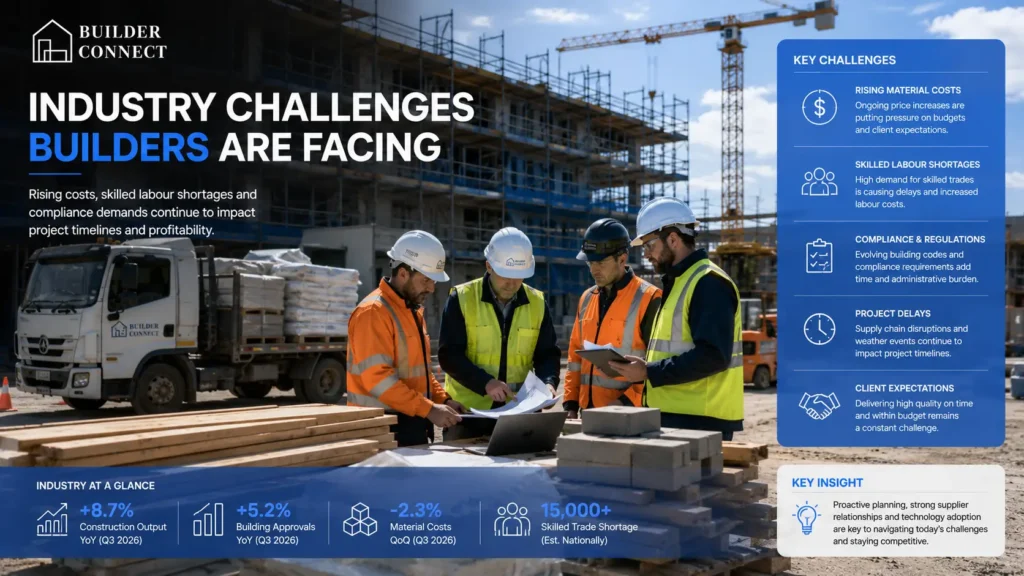
The building industry continues to adapt to changing market conditions, making it important for builders, contractors, and property owners to understand the challenges affecting construction projects. From maintaining a reliable supply chain to meeting new compliance requirements, today’s environment requires careful planning, strong project management, and clear communication. By understanding these construction challenges, businesses can reduce risks, improve efficiency, and deliver better outcomes for their clients.
Supply Chain Stability
A stable supply chain is one of the most important factors in keeping construction projects on schedule and within budget. While the availability of many building materials has improved compared to previous years, disruptions can still occur because of manufacturing delays, transportation issues, seasonal demand, or unexpected market changes. Even a short delay in receiving key materials can affect multiple stages of a project.
Builders can strengthen their supply chain by planning purchases well in advance and maintaining strong relationships with trusted suppliers. Having alternative product options and monitoring inventory throughout the project also helps reduce the risk of delays. Good project management ensures that material deliveries are coordinated with each phase of construction, allowing work to continue as smoothly as possible.
- Early Planning: Order long lead-time materials before construction begins whenever possible.
- Supplier Relationships: Work with reliable suppliers who communicate openly about product availability.
- Alternative Products: Identify suitable substitute materials that meet quality and compliance requirements if shortages occur.
- Inventory Monitoring: Regularly review delivery schedules and stock levels to avoid unnecessary interruptions.
Skilled Worker Shortages
Finding experienced tradespeople remains one of the biggest construction challenges across many regions. High demand for qualified workers, an ageing workforce, and ongoing competition between projects can make recruitment more difficult. Labour shortages may lead to longer construction timelines, increased labour costs, and greater pressure on existing teams.
Many successful builders are responding by investing in training, apprenticeships, and staff development to strengthen their workforce over the long term. Creating a positive working environment and offering consistent employment opportunities can also improve staff retention. Careful scheduling and realistic project planning help teams manage workloads without compromising the quality of workmanship.
- Training Programs: Develop new talent through apprenticeships and ongoing professional development.
- Workforce Planning: Schedule projects realistically based on available labour resources.
- Employee Retention: Support experienced workers with safe workplaces, clear communication, and career development opportunities.
- Resource Allocation: Assign skilled trades where their expertise delivers the greatest value during each project stage.
Regulatory And Compliance Changes
Building regulations continue to evolve as governments introduce new safety, environmental, and construction standards. Builders must stay informed about these changes to ensure every project complies with current building codes and local requirements. Missing an important compliance update can result in costly delays, inspections, or corrective work.
Successful builders treat compliance as an essential part of every project rather than an administrative task completed at the end. Regular staff training, accurate documentation, and working closely with building inspectors and industry professionals help reduce risks while supporting high-quality construction practices.
- Regulation Monitoring: Keep up to date with changes to building codes and industry requirements.
- Documentation: Maintain accurate records throughout every stage of construction.
- Quality Checks: Perform regular site inspections to identify potential compliance issues early.
- Professional Advice: Consult qualified specialists when projects involve complex regulatory requirements.
Rising Customer Expectations
Today’s clients expect more than quality construction. They also value clear communication, transparent pricing, reliable timelines, and regular progress updates throughout the project. With more information available online, customers often arrive with higher expectations and want builders who are responsive, knowledgeable, and trustworthy.
Meeting these expectations requires strong project management and a customer-focused approach. Builders who explain each stage of the process, respond promptly to questions, and manage expectations from the beginning are more likely to build lasting relationships and earn positive referrals. Consistent communication helps prevent misunderstandings and creates greater confidence throughout the construction journey.
- Clear Communication: Provide regular updates so clients understand project progress and upcoming work.
- Transparent Pricing: Explain quotations and possible cost variations before construction begins.
- Realistic Timelines: Set achievable schedules based on current labour and material availability.
- Customer Experience: Listen carefully to client concerns and provide practical solutions that support successful project outcomes.
Understanding these industry challenges allows builders and property owners to make better decisions before construction begins. With careful planning, strong project management, ongoing compliance, and a skilled workforce, it is possible to reduce risks, improve project efficiency, and deliver high-quality results even in a changing construction environment.
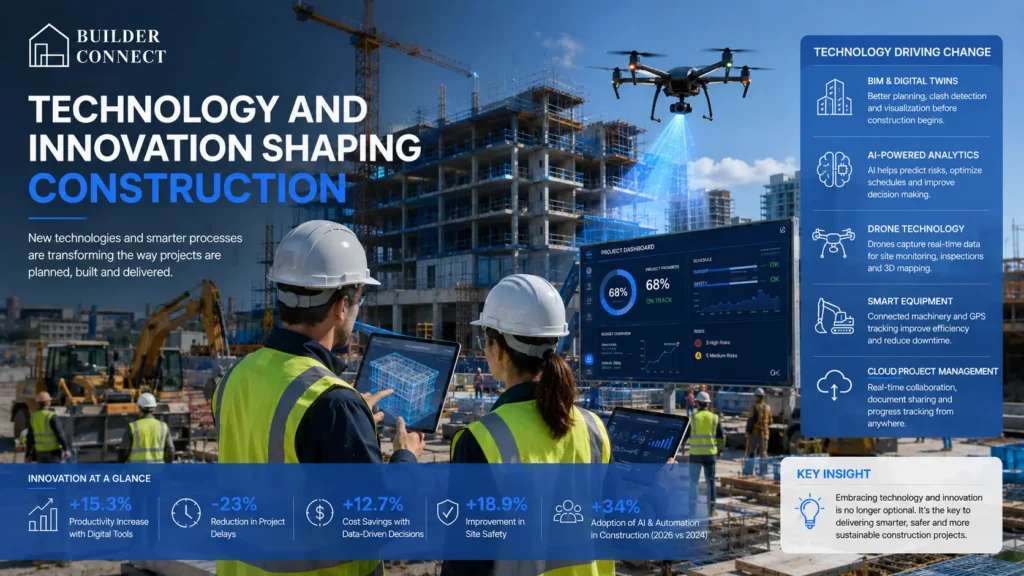
Technology And Innovation Shaping Construction
Technology continues to reshape the construction industry by improving efficiency, accuracy, safety, and communication across every stage of a project. From cloud-based project management platforms to advanced building materials, today’s innovations help contractors deliver better outcomes while giving property owners greater confidence throughout the building process. As construction technology evolves, businesses that embrace practical solutions are often better equipped to manage costs, reduce delays, and meet changing customer expectations.
Digital Project Management
Digital project management has become an essential part of modern construction. Instead of relying on paper documents and scattered communication, builders can now manage schedules, budgets, drawings, inspections, and project updates through centralized software platforms. This approach improves coordination between contractors, suppliers, designers, and clients while reducing the risk of costly misunderstandings.
Cloud-based systems also make it easier to track progress in real time. Team members can access the latest plans from the office or job site, ensuring everyone works from the most current information. This level of visibility helps identify potential issues earlier, allowing adjustments before they become expensive problems.
Some of the most valuable benefits include:
- Improved Communication: Project updates, documents, and approvals can be shared quickly between everyone involved.
- Better Scheduling: Digital calendars and timeline tools help keep projects on track and highlight upcoming milestones.
- Document Control: The latest drawings, specifications, and permits remain organized and accessible in one location.
- Greater Accountability: Progress tracking creates a clear record of completed tasks and outstanding work.
- Reduced Errors: Working from updated information minimizes mistakes caused by outdated plans or missing documents.
As digital construction tools become more accessible, even smaller building companies can improve efficiency without significantly increasing operating costs.
AI And Automation In Construction
Artificial intelligence is becoming an increasingly valuable tool within the construction industry. Rather than replacing skilled professionals, AI in construction supports better decision-making by analysing large amounts of project data and identifying patterns that people may overlook.
For example, estimating software can review historical project information to produce more accurate cost forecasts. Scheduling tools can identify potential delays before they affect the overall timeline, while quality control systems can assist with monitoring project performance throughout construction.
Automation is also reducing repetitive administrative work. Tasks such as document management, reporting, invoice processing, and material tracking can now be completed more efficiently, allowing project teams to spend more time focusing on planning, quality, and customer service.
Practical applications of AI and automation include:
- Cost Forecasting: AI helps estimate budgets using historical project data and current market conditions.
- Project Scheduling: Automated planning tools identify scheduling conflicts and improve resource allocation.
- Quality Monitoring: Digital inspections help detect issues earlier and improve consistency across projects.
- Risk Assessment: Predictive analysis highlights potential safety, scheduling, or budget risks before they escalate.
- Administrative Efficiency: Automation reduces manual paperwork and improves overall workflow.
As these technologies continue to mature, they are expected to support faster project delivery while maintaining high construction standards.
Sustainable Building Practices
Sustainable building has become an important priority for homeowners, developers, and construction professionals alike. Many clients are looking for buildings that are more energy-efficient, cost-effective to operate, and designed with long-term environmental performance in mind.
Modern sustainable building practices extend beyond simply selecting environmentally friendly materials. They also involve improving insulation, reducing waste, designing for natural light, increasing water efficiency, and choosing products that require less maintenance over their lifespan.
Construction companies are also finding practical ways to reduce waste during projects by improving material planning, recycling suitable materials, and minimizing unnecessary disposal. These practices not only reduce environmental impact but can also improve project efficiency and lower operating costs.
Key sustainable building approaches include:
- Energy-Efficient Design: Better insulation, glazing, and ventilation reduce long-term energy use.
- Responsible Material Selection: Durable products with longer service lives reduce future replacement needs.
- Waste Reduction: Careful planning helps minimize excess materials and supports recycling where possible.
- Water Conservation: Efficient fixtures and drainage systems reduce water consumption.
- Long-Term Performance: Buildings designed for durability often require fewer repairs over time.
Sustainability continues to drive innovation throughout the construction sector as both regulations and customer expectations evolve.
New Building Products And Materials
Innovation in building products is providing contractors with more options to improve durability, efficiency, and overall project performance. Manufacturers continue to develop materials that are stronger, lighter, easier to install, and better suited to changing environmental conditions.
Many modern products are designed to improve thermal performance, resist moisture, reduce maintenance requirements, and increase the lifespan of completed buildings. These advancements allow builders to deliver projects that perform better while often reducing long-term ownership costs.
Examples of recent innovation include:
- High-Performance Insulation: Modern insulation products improve energy efficiency and indoor comfort.
- Advanced Concrete Products: New concrete mixes offer increased strength, durability, and improved curing performance.
- Engineered Timber: Manufactured timber products provide structural stability while supporting sustainable building goals.
- Low-Maintenance Cladding: Modern exterior systems are designed to withstand harsh weather while reducing ongoing maintenance.
- Smart Building Products: Connected devices help monitor energy use, indoor climate, and overall building performance.
Selecting the right materials requires careful consideration of the building’s purpose, climate conditions, budget, and expected lifespan. Experienced builders evaluate these factors carefully to ensure each product delivers lasting value rather than simply following industry trends.
Technology and innovation will continue to shape the future of construction by helping builders work more efficiently while improving quality, safety, and sustainability. Understanding these developments allows homeowners, businesses, and industry professionals to make better-informed decisions and prepare for the opportunities that modern construction technology continues to create.
Sustainability And Environmental Developments
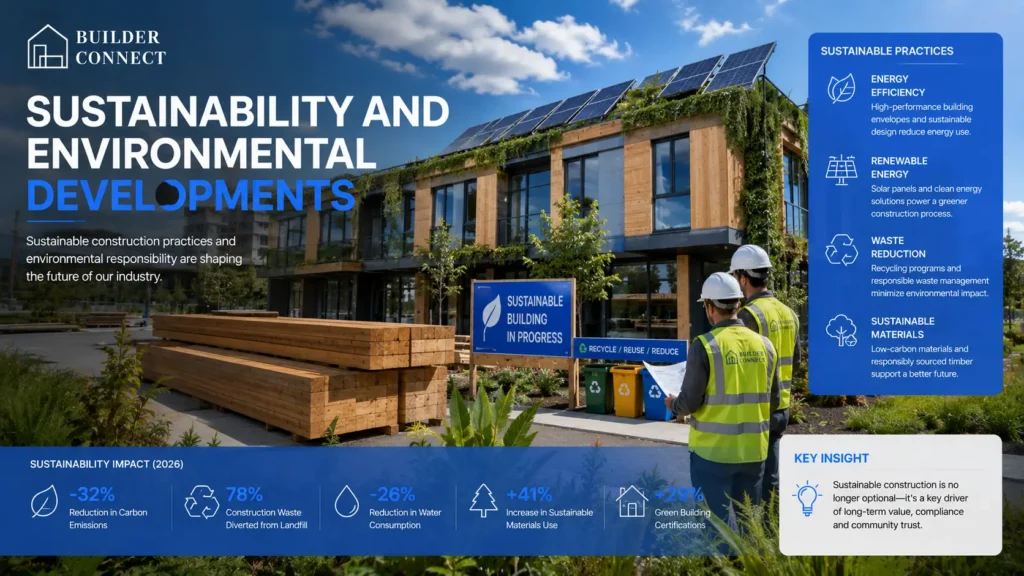
Sustainability continues to shape the way the construction industry plans, designs, and delivers projects. Builders, developers, and property owners are placing greater emphasis on reducing environmental impact while improving long-term building performance. As environmental standards evolve and demand for sustainable construction grows, businesses are adopting smarter materials, efficient building methods, and environmentally responsible practices that benefit both occupants and the wider community.
Energy-Efficient Building Trends
Energy efficiency has become a priority for both residential and commercial construction projects. Rising energy costs and greater awareness of environmental issues have encouraged property owners to invest in buildings that use less energy while maintaining comfort throughout the year. Modern construction methods now focus on improving insulation, ventilation, natural lighting, and the overall performance of the building envelope.
Builders are also selecting products that help reduce heating and cooling demands without sacrificing durability or appearance. High-performance windows, quality insulation, efficient heating systems, and well-designed ventilation all contribute to lower energy consumption over the life of a building. These improvements not only support sustainable construction but can also reduce ongoing operating costs for homeowners and businesses.
Some common energy-efficient building features include:
- High-performance insulation: Helps maintain indoor temperatures by reducing unwanted heat loss during winter and limiting heat gain during summer.
- Energy-efficient windows: Improve thermal performance while allowing natural light to enter the building.
- Smart heating and cooling systems: Adjust energy use based on occupancy and changing weather conditions.
- LED lighting: Uses significantly less electricity while providing reliable, long-lasting illumination.
- Solar-ready designs: Allow future installation of renewable energy systems with minimal structural changes.
Waste Reduction And Recycling
Construction projects generate large amounts of waste, making effective waste management an important part of responsible building practices. Careful planning before construction begins can significantly reduce unnecessary material use while improving project efficiency.
Many contractors now separate recyclable materials directly on-site instead of sending everything to landfill. Timber, steel, concrete, bricks, plasterboard, and certain plastics can often be recovered and processed for future use when handled correctly. Recycling not only reduces waste but can also lower disposal costs and conserve valuable natural resources.
Successful waste reduction often starts during the planning stage by accurately estimating material quantities and ordering only what is required. Builders can also reduce waste by protecting materials from weather damage, storing products properly, and reusing suitable materials wherever practical.
Effective waste-management practices include:
- Accurate material planning: Reduces excess ordering and limits unnecessary waste.
- On-site recycling: Separates recyclable materials for recovery instead of disposal.
- Material reuse: Gives suitable products a second life whenever possible.
- Responsible disposal: Ensures hazardous or non-recyclable materials are managed safely.
- Supplier collaboration: Works with manufacturers that offer recyclable packaging or product take-back programs.
Low-Carbon Construction Materials
Reducing carbon emissions has become an important goal across the building sector. Material selection plays a major role because the production, transportation, and installation of building products all contribute to a project’s environmental impact. Choosing lower-carbon alternatives allows construction projects to reduce emissions without compromising quality or structural performance.
Manufacturers continue to develop innovative products that require fewer natural resources and generate lower emissions during production. Recycled steel, engineered timber, low-carbon concrete mixes, recycled aggregates, and responsibly sourced timber are becoming more widely available across many construction markets.
When selecting construction materials, builders often consider several factors beyond initial cost, including durability, maintenance requirements, expected lifespan, local availability, and compliance with environmental standards. Taking a whole-of-life approach helps ensure materials continue delivering value long after construction has been completed.
Examples of low-carbon material choices include:
- Engineered timber: Stores carbon while offering excellent structural performance for many building applications.
- Low-carbon concrete: Uses alternative cement blends that reduce manufacturing emissions.
- Recycled steel: Conserves raw materials while maintaining high structural strength.
- Recycled aggregates: Reuse processed construction materials in suitable applications.
- Locally sourced materials: Reduce transportation-related emissions and support local suppliers.
Growing Demand For Green Buildings
Demand for green buildings continues to increase as property owners recognise the long-term benefits of environmentally responsible construction. Many buyers and tenants now consider sustainability features alongside traditional factors such as location, design, and price when choosing a property.
Green buildings are designed to improve occupant comfort while reducing energy use, water consumption, and environmental impact throughout their lifespan. Better indoor air quality, efficient building systems, durable materials, and thoughtful site planning all contribute to healthier and more efficient spaces.
Businesses are also responding to stronger environmental standards, investor expectations, and customer preferences by incorporating sustainable practices into new developments and major renovations. Although some sustainable features may involve higher upfront costs, they often provide long-term value through lower operating expenses, improved building performance, and greater market appeal.
Some key benefits of green buildings include:
- Lower operating costs: Reduced energy and water use can decrease ongoing utility expenses.
- Improved indoor comfort: Better ventilation, lighting, and temperature control create healthier living and working environments.
- Higher property appeal: Sustainable features are increasingly attractive to buyers, tenants, and investors.
- Reduced environmental impact: Efficient design and responsible material choices help conserve natural resources.
- Long-term resilience: Well-designed buildings are often better prepared to meet future environmental standards and changing market expectations.
Sustainability is no longer viewed as an optional feature but as an essential part of modern construction. By adopting energy-efficient designs, reducing waste, selecting low-carbon materials, and meeting evolving environmental standards, the building industry is creating more resilient, efficient, and responsible developments that deliver lasting value for both property owners and future generations.
What Property Owners Should Consider Before Starting A Project
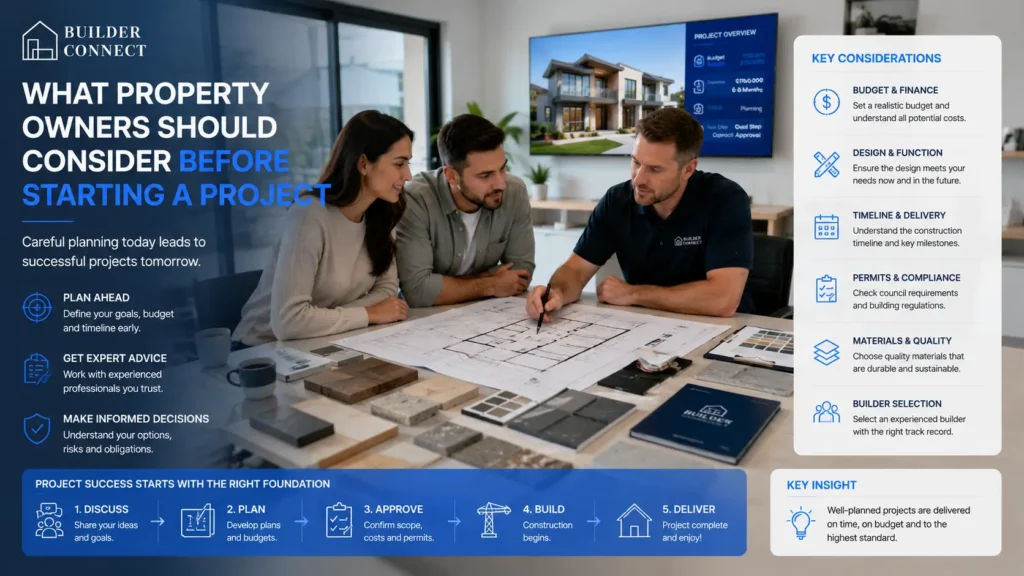
Starting a construction or renovation project is a significant investment, and careful preparation can make the difference between a smooth experience and an expensive one. Whether you are planning a new home building project, upgrading an existing property, or carrying out a major renovation, taking the time to understand your budget, choose the right professionals, and prepare for changing market conditions will help you make informed decisions. Good construction planning also reduces stress, improves communication, and creates realistic expectations from the beginning.
Budget Planning
A well-prepared budget is the foundation of every successful project. It should include more than just the estimated construction cost. Property owners should also consider permits, professional design services, material choices, landscaping, utility connections, inspections, and a contingency fund for unexpected expenses.
During renovation planning, hidden issues such as outdated wiring, plumbing problems, or structural damage may only become apparent once work begins. Setting aside a contingency budget helps prevent financial pressure if additional repairs become necessary.
When preparing your budget, consider the following:
- Construction Costs: Include labour, materials, equipment, and contractor fees.
- Professional Services: Account for architects, designers, engineers, surveyors, or consultants where required.
- Council Requirements: Budget for permits, inspections, and any required approvals.
- Contingency Fund: Reserve extra funds for unforeseen conditions that may arise during construction.
- Future Maintenance: Consider the long-term maintenance costs of the materials and products you choose.
A realistic budget allows you to compare quotes fairly and helps avoid making rushed decisions later in the project.
Choosing The Right Builder
Builder selection is one of the most important decisions you will make. A reliable builder does more than complete the work. They communicate clearly, manage the project professionally, and provide realistic advice throughout every stage of construction.
Rather than focusing only on the lowest quote, evaluate each builder’s experience, reputation, and ability to deliver projects similar to yours. A higher-quality builder may provide better value through careful workmanship, accurate planning, and fewer unexpected issues.
When comparing builders, look for:
- Relevant Experience: Choose a builder with experience completing projects similar in size and complexity.
- Clear Communication: Select someone who explains the process, answers questions, and keeps you informed.
- Detailed Quotations: Look for transparent quotes that clearly outline inclusions, exclusions, and allowances.
- Licensing And Insurance: Confirm that the builder meets local licensing requirements and carries appropriate insurance.
- Customer References: Read genuine reviews and ask for recent project examples where possible.
Good communication and trust often contribute just as much to a successful outcome as technical skills.
Understanding Current Market Conditions
Construction projects are influenced by broader market conditions that can affect pricing, availability, and scheduling. Material costs, labour demand, interest rates, and supply chains all play a role in determining how smoothly a project progresses.
For example, periods of high demand may increase waiting times for certain trades or specialist materials. Likewise, fluctuations in the cost of timber, steel, concrete, or imported products may influence the final project budget.
Before starting a project, it helps to understand:
- Material Availability: Some products may require longer lead times than others.
- Labour Demand: High demand for skilled trades can affect scheduling and pricing.
- Supply Chain Conditions: Shipping delays or manufacturing shortages may influence delivery times.
- Economic Factors: Inflation, financing costs, and housing demand can affect overall construction activity.
- Local Building Activity: Busy construction periods may increase competition for contractors and suppliers.
Keeping informed about current market conditions allows property owners to make more confident decisions during both home building and renovation planning.
Planning For Potential Delays
Even well-managed projects can experience delays. Weather conditions, permit approvals, material shortages, design changes, and unforeseen site conditions are all common factors that may affect construction schedules.
Preparing for these possibilities early helps reduce frustration and supports better decision-making if adjustments become necessary. Working with your builder to establish realistic timelines and regular progress updates creates greater transparency throughout the project.
Practical ways to prepare include:
- Allow Extra Time: Build flexibility into your expected completion date whenever possible.
- Order Materials Early: Confirm lead times for important products before construction begins.
- Minimise Design Changes: Finalise plans before work starts to reduce costly variations.
- Maintain Regular Communication: Schedule consistent updates with your builder to discuss progress and any emerging issues.
- Prepare For Unexpected Conditions: Older properties and challenging sites may require additional work once construction begins.
Projects rarely follow a perfectly straight path, but careful planning, realistic expectations, and proactive communication can minimise disruptions and keep construction moving forward.
Taking the time to plan carefully before construction begins creates a stronger foundation for the entire project. With realistic budgeting, thoughtful builder selection, an understanding of current market conditions, and practical construction planning, property owners are better prepared to manage challenges, protect their investment, and achieve a successful outcome.
Industry Outlook For The Rest Of 2026
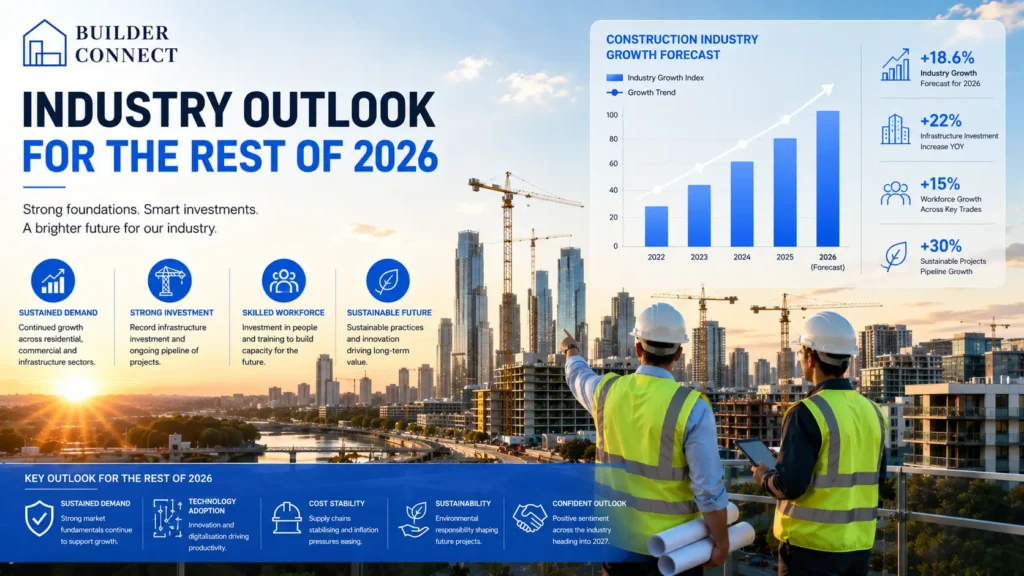
The building industry continues to adapt as economic conditions, customer expectations, and construction practices evolve throughout 2026. While some challenges remain, there are also encouraging signs of stability and growth across many parts of the sector. Understanding the latest construction forecast and building outlook can help homeowners, builders, developers, and investors make informed decisions before committing to new projects. Looking ahead, the remainder of the year is expected to bring a mix of opportunities and challenges that will shape the future construction market.
Expected Market Trends
Several market trends are expected to continue influencing the building industry during the rest of 2026. Demand for new homes and renovation projects is likely to remain steady in areas experiencing population growth and ongoing infrastructure investment. At the same time, property owners are placing greater importance on quality workmanship, energy efficiency, and long-lasting building materials.
Builders are also seeing increased demand for projects that offer better value over time rather than simply focusing on the lowest upfront cost. Homeowners are becoming more informed about material choices, maintenance requirements, and sustainable building practices, encouraging construction companies to provide clearer advice and more detailed project planning.
Technology will also continue to support the industry by improving communication, estimating, scheduling, and project management. Digital tools are helping businesses deliver more accurate timelines and improve collaboration between contractors, suppliers, and clients.
Some of the market trends expected to continue include:
- Greater Focus On Sustainability: More projects are expected to include energy-efficient designs, environmentally responsible materials, and improved insulation to reduce long-term operating costs.
- Growing Demand For Renovations: Many property owners may choose to renovate existing homes rather than build new ones, particularly where land availability is limited.
- Increased Adoption Of Digital Tools: Construction management software, digital estimating, and project tracking systems are becoming standard across many building businesses.
- Higher Expectations From Clients: Customers increasingly value transparent communication, detailed quotations, and realistic project schedules.
Opportunities For Builders And Contractors
Despite ongoing challenges, there are many opportunities for builders and contractors who continue to adapt to changing market conditions. Businesses that invest in skilled staff, modern technology, and efficient project management are often better positioned to meet customer expectations and remain competitive.
Specialised services are also becoming more valuable as homeowners seek experienced professionals for renovations, extensions, accessibility improvements, and energy-efficient upgrades. Contractors who clearly explain their processes and demonstrate proven expertise are more likely to build trust with potential clients.
Builders can strengthen their position by focusing on:
- Customer Experience: Providing clear communication, regular updates, and honest advice helps build long-term relationships.
- Quality Workmanship: Consistent attention to detail can lead to positive referrals and repeat business.
- Professional Development: Ongoing training helps teams stay current with building standards, regulations, and new construction methods.
- Service Diversification: Expanding into complementary services can create additional revenue opportunities while meeting broader customer needs.
Businesses that continue improving their operations while maintaining high standards are well placed to benefit from the evolving building outlook.
Risks To Watch
Although the overall construction forecast remains encouraging, several risks could still affect project delivery during the remainder of 2026. Planning ahead and monitoring industry developments can help reduce the impact of these challenges.
Construction businesses should remain aware of changing material availability, labour market conditions, and broader economic factors that may influence project costs and timelines. Unexpected changes in interest rates or consumer confidence can also affect demand for residential and commercial construction.
Common risks include:
- Material Price Volatility: Sudden price increases may affect project budgets and quoting accuracy.
- Labour Availability: Skilled-worker shortages may continue to influence scheduling and project completion times.
- Regulatory Changes: Updates to building standards or compliance requirements may require additional planning or documentation.
- Economic Uncertainty: Inflation, borrowing costs, and changing investment confidence can influence construction activity across different sectors.
By maintaining realistic budgets, communicating openly with clients, and reviewing project plans regularly, builders can better manage these potential risks.
What Could Influence Q4 2026
Several factors will likely shape industry performance as the final quarter of 2026 approaches. Government infrastructure spending, housing demand, lending conditions, and ongoing investment in commercial developments will all contribute to future construction activity.
If supply chains continue to improve and labour availability becomes more stable, project timelines may become more predictable. Continued investment in technology and workforce development could also improve productivity across the construction sector.
Consumer confidence will remain an important factor. Homeowners who feel financially secure are generally more willing to begin building or renovation projects, while businesses often increase investment when economic conditions become more stable.
Industry professionals should continue monitoring:
- Housing Demand: Changes in buyer activity can directly influence residential construction.
- Government Investment: Public infrastructure projects often create new opportunities for contractors and suppliers.
- Interest Rates: Lending conditions can affect both residential and commercial development decisions.
- Construction Innovation: Continued adoption of modern building methods and digital technology may improve efficiency across future projects.
Businesses that remain flexible, plan carefully, and respond to changing market conditions are likely to be in a stronger position as the industry moves into Q4 and beyond.
The remainder of 2026 presents a balanced mix of opportunities and challenges for the construction industry. By staying informed about evolving market trends, monitoring the latest construction forecast, and focusing on quality, efficiency, and customer trust, builders, contractors, and property owners can make well-informed decisions that support successful projects now and into the future.
References
- 2026 Engineering And Construction Industry Outlook (Deloitte Insights): https://www.deloitte.com/us/en/insights/industry/engineering-and-construction/engineering-and-construction-industry-outlook.html
- AIA Consensus Construction Forecast: https://www.aia.org/resource-center/consensus-construction-forecast
- 2026 PCL Construction Industry Outlook: Key Trends, Data And Sector Insights: https://www.pcl.com/us/en/insights/2026-pcl-construction-industry-outlook-key-trends-data-and-sector-insights
- Global Construction Monitor (RICS): https://www.rics.org/news-insights/market-surveys/global-construction-monitor
- Construction And Housebuilding Outlook H1 2026 (PwC): https://www.pwc.co.uk/industries/documents/construction-and-housebuilding-outlook-h1-2026.pdf
FAQs: About Building Industry Update 2026 Q3
Conclusion
The Building Industry Update 2026 Q3 highlights that the construction sector continues to evolve as material costs, labour availability, technology, sustainability, and market demand influence how projects are planned and delivered. Whether you are a homeowner, builder, developer, or business owner, staying informed about these changes can help you make better decisions, manage budgets more effectively, and prepare for potential challenges. As market conditions, regulations, and construction costs may continue to change throughout the year, it is wise to follow future quarterly updates and consult qualified professionals before making major building decisions. You can also expand your knowledge by exploring related resources such as building cost guides, construction planning checklists, home renovation guides, advice on choosing a builder, building consent resources, sustainable building articles, previous quarterly industry updates, and market forecast content to support well-informed planning and long-term project success.
Find A Professional Builders Company Near You!
- Auckland Builders For Small Jobs
- Builders Alexandra
- Builders Ashburton
- Builders Auckland
- Builders Blenheim
- Builders Cambridge
- Builders Central Otago
- Builders Christchurch
- Builders Clyde
- Builders Cromwell
- Builders Dunedin
- Builders Feilding
- Builders Gisborne
- Builders Hamilton
- Builders Hastings
- Builders Havelock North
- Builders Hawkes Bay
- Builders Hibiscus Coast
- Builders Invercargill
- Builders Johnsonville
- Builders Kapiti
- Builders Kerikeri
- Builders Levin
- Builders Lower Hutt
- Builders Manawatu
- Builders Masterton
- Builders Mosgiel
- Builders Napier
- Builders Nelson
- Builders New Plymouth
- Builders Oamaru
- Builders Paihia
- Builders Palmerston North
- Builders Paraparaumu
- Builders Porirua
- Builders Pukekohe
- Builders Queenstown
- Builders Rangiora
- Builders Rolleston
- Builders Taupo
- Builders Tauranga
- Builders Te Awamutu
- Builders Timaru
- Builders Tokoroa
- Builders Upper Hutt
- Builders Waikanae
- Builders Wanaka
- Builders Warkworth
- Builders Wellington
- Builders West Auckland
- Builders Whakatane
- Builders Whanganui
- Builders Whangarei
- Handyman Wellington
- Home Builders Rotorua
- Kitchen Removal Service Auckland
- Wellington Builders For Small Jobs

About the Author:
Mike Veail is a recognized digital marketing expert with over 6 years of experience in helping tradespeople and small businesses thrive online. A former quantity surveyor, Mike combines deep industry knowledge with hands-on expertise in SEO and Google Ads. His marketing strategies are tailored to the specific needs of the trades sector, helping businesses increase visibility and generate more leads through proven, ethical methods.
Mike has successfully partnered with numerous companies, establishing a track record of delivering measurable results. His work has been featured across various platforms that showcase his expertise in lead generation and online marketing for the trades sector.
Learn more about Mike's experience and services at https://theleadguy.online or follow him on social media: