Welcome to this practical guide for New Zealand homeowners thinking, “I need a new roof but can’t afford it NZ.” A damaged or leaking roof can create stress, especially when replacement costs are beyond your current budget, but a full reroof may not always be the only immediate option. This guide explains how to assess whether your roof needs repairs or replacement, explore insurance and financial assistance, compare roofing quotes, reduce costs safely, and protect your home while planning the next step. You will learn how to make an informed decision without ignoring urgent damage or committing to financing that may not suit your circumstances.
If you need a new roof but cannot afford it in NZ, arrange a professional inspection first. Ask about urgent repairs, insurance coverage, Work and Income assistance, payment plans, bank lending, and staged replacement. Compare written quotes and prioritise safety, water tightness, and essential work before optional upgrades.
- What Should You Do If You Cannot Afford A New Roof?
- Does Your Roof Need Replacing Or Could It Be Repaired?
- What To Do If Your Roof Is Leaking Right Now
- Will Home Insurance Pay For A New Roof?
- Can Work And Income Help Pay For Roof Repairs?
- What Other Roof Financing Options Are Available In NZ?
- Can You Replace A Roof In Stages?
- How To Reduce Roof Replacement Costs Without Cutting Corners
- How To Choose A Trustworthy Roofer When Money Is Tight
- Do You Need Building Consent For A Roof Replacement In NZ?
- What Happens If You Delay Replacing A Failing Roof?
- A Practical Action Plan When You Cannot Afford A New Roof
- Get A Clear Roof Assessment Before Making A Financial Decision
- References
- FAQs: About I Need A New Roof But Can't Afford It NZ
- Conclusion
- Find A Professional Roofing Company Near You!
What Should You Do If You Cannot Afford A New Roof?
If you cannot afford a new roof in NZ, act quickly to prevent further water damage rather than delaying action. Arrange a professional roof inspection to determine whether repairs or replacement are needed, check your insurance and available financial assistance, compare written quotes and payment options, and address active leaks immediately to protect your home and reduce future repair costs.
A new roof is a significant investment, and many homeowners worry about how they will pay for it. If your roof has started leaking or showing signs of failure, the most important step is to make informed decisions instead of putting the problem off. While you may not be ready to pay for a complete replacement today, there are practical steps you can take to protect your property, understand your options, and avoid much larger repair bills in the future.
Prevent Immediate Water Damage
Your first priority should always be protecting your home from additional damage. Even a small roof leak can quickly affect ceilings, insulation, wall linings, timber framing, flooring, and electrical systems if water continues to enter the house.
Take practical steps as soon as you notice a leak.
- Move belongings: Relocate furniture, electronics, rugs, and valuables away from affected areas to prevent unnecessary damage.
- Contain the water: Place buckets or containers beneath leaks and use towels to reduce water spreading across floors.
- Document the damage: Take clear photographs and videos of the leak, affected rooms, and any visible roof damage. This information may help if you need to make an insurance claim.
- Monitor the leak: Pay attention to whether the leak only occurs during heavy rain or continues after the weather clears, as this information can assist a roofing contractor in locating the source.
- Stay safe: Avoid touching wet electrical fittings or entering roof spaces if water is present around wiring or lighting fixtures.
Acting quickly can reduce repair costs and may also prevent secondary damage that insurance policies may not fully cover.
Arrange a Professional Roof Inspection
Before assuming you need a complete roof replacement, have your roof professionally assessed. Many roofing problems appear worse than they actually are, while others may look minor but hide more serious structural issues beneath the surface.
An experienced roofer should inspect the roof from both the exterior and, where appropriate, inside the roof space.
A thorough inspection should identify:
- Source of the leak: The exact location where water is entering the roof system.
- Overall roof condition: Whether deterioration is isolated or widespread.
- Remaining service life: An estimate of how much usable life the roof may still have.
- Safety concerns: Any loose roofing materials, sagging sections, or structural issues requiring urgent attention.
- Recommended solution: Whether repairs are practical or full replacement is the safer long-term option.
Ask for photographs and a written report whenever possible. Having clear documentation makes it easier to compare recommendations from different roofing companies and supports insurance or financial assistance applications if needed.
Confirm Whether Repair or Replacement Is Necessary
One of the biggest mistakes homeowners make is assuming every roof leak means they need a completely new roof.
In many cases, targeted repairs can safely extend the life of a roof for several more years. In other situations, ongoing repairs become more expensive than replacing the roof entirely.
Repairs may be appropriate when:
- Damage is isolated: Only one section of the roof has failed.
- Flashings have deteriorated: Water enters around chimneys, skylights, vents, or roof penetrations.
- Storm damage occurred: Wind or falling branches damaged a limited area.
- Most roofing materials remain sound: The majority of the roof continues to perform well.
Replacement becomes more likely when:
- Leaks are widespread: Water enters through multiple areas.
- Materials have reached the end of their lifespan: Roofing products show extensive wear or deterioration.
- Corrosion or cracking is extensive: Large sections have become structurally unreliable.
- Previous repairs continue to fail: Repeated patching no longer provides a lasting solution.
- Structural damage exists: Rotten timber or sagging roof framing requires substantial work.
Understanding which category your roof falls into prevents unnecessary spending while ensuring genuine safety risks are addressed.
Check Insurance and Financial Assistance
If you cannot afford roof replacement, investigate every available source of financial support before making a decision.
Start with your home insurance policy. While insurers generally do not cover damage caused by age or poor maintenance, they may provide cover when the roof has been damaged by an insured event such as a storm, hail, fire, or falling tree.
If insurance is unlikely to apply, consider whether you may qualify for roof replacement financial assistance or emergency support.
Possible options include:
- Insurance claims: For sudden accidental damage covered under your policy.
- Work and Income assistance: Eligible homeowners may receive help with immediate and essential repairs, depending on their circumstances.
- Bank lending: Existing mortgage providers may offer home improvement lending or loan top-ups.
- Roofing payment plans: Some roofing companies partner with finance providers to spread payments over time.
- Community support: In limited circumstances, charitable organisations or local community groups may assist vulnerable homeowners facing urgent housing issues.
If you are looking for help paying for a new roof in NZ, compare every option carefully rather than accepting the first finance offer you receive.
Compare Written Quotes and Payment Options
Once you understand your roof’s condition, obtain at least two or three detailed written quotes from reputable roofing contractors.
Comparing quotes allows you to evaluate more than just price. It also helps you understand differences in workmanship, materials, warranties, and the scope of work.
Each quotation should clearly explain:
- Materials: Roofing products, underlay, flashings, and fixings being supplied.
- Labour: Installation costs and expected project duration.
- Additional work: Timber repairs, gutter work, scaffolding, or disposal fees.
- Warranty: Manufacturer and workmanship warranty coverage.
- Payment schedule: Deposit requirements, progress payments, and final payment terms.
- Exclusions: Work that is not included in the quoted price.
If affordable roofing options include finance, ask about:
- Interest rates: The true cost of borrowing.
- Fees: Establishment, administration, or early repayment charges.
- Repayment period: Monthly affordability and total repayment amount.
- Flexibility: Whether additional payments can reduce the balance sooner.
Looking beyond the lowest quote often leads to better long-term value and fewer unexpected costs.
Do Not Ignore Active Roof Leaks
Choosing to delay a complete roof replacement does not mean you should ignore an active leak.
Water damage rarely stays confined to one area. Moisture can spread through insulation, ceiling cavities, wall framing, and flooring before visible signs appear inside your home. What begins as a relatively inexpensive repair may eventually require replacement of plasterboard, insulation, electrical components, timber framing, and interior finishes.
If replacing the roof immediately is beyond your budget, speak with a qualified roofing contractor about emergency roof repairs or temporary weatherproofing measures that can safely protect your home while you organise funding for permanent work. Addressing urgent issues early usually costs far less than repairing extensive water damage later.
Taking a structured approach allows you to make confident decisions instead of reacting under pressure. By protecting your home first, understanding the true condition of your roof, exploring available financial support, and comparing professional advice, you can choose the most practical solution for your circumstances while avoiding unnecessary costs.

Does Your Roof Need Replacing Or Could It Be Repaired?
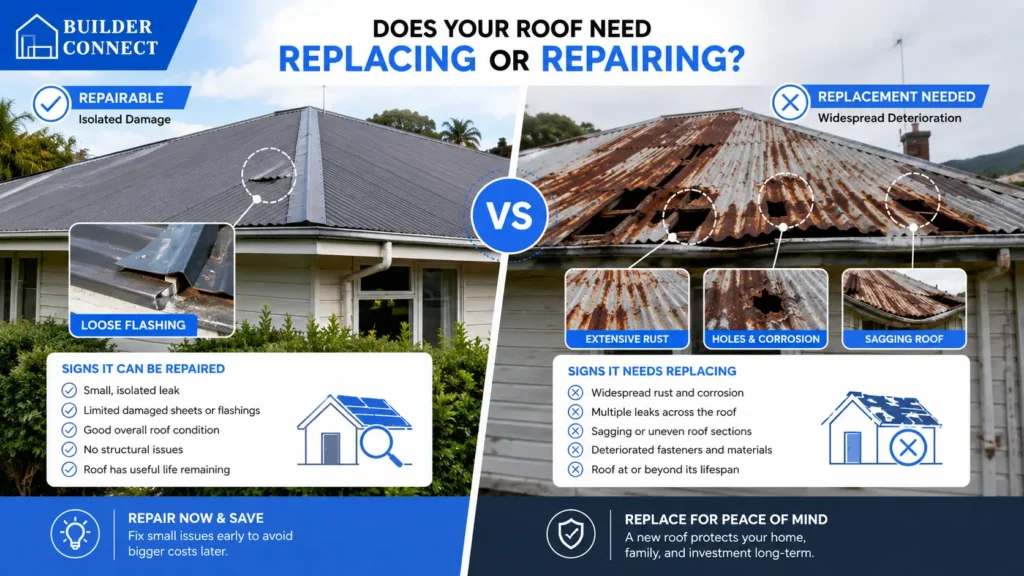
Seeing rust, stains, cracked tiles, or water marks on your ceiling does not automatically mean you need a complete roof replacement. Many roofing problems can be repaired if they are identified early and the damage is limited to a specific area. The best approach is to have the roof professionally inspected before making any major financial decision. A thorough assessment can determine whether targeted repairs will safely extend the roof’s life or whether replacing the entire roof is the more practical and cost-effective solution over the long term.
Signs That a Roof May Be Repairable
Many roofing issues develop in isolated areas rather than across the entire roof. If the roof structure remains sound and the damage is limited, repairs may restore weather protection and delay the need for a complete replacement.
- Small isolated leak: A single leak is often caused by damaged flashing, a loose fixing, or a minor defect rather than widespread roof failure. Identifying the exact source can often prevent unnecessary replacement.
- Limited damaged roofing materials: A few cracked tiles, rusted metal sheets, missing fasteners, or damaged flashings can often be replaced individually if matching materials remain available and the surrounding roof is still in good condition.
- Blocked or damaged gutters: Overflowing gutters may allow water to enter beneath roofing materials, creating leaks that appear to originate from the roof itself. Cleaning, repairing, or replacing damaged gutters may resolve the issue without replacing the roof.
- Localised storm damage: Strong winds, fallen branches, or hail may damage only one section of the roof. In many cases, replacing the affected area is enough when the remaining roof has not been compromised.
- Faulty flashing around roof penetrations: Flashing around chimneys, skylights, vents, solar panels, and roof penetrations is a common source of leaks. Repairing or replacing these flashings often restores a watertight seal without major roofing work.
- Surface deterioration only: Minor surface corrosion, faded coatings, or weathering do not always indicate structural failure. A professional inspection can determine whether the underlying roofing material remains sound.
- Reasonable remaining service life: If the roof still has many years of expected service life and the current problem is isolated, repairing the affected area may provide the best value while allowing you to budget for replacement in the future.
Signs That Full Roof Replacement May Be Necessary
Some roofing problems indicate that repairs are becoming less effective or no longer represent good long-term value. In these situations, investing in a new roof may reduce future repair costs and improve the overall protection of your home.
- Widespread rust or material failure: Extensive corrosion, cracked roofing materials, lifting sheets, or deteriorated tiles across large sections of the roof often indicate that the roofing system has reached the end of its serviceable life.
- Repeated leaks in multiple locations: When new leaks continue appearing despite previous repairs, the roof may have widespread deterioration that cannot be solved by patching isolated areas.
- Extensive corrosion around fixings and laps: Rust developing around fasteners, sheet overlaps, and joins can weaken the roof’s weatherproofing and increase the likelihood of future leaks.
- Sagging roof sections: Visible sagging may indicate structural problems beneath the roofing materials, including weakened framing, water damage, or excessive loading. These issues require prompt professional assessment.
- Rotten roof framing or substrate: Long-term water penetration can damage timber framing, battens, or roof substrate. Once structural components begin deteriorating, replacement often becomes the safest option.
- Roof cladding nearing the end of its serviceable life: Every roofing material has an expected lifespan. When the entire roof is approaching that limit, spending money on repeated repairs may not provide good long-term value.
- Repairs that continue to fail: If the same area has been repaired several times without lasting success, there may be underlying problems that can only be addressed through replacement.
- Unavailable replacement materials: Older roofing profiles and discontinued products can make repairs difficult or impossible. When compatible materials are no longer manufactured, replacing larger roof sections or the entire roof may be necessary.
Ask for a Written Roof Condition Report
Before agreeing to an expensive roof replacement, ask the roofing contractor to provide a written roof condition report. A detailed report gives you a clear understanding of the roof’s current condition and helps you compare recommendations from different contractors using the same information.
A quality roof assessment should include:
- Source of each leak: A clear explanation of where water is entering and how the contractor identified the problem.
- Current roof condition: An overall assessment of the roofing materials, flashings, fixings, gutters, and visible structural components.
- Immediate safety concerns: Identification of any hazards that require urgent attention, including structural movement, loose roofing materials, or water affecting electrical systems.
- Repairable areas: A breakdown of which sections can reasonably be repaired and the expected outcome of those repairs.
- Expected life after repair: An estimate of how much additional service life the proposed repairs are likely to provide under normal conditions.
- Recommended replacement timeframe: If replacement is not immediately necessary, the report should explain when it is likely to become the most practical option.
- Repair and replacement cost options: Separate estimates for repairing the roof and replacing it completely so you can compare both approaches.
- Photographic evidence: Clear photographs showing damaged areas, close-up defects, and wider roof views that support the contractor’s recommendations.
If a contractor immediately recommends replacing the entire roof without providing detailed evidence, consider obtaining an independent second opinion. Comparing assessments from another experienced roofing professional can help confirm whether replacement is genuinely necessary or whether repairs remain a practical option.
It is also worth asking whether the inspection fee will be credited toward future repair or replacement work if you decide to proceed with that contractor. Some roofing companies offer this as part of their quoting process, which can help reduce your overall project cost.
Taking the time to understand your roof’s actual condition before committing to major work can save thousands of dollars and help you choose the solution that delivers the best long-term value. Whether the answer is a targeted repair or a complete replacement, an informed decision based on a detailed professional assessment is always the safest investment.
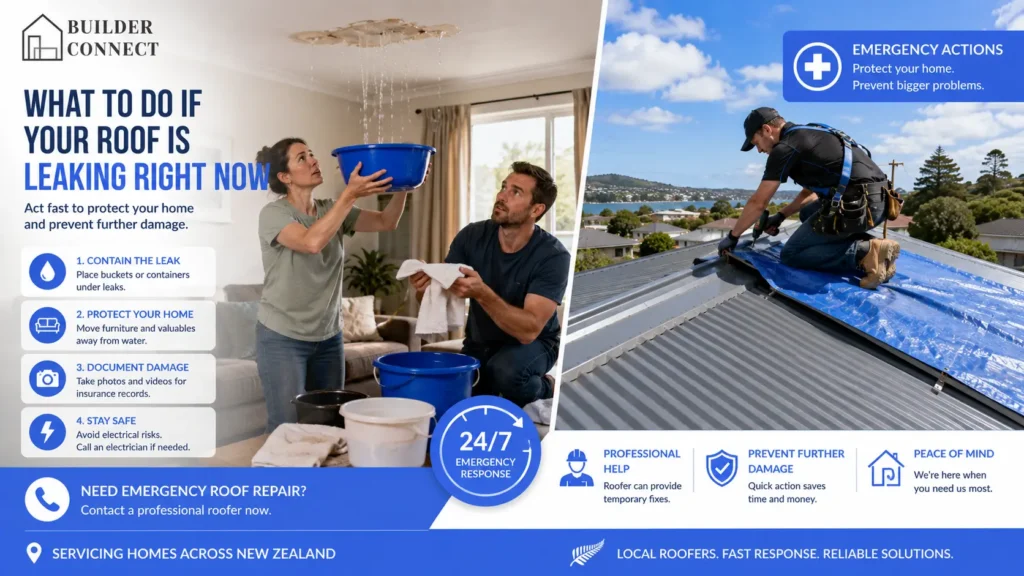
What To Do If Your Roof Is Leaking Right Now
A leaking roof should never be ignored, even if the water appears to be coming from a small area. Roof leaks often travel along framing, insulation, or ceiling cavities before becoming visible inside your home, which means the actual source may be several feet away from where the water is dripping. Acting quickly can reduce repair costs, protect your belongings, and help prevent more serious structural damage while you arrange a professional roof inspection.
Protect the Inside of Your Home
Your first priority is limiting further damage until a roofing professional can assess the problem. Taking a few simple steps immediately can help prevent expensive repairs to ceilings, flooring, furniture, and electrical systems.
- Move valuable belongings: Relocate furniture, electronics, rugs, artwork, and important documents away from the affected area to reduce the risk of water damage.
- Collect dripping water: Place buckets, containers, or towels beneath active leaks to catch water and minimise damage to flooring. Empty containers regularly if the leak continues during heavy rain.
- Photograph the damage: Take clear photos and videos of ceiling stains, dripping water, damaged roofing materials if visible, and any affected belongings. These records may be helpful if you need to discuss the damage with your insurance provider.
- Monitor ceiling movement: If a ceiling begins to sag or bulge, it could indicate that water has collected above the plasterboard. Avoid standing directly underneath it and contact a roofing contractor as soon as possible because a saturated ceiling may collapse without warning.
- Stay away from electrical hazards: Never touch wet light fittings, ceiling fans, electrical outlets, or switches if water is present. Moisture and electricity create a serious safety risk.
- Call an electrician when necessary: If water is leaking near wiring, lighting fixtures, the switchboard, or other electrical equipment, contact a licensed electrician immediately before attempting any further work inside the home.
Taking these precautions can reduce secondary damage while giving your roofer a clearer picture of the problem during the inspection.
Arrange a Temporary Professional Repair
Not every leaking roof requires immediate replacement. In many cases, a qualified roofer can carry out temporary repairs that keep the home weather-tight until permanent work can be scheduled. This approach is often helpful when replacement materials need to be ordered, insurance assessments are pending, or homeowners need time to arrange finance.
Ask the roofing contractor whether one or more of the following temporary solutions are appropriate.
- Temporary weatherproofing: Protective coverings or emergency repairs can reduce water entry during rain until permanent repairs are completed.
- Replacing isolated damaged sections: If only a small area of roofing has failed, replacing individual sheets, tiles, or damaged components may safely extend the roof’s service life.
- Securing loose materials: Strong winds can loosen roofing materials, creating openings that allow water inside. Refastening or replacing loose components may prevent further damage.
- Repairing flashings: Flashings around chimneys, skylights, vents, valleys, and wall junctions are common leak points. Repairing damaged flashings often resolves localised water entry without replacing the entire roof.
- Clearing drainage paths: Blocked gutters, valleys, downpipes, or roof drains can cause water to back up beneath roofing materials. Cleaning these areas may improve drainage and reduce leaking.
Before any temporary repair begins, ask the contractor to explain exactly what the work will achieve and how long it is expected to remain effective.
A professional temporary repair should always include:
- A written scope: The quote should clearly describe the work being completed so there is no misunderstanding about what is included.
- An expected lifespan: Ask how long the repair is reasonably expected to remain effective under normal weather conditions.
- Clear limitations: Temporary repairs are designed to reduce immediate water entry, not permanently solve widespread roof deterioration. Understanding these limitations helps you plan future work.
- An agreed price: Confirm the total cost before work starts, including emergency call-out fees, materials, and any additional charges that may apply if further damage is discovered.
A reputable roofing contractor should explain whether the repair is intended as a short-term solution or whether it is likely to provide several more years of reliable performance.
Do Not Take Unsafe DIY Measures
It can be tempting to climb onto the roof or apply a quick fix during heavy rain, especially when water is entering the house. Unfortunately, many emergency DIY repairs create greater safety risks or make permanent repairs more difficult later.
Avoid the following mistakes.
- Do not climb onto a wet or damaged roof: Wet roofing surfaces become extremely slippery, particularly on steep roofs or those covered with moss, debris, or loose materials. Falls from roofs remain one of the most common causes of serious home-maintenance injuries.
- Do not rely on indoor sealants: Applying silicone or sealant to a ceiling crack rarely fixes the actual source of the leak because the water usually enters much higher up the roof before travelling through the structure.
- Do not block ventilation or drainage openings: Roof ventilation and drainage systems are designed to move moisture away from the building. Blocking these openings can trap water, increase condensation, and create additional problems over time.
- Do not assume the leak is directly above the drip: Water often follows rafters, roof framing, insulation, or wiring before becoming visible inside the home. A professional inspection is usually needed to trace the leak back to its true origin.
- Do not delay professional advice: Even a small leak can allow moisture to spread into insulation, framing, and plasterboard. The longer water remains inside the building, the more extensive and expensive the repairs may become.
Responding quickly to a roof leak does not always mean replacing the entire roof immediately. By protecting your home, arranging a professional assessment, and avoiding unsafe DIY repairs, you can reduce damage, make informed decisions, and choose the most appropriate repair or replacement option for your situation.
Will Home Insurance Pay For A New Roof?
Many New Zealand homeowners hope their insurance will cover the cost of a new roof after discovering a leak or visible damage. In some situations, it may, but it depends on what caused the damage rather than the roof’s age alone. Most home insurance policies are designed to cover sudden and accidental insured events, not problems that develop gradually through normal ageing, weather exposure, or lack of maintenance. Understanding this difference can help you avoid unexpected claim outcomes and make better decisions before arranging major roofing work.
Roof Damage That May Be Covered
Insurance policies often provide cover when a roof is damaged by an unexpected event that is included in the policy. Each insurer has different terms and conditions, so it is important to review your policy carefully before assuming a claim will be accepted.
Examples of roof damage that may be covered include:
- Storm damage: Strong winds, heavy rain, or severe weather may damage roofing materials, flashings, or structural components if the event meets the policy definition of an insured storm.
- Fallen trees or branches: A tree or large branch falling onto the roof during a storm or another unexpected event may be covered, including damage caused by the impact.
- Hail damage: Significant hail can dent metal roofing, crack tiles, or damage roof coatings, depending on the severity of the event.
- Fire damage: Roof damage caused by a house fire or a nearby fire may be covered under the fire section of the policy.
- Impact damage: Unexpected impacts from vehicles, flying debris, or other insured events may qualify for cover.
- Sudden accidental events: Some policies cover accidental damage that occurs unexpectedly, provided it falls within the insurer’s policy conditions.
Even if the roof damage appears obvious, the insurer will usually investigate the cause before deciding whether the claim meets the policy requirements. In many cases, an assessor or roofing specialist will inspect the property and determine whether the damage resulted from a covered event or from gradual deterioration over time.
Roof Problems That Are Often Excluded
While insurance can provide valuable protection against unexpected events, it is generally not intended to pay for routine maintenance or ageing building materials. A roof that has simply reached the end of its service life will usually remain the homeowner’s responsibility.
Common exclusions often include:
- Wear and tear: Roofing materials naturally deteriorate over time through exposure to sunlight, rain, wind, and changing temperatures.
- Rust or corrosion: Metal roofing may eventually corrode, particularly in coastal or high-moisture environments, and this gradual process is usually excluded.
- Poor maintenance: Damage resulting from neglected maintenance, blocked gutters, loose roofing materials, or unrepaired leaks is commonly excluded.
- Gradual water damage: Slow leaks that have developed over months or years often fall outside standard insurance cover because the damage was not sudden.
- Faulty workmanship: Problems caused by poor installation or defective construction may need to be addressed through the original contractor or warranty rather than an insurance claim.
- Pre-existing damage: Damage that existed before the policy began or before the insured event occurred is generally not covered.
- Age-related deterioration: Roofing materials eventually wear out, and replacing an old roof because it has reached the end of its lifespan is considered normal property maintenance.
For example, if a thirty-year-old roof develops several leaks because the roofing material has deteriorated over time, the insurer may decline the cost of replacing the roof itself. If a severe storm later causes additional sudden damage, the insurer may assess whether the storm created new insured damage separate from the roof’s existing condition.
How to Approach an Insurance Claim
If you believe your roof has been damaged by a covered event, taking the right steps early can make the claims process smoother and help preserve important evidence. Acting too quickly without contacting your insurer may create unnecessary complications, particularly if major work is completed before an assessment.
Before lodging a claim, consider the following practical steps:
- Review your policy: Read the relevant sections covering roof damage, exclusions, excess amounts, and emergency repairs so you understand what may be covered.
- Contact your insurer promptly: Notify your insurer as soon as practical after discovering damage that may result from an insured event. Early notification allows them to explain the next steps.
- Document the damage: Take clear photographs and videos from safe locations showing both exterior and interior damage, including any water stains, damaged ceilings, or affected belongings.
- Preserve damaged materials: If roofing materials have fallen or been removed during emergency work, keep them where practical until the insurer confirms they are no longer needed.
- Record important details: Note when the leak was first noticed, recent weather conditions, and any events that may have contributed to the damage.
- Prevent additional damage: Arrange reasonable temporary repairs if necessary to stop further water entering the home. Most insurers expect homeowners to take practical steps to minimise additional loss.
- Keep all paperwork: Retain inspection reports, quotations, invoices, receipts, and correspondence related to the damage and any emergency repairs.
- Confirm assessment requirements: Ask whether your insurer requires an approved roofing contractor or insurance assessor before authorising permanent repair or replacement work.
It is also important to understand that a leaking roof does not automatically qualify for a full roof replacement under an insurance policy. If the leak is caused by an old roof that has gradually deteriorated, the insurer may decline replacement costs even though water has entered the home. In some situations, the insurer may instead cover damage caused by the sudden insured event, such as storm-related interior water damage, without paying to replace roofing materials that had already reached the end of their useful life.
Understanding this distinction can help you set realistic expectations before lodging a claim and avoid costly misunderstandings during the assessment process.
Before committing to major roofing work, take the time to understand what your insurance policy covers and gather the information your insurer may require. A professional roof inspection, clear documentation, and prompt communication with your insurer can help you make informed decisions while protecting both your home and your finances.

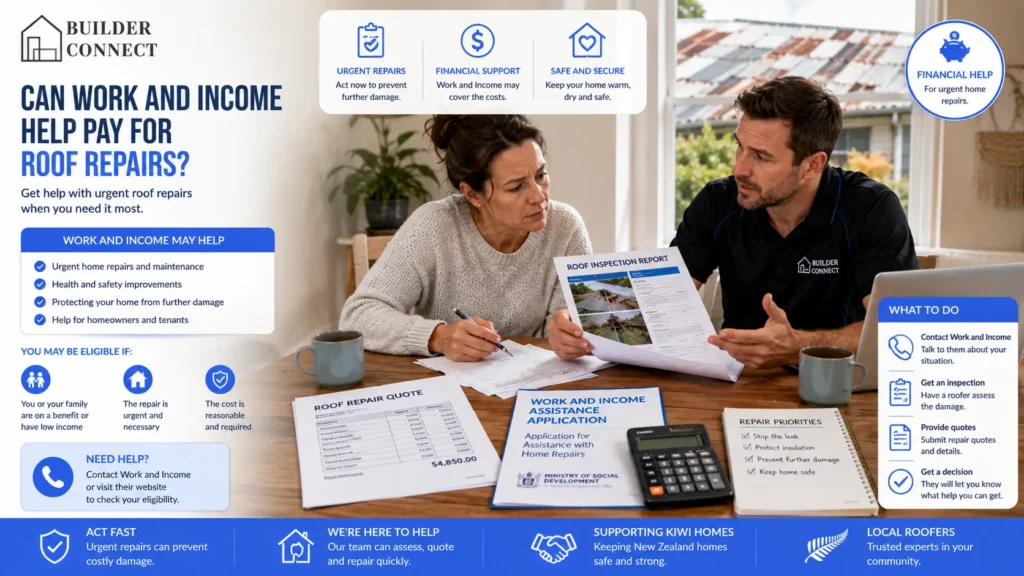
Can Work And Income Help Pay For Roof Repairs?
A leaking or damaged roof can quickly become more than a maintenance issue. Water entering your home can damage ceilings, insulation, electrical systems, and structural timber, making timely repairs important for both safety and long-term costs. If you cannot afford urgent roof work, Work and Income may be able to provide financial assistance for eligible homeowners facing immediate and essential home repair needs. While this support is not intended to fund every roof replacement project, it may help cover necessary repairs that allow you to continue living safely in your home.
Who May Qualify?
Work and Income assesses each application individually, taking into account both the urgency of the repair and the applicant’s financial situation. Meeting one requirement does not automatically guarantee approval, so it is important to provide complete and accurate information when applying.
Some of the factors Work and Income may consider include:
- Benefit Or Pension Status: Applicants who receive a benefit, pension, or New Zealand Superannuation may be eligible for assistance, depending on their individual circumstances.
- Immediate And Essential Need: The roof repair should be necessary to protect the home from further damage or to maintain a safe and healthy living environment.
- Reasonable Living Standard: The repair must help ensure the property remains suitable for normal day-to-day living rather than funding cosmetic improvements.
- Other Finance Options: You may be asked whether you have approached your bank or another lender before seeking financial assistance through Work and Income.
- Financial Circumstances: Your income, assets, savings, and overall financial position will be considered to determine eligibility.
Work and Income advises that assistance for essential home maintenance is generally available up to NZ$1,000, depending on individual circumstances. Some forms of assistance may need to be repaid, while others may not. Even if you are not currently receiving a benefit, it is still worth contacting Work and Income if your roof requires urgent repairs, as assistance may be available depending on your situation.
What To Prepare Before Applying
Preparing your documents before contacting Work and Income can help make the application process smoother and reduce delays. Having clear evidence of the problem also demonstrates why the repair cannot reasonably be postponed.
Before applying, gather the following information:
- Proof Of Identity: Bring suitable identification such as a passport or driver licence.
- Income And Asset Information: Prepare recent information about your earnings, savings, investments, and other financial resources.
- Evidence Of Home Ownership: Have documents available that confirm you own the property requiring repairs.
- Roof Inspection Report: Obtain a written assessment from a qualified roofing contractor explaining the condition of the roof and the recommended work.
- Photographs Of Damage: Take clear photographs showing leaks, damaged roofing materials, water stains, or other visible problems.
- Written Roofing Quotes: Request one or more detailed written quotes outlining the proposed repairs and associated costs.
- Evidence Of Declined Finance: If requested, provide evidence that you approached a bank or another finance provider that was unable to assist.
- Explanation Of Urgency: Prepare a short explanation describing why the roof repair is essential now and how delaying the work could affect the safety or condition of your home.
Providing complete documentation at the beginning of the process helps Work and Income understand both the seriousness of the problem and the financial assistance you require.
Set Realistic Expectations
Financial assistance should be viewed as one part of your overall plan rather than a guaranteed solution for replacing an entire roof. Understanding how the process works can help you make informed decisions while avoiding unnecessary financial risk.
Keep the following points in mind:
- Urgent Repairs First: Assistance is more commonly intended for immediate and essential repairs rather than funding a complete reroof.
- Eligibility Varies: Approval depends on your financial circumstances, the urgency of the work, and the assessment completed by Work and Income.
- Repayment May Apply: Some assistance may need to be repaid, so ask about the repayment conditions before accepting any financial support.
- Wait For Approval: Avoid signing contracts or scheduling major roofing work until you have confirmed whether funding has been approved.
- Confirm Payment Arrangements: Speak with both Work and Income and your roofing contractor to understand how and when payments will be made if assistance is approved.
If Work and Income cannot cover the full cost of your roofing project, ask your contractor whether temporary repairs, staged work, or payment plans are available. Combining financial assistance with practical budgeting can often help protect your home while giving you more time to plan for a complete roof replacement if it becomes necessary.
Taking action early is often the most cost-effective approach. Even if Work and Income assistance does not cover the full project, exploring your eligibility and gathering professional advice can help you prevent further damage, understand your options, and make confident decisions about protecting your home.
What Other Roof Financing Options Are Available In NZ?
Paying for a roof replacement can be challenging, especially when the work cannot be delayed because of leaks or structural concerns. If replacing your roof is necessary but paying the full cost upfront is not realistic, there are several financing options worth considering. The best choice depends on your financial situation, existing debts, and how quickly the work needs to be completed. Rather than choosing the first finance offer available, compare each option carefully so you understand the total cost, repayment terms, and any risks before signing an agreement.
Ask the Roofer About a Payment Plan
Many roofing companies offer payment plans either directly or through a third-party finance provider. While these arrangements can make a roof replacement more affordable by spreading the cost over time, not all payment plans are the same. Understanding the details before accepting finance can help you avoid unexpected costs later.
Before agreeing to a payment plan, ask the roofer to explain exactly how the finance works and request the information in writing.
- Deposit requirement: Find out whether a deposit is required before work begins and how much you will need to pay upfront.
- Progress payments: Ask when payments are due throughout the project and whether they are linked to completed stages of work.
- Interest charges: Confirm whether the finance is interest-free for a promotional period or whether interest starts immediately.
- Administration fees: Check for application fees, account keeping fees, establishment charges, or other administrative costs that increase the overall price.
- Finance provider: Ask whether the payment plan is managed by the roofing company or by an independent finance company. This helps you understand who you will be dealing with throughout the repayment period.
- Project delays: Clarify what happens if bad weather or material shortages delay the project. Ask whether repayments begin before the roof is completed.
- Early repayment fees: Some finance agreements charge penalties if you pay the loan off ahead of schedule, while others allow extra repayments without additional cost.
- Debt responsibility: Ask who manages the finance if there is a dispute about workmanship or delays. Your loan agreement may remain separate from any issues with the roofing contractor.
A reputable roofing company should be happy to explain its finance options clearly and provide written documentation before asking you to commit.
Talk to Your Existing Bank or Mortgage Provider
If you already have a home loan, your bank may offer borrowing options that are less expensive than unsecured lending. Existing customers can sometimes access lower interest rates because the loan is secured against the property.
Depending on your financial circumstances, your bank may discuss options such as:
- Home-loan top-up: Borrow additional funds against your existing mortgage if you have enough available equity.
- Revolving credit: Use available funds within a revolving credit facility and repay them as your finances allow.
- Renovation lending: Apply for a separate loan specifically intended for home improvements or essential maintenance.
- Temporary repayment adjustment: Ask whether short-term repayment changes could help you manage the cost of urgent roof work.
When comparing bank finance, do not focus only on the advertised interest rate. The total borrowing cost can vary significantly between lenders.
Compare the following before making a decision:
- Interest rate: Understand whether the rate is fixed or variable and how changes could affect future repayments.
- Establishment fees: Include loan application fees and other setup costs when comparing lenders.
- Valuation costs: Some lenders require a property valuation before approving additional borrowing.
- Monthly repayment: Make sure the repayments comfortably fit within your household budget.
- Total repayment: Calculate how much you will repay over the entire loan term rather than looking only at the monthly amount.
- Mortgage term impact: If the roof cost is added to a long-term mortgage, you may end up paying interest on that expense for many years unless you make additional repayments.
Speaking with your existing lender before exploring more expensive borrowing options is often a sensible first step.
Consider a Personal Loan Carefully
A personal loan may be appropriate if you do not have enough home equity or prefer not to adjust your mortgage. Because personal loans are often unsecured, the lender takes on more risk, which usually results in a higher interest rate than a secured home loan.
Before applying for a personal loan, compare more than the advertised weekly or monthly repayment.
Instead, consider:
- Total repayment amount: Calculate the full amount you will repay over the life of the loan, including all interest and fees.
- Loan term: A longer repayment period may reduce monthly repayments but usually increases the total interest paid.
- Additional fees: Check for application fees, account fees, and early repayment charges.
- Borrowing amount: Only borrow enough to cover the confirmed roofing quote and a reasonable contingency for unexpected repairs. Borrowing significantly more than necessary increases both debt and interest costs.
Choosing the lowest overall borrowing cost is generally more important than selecting the smallest advertised repayment.
Ask Family or Whānau About a Formal Loan Arrangement
For some homeowners, borrowing from family or whānau can provide greater flexibility than using commercial finance. While this may reduce interest costs, it is still important to treat the arrangement professionally to avoid misunderstandings later.
Even when everyone trusts each other, put the agreement in writing.
Include:
- Loan amount: Clearly record the total amount being borrowed.
- Repayment schedule: Agree on when repayments will begin, how often they will be made, and when the loan should be fully repaid.
- Interest arrangements: State whether interest will be charged or whether the loan is interest-free.
- Expectations: Record any conditions or expectations so everyone understands the agreement from the beginning.
Keep the family loan separate from your roofing contract. The roofer should continue to provide written quotes, invoices, warranties, and completion documents regardless of how you finance the project.
For larger loans, independent legal advice can help protect both parties and ensure the agreement is fair and properly documented.
Avoid High-Cost Short-Term Lending
When a roof is leaking, it is understandable to feel pressure to secure funding quickly. Unfortunately, urgency can also make homeowners vulnerable to expensive lending products that create long-term financial stress.
Be cautious of borrowing options that appear convenient but have very high overall costs.
These may include:
- Payday loans: These loans often have high fees and very short repayment periods that can quickly become difficult to manage.
- Repeated buy-now-pay-later borrowing: Using several short-term payment services at once can make household budgeting increasingly difficult and may lead to missed repayments.
- Credit-card cash advances: Cash advances often attract higher interest rates and additional fees from the day the money is withdrawn.
- Door-to-door finance offers: Be cautious of finance arranged during unsolicited sales visits or situations where you are pressured to sign documents immediately.
- Low-weekly-payment loans: A small weekly repayment can appear affordable, but a long repayment period may significantly increase the total amount repaid.
If a finance offer seems rushed, confusing, or too good to be true, take time to compare alternatives before making a commitment. A reputable lender or roofing contractor should allow you to review the agreement carefully and ask questions without pressure.
Taking time to compare roof financing options can save you thousands of dollars over the life of the loan. Whether you choose a payment plan, bank finance, a personal loan, or support from family or whānau, focus on the total long-term cost rather than the lowest initial repayment. A well-informed financial decision can help you complete essential roofing work while protecting both your home and your financial future.

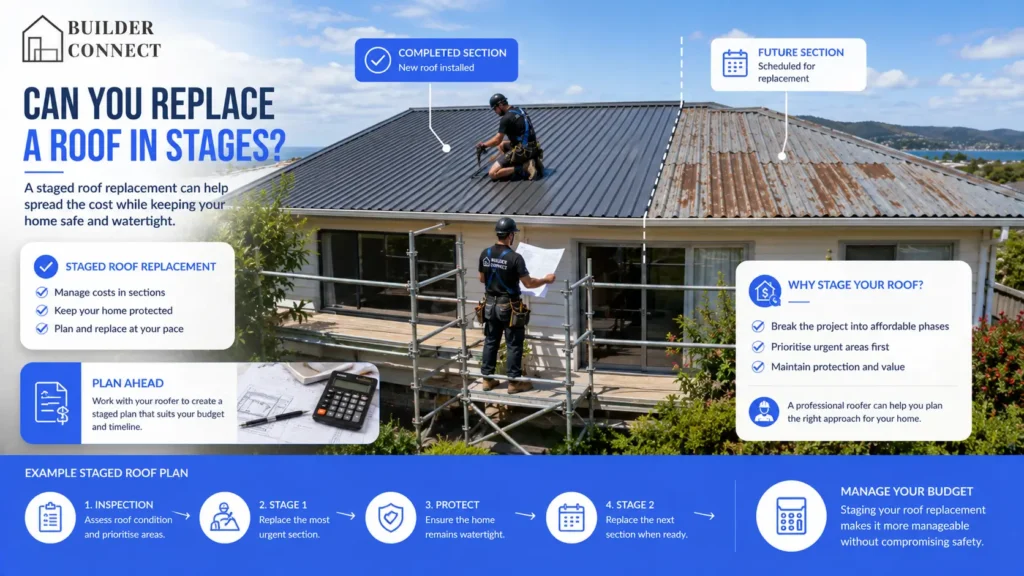
Can You Replace A Roof In Stages?
Replacing an entire roof at once is not always the only option. For some New Zealand homeowners, completing the work in stages can make the project more manageable when finances are limited. A staged roof replacement involves repairing or replacing one section first and completing the remaining sections later. While this approach can reduce the immediate financial burden, it is only suitable when the roof’s condition, design, and remaining lifespan make it a practical long-term solution. A professional roofing inspection is essential to determine whether staging the work will save money or create additional costs in the future.
When Staged Roofing Work May Be Practical
In certain situations, replacing a roof in stages can be a sensible way to protect your home while spreading costs over time. The key is ensuring that the remaining sections of the roof are still structurally sound and capable of performing well until the next stage is completed.
- One roof section has deteriorated faster: Different parts of a roof can age at different rates. Areas exposed to stronger sunlight, prevailing winds, salt air, or heavy rainfall may wear out years before the rest of the roof. If only one section has reached the end of its service life, replacing that area first may be a practical option.
- A home extension has its own roof structure: Many homes have extensions, garages, or additions built at different times. These areas often have separate roof framing and cladding, allowing them to be replaced independently without affecting the original roof.
- A weather-tight connection can be achieved: A qualified roofer should confirm that a secure weather-proof junction can be created between the new and existing roofing materials. Proper flashings, underlay connections, and drainage details are critical for preventing leaks where the two roof sections meet.
- The remaining roof still has useful service life: If an inspection shows that the unreplaced sections remain in good condition and are expected to last several more years with routine maintenance, delaying their replacement may be financially sensible.
- The project avoids unnecessary duplication: Staging works best when it does not require significant repeat costs. If scaffolding, equipment, and labour can be planned efficiently, homeowners may reduce the overall financial impact while still protecting the property.
When Staging May Cost More
Although staged replacement can reduce the initial expense, it is not always the cheapest option over the life of the project. In some cases, completing the roof in one project may result in lower overall costs.
- Scaffolding is required multiple times: One of the largest expenses on many roofing projects is safe access equipment. Installing and removing scaffolding more than once can add substantial costs that could have been avoided with a single replacement project.
- Material prices increase over time: Roofing materials, freight, and labour costs can change between stages. Waiting several years to complete the remaining work may mean paying considerably more than today’s prices.
- Roofing materials no longer match: Manufacturers occasionally discontinue colours, profiles, or product ranges. Even if the same roofing material is available later, slight differences in colour caused by weathering can make the completed roof appear uneven.
- Flashings and junctions require rebuilding: Every time a new roof section joins an older section, additional flashing work is required. If another stage is completed later, some of this work may need to be removed and rebuilt, increasing labour costs.
- Warranty coverage becomes more complicated: Roofing warranties generally apply to completed installations completed under specific conditions. Splitting the project into several stages may affect warranty coverage, particularly where new work connects with older roofing materials.
- The remaining roof deteriorates faster than expected: Even if a roof appears serviceable today, unexpected storm damage, corrosion, or hidden deterioration can shorten its remaining lifespan. This may force homeowners to complete the second stage earlier than planned, placing additional pressure on their budget.
Ask for Two Written Options
Before deciding whether to replace a roof in stages, ask your roofing contractor to prepare two detailed written proposals. Having both options allows you to compare the financial impact and long-term value before committing to either approach.
Request one quote for immediate essential repairs or partial roof replacement that keeps the home weather-tight while delaying the remaining work. Then request a second quote for replacing the entire roof during one project using the same roofing materials and specifications.
Do not focus only on the initial payment. Compare the total long-term cost, including scaffolding, labour, materials, flashings, warranties, future maintenance, and the likelihood of additional work between stages. In many cases, spending slightly more today may reduce the total amount you pay over the next decade, while in other situations a staged approach may provide the flexibility needed without compromising the safety or performance of your roof.
A staged roof replacement can be a practical solution when it is supported by a professional assessment and careful planning. Taking the time to compare both immediate and long-term costs will help you choose an option that protects your home, fits your budget, and reduces the risk of unexpected expenses later.
How To Reduce Roof Replacement Costs Without Cutting Corners
Reducing the cost of a roof replacement does not mean choosing the cheapest contractor or removing work that protects your home. The safest approach is to understand exactly what each quote includes, separate urgent work from optional improvements, and choose materials that suit your property. Careful planning can lower the total cost without compromising weather-tightness, safety, or long-term performance.
Compare at Least Two or Three Detailed Quotes
Roofing quotes can vary widely because contractors may calculate the roof area differently, recommend different materials, or exclude costs that another roofer includes. A low initial price may become more expensive once scaffolding, damaged timber, disposal, or flashing work is added.
Ask each contractor to provide a written, itemised quote based on the same project scope. This makes it easier to compare value rather than focusing only on the final figure.
Each quote should clearly identify:
- Roof area: Confirm the measured roof area rather than relying only on the home’s floor size. Roof pitch, extensions, valleys, and attached structures can increase the amount of roofing material required.
- Material and profile: The quote should name the roofing material, product range, and profile so you can compare equivalent options.
- Material thickness or specification: Small differences in material grade, coating, or thickness can affect durability, warranty coverage, and suitability for local conditions.
- Underlay: Check the type of roof underlay included and whether it suits the roof design, building use, and current requirements.
- Flashings: Confirm whether ridge, barge, apron, valley, chimney, wall, and roof-penetration flashings are included.
- Fixings: The quote should specify the type of screws, nails, clips, seals, or fasteners being used. Fixings must be compatible with the roofing material and local exposure conditions.
- Removal and disposal: Ask whether the price covers removing the existing roof, loading waste, transport, disposal fees, and site clean-up.
- Scaffolding and edge protection: Safe roof access can represent a significant part of the project cost. Confirm whether scaffolding, edge protection, safety rails, or access equipment are included.
- Timber repairs: Ask how damaged battens, purlins, fascia boards, roof framing, or substrate will be priced if problems are discovered after the old roofing is removed.
- Gutters and downpipes: Confirm whether these will be retained, repaired, removed, replaced, or reinstalled.
- Insulation work: Check whether insulation removal, replacement, or upgrades are included, especially if damaged or wet insulation is found.
- Consent-related costs: Ask whether the quote includes council fees, documentation, inspections, design work, or professional advice when these are required.
- Warranty: Review both the material warranty and the workmanship warranty. Check the duration, conditions, exclusions, and maintenance obligations.
- GST: Confirm whether GST is included in the stated price to avoid an unexpected increase.
- Exclusions: Ask the roofer to list anything not covered by the quote. Common exclusions may include hidden structural damage, asbestos-related work, electrical repairs, or internal ceiling repairs.
- Payment schedule: The quote should show the deposit, progress payments, final payment, and when each amount becomes due.
Do not assume two quotes include the same work simply because they both say “complete roof replacement.” A detailed scope protects you from hidden costs and makes it easier to identify where genuine savings can be made.
Separate Essential Work From Optional Upgrades
When your budget is limited, ask the roofer to separate work that is necessary for safety and weather-tightness from upgrades that mainly improve appearance or convenience. This allows you to protect the home first and consider non-essential changes later.
Essential work may include:
- Failed-roofing removal: Roofing that is badly corroded, cracked, damaged, or no longer weather-tight must be removed so the underlying roof can be inspected.
- Structural repairs: Rotten timber, damaged framing, failed battens, or weakened substrate should be repaired before new roofing is installed.
- Compliant underlay and flashings: These components help control moisture and direct water away from vulnerable roof junctions.
- Weather-tightness restoration: The completed roof must prevent rain from entering around edges, ridges, valleys, walls, vents, chimneys, and other penetrations.
- Safe access: Scaffolding and edge protection are essential project costs when they are required to complete the work safely.
Optional upgrades may include:
- Premium colours: Standard colour ranges may cost less than custom or specialised finishes while still providing suitable protection.
- Decorative profiles: Some roofing profiles are selected mainly for appearance and may cost more than practical standard options.
- New gutters: Existing gutters may be retained if they remain sound, correctly positioned, and suitable for the new roof.
- Skylights: Adding new skylights can increase material, flashing, installation, and maintenance costs.
- Exterior painting: Painting unrelated walls, fascia boards, or other exterior areas can often be scheduled as a separate project.
- Cosmetic alterations: Changes to roof lines, decorative trims, or architectural features may add cost without improving the roof’s core performance.
Ask for the quote to show essential and optional items separately. This gives you control over the budget and helps prevent useful but non-urgent upgrades from making the project unaffordable.
Choose Materials Based on Site Conditions
The cheapest roofing material is not always the most affordable over the life of the home. A product that is unsuitable for the site’s exposure, roof pitch, or existing structure may require more maintenance or earlier replacement.
Material selection should consider the following factors:
- Coastal exposure: Salt-laden air can accelerate corrosion. Homes near the coast may need roofing, coatings, and fixings designed for higher-corrosion environments.
- Wind zone: High-wind areas may require specific fixing patterns, roofing systems, or installation methods.
- Roof pitch: Some roofing profiles are suitable only above certain minimum roof pitches. Using an unsuitable profile can increase the risk of water entry.
- Existing structure: The roof framing must be able to support the selected material. A heavier roofing product may require structural assessment or strengthening.
- Rainfall: Roof design, flashings, gutters, and drainage capacity should suit local rainfall and the amount of water flowing from the roof.
- Metal compatibility: Different metals can react when they come into contact or when water runs from one material onto another. Gutters, flashings, fixings, and roofing should be compatible.
- Maintenance requirements: Some products need regular washing, recoating, inspection, or debris removal to maintain warranty coverage and performance.
- Expected lifespan: Compare the initial cost with the realistic service life, maintenance needs, and warranty conditions.
Ask the roofer to explain why the recommended material suits your home. A credible recommendation should be based on site conditions and product specifications rather than price alone.
Ask About Timing and Scheduling
Roofing companies may have quieter periods when scheduling is more flexible. It can be worth asking whether the project price changes during off-peak periods, but any potential saving should be weighed against the condition of the roof.
If the roof is still serviceable and not actively leaking, flexible scheduling may help you secure a suitable contractor or spread preparation costs over a longer period. If water is already entering the home, delaying essential work to wait for a seasonal discount can result in damage that costs more to repair.
Before work begins, confirm how the contractor will protect the property during roof removal and installation. Ask whether sections will be completed and made weather-tight each day, how exposed areas will be covered, and what happens if rain or strong winds interrupt the project.
Check Whether Repairing Gutters Is Enough
Water entering a home does not always mean the roof cladding has failed. Leaks can be caused by overflowing gutters, blocked downpipes, damaged flashings, loose fixings, failed seals, or poor drainage around roof junctions.
A proper inspection should trace the source of the water rather than relying only on where the stain appears inside the house. Water can travel along framing, underlay, or roofing components before becoming visible indoors.
Ask the roofer to inspect:
- Gutters: Look for blockages, rust, incorrect falls, overflowing sections, loose brackets, and failed joints.
- Downpipes: Check whether downpipes are blocked, undersized, damaged, or unable to discharge water effectively.
- Flashings: Inspect roof-to-wall junctions, valleys, chimneys, skylights, vents, and pipe penetrations.
- Roof drainage: Confirm that water can move freely from the roof into the guttering system without pooling or backing up.
- Fixings and seals: Check for loose fasteners, damaged washers, cracked sealants, and gaps around penetrations.
If the main roofing material remains sound, repairing the drainage or flashing problem may restore weather-tightness at a much lower cost than a full replacement. The key is obtaining an accurate diagnosis from a qualified roofing professional before committing to major work.
The best savings come from choosing the right scope, not simply the lowest price. A detailed quote, accurate diagnosis, suitable materials, and clear separation between essential work and optional upgrades can protect your home while keeping the roof-replacement budget under control.

How To Choose A Trustworthy Roofer When Money Is Tight
Choosing a roofer can feel overwhelming when your budget is already stretched. It may be tempting to accept the cheapest quote or hire the first contractor who promises a quick solution, but making a rushed decision can lead to poor workmanship, unexpected costs, or even roofing scams. Taking the time to check a roofer’s qualifications, compare written quotes, and understand the contract can help you protect both your home and your finances. A reliable roofing contractor will be transparent about their experience, pricing, and the work they recommend, giving you confidence that your money is being spent on a lasting solution.
Check the Roofer’s Credentials
Before agreeing to any roofing work, make sure you know exactly who you are hiring. A professional roofing contractor should be willing to answer your questions, provide supporting documentation, and explain their recommendations without pressure. Verifying a contractor’s credentials helps reduce the risk of poor workmanship and gives you greater confidence that the work will meet New Zealand building standards.
When comparing roofers, look for more than just a competitive price.
- Business details: Confirm the company’s legal business name, physical address, phone number, email address, and website. Legitimate businesses are transparent about how customers can contact them before, during, and after the project.
- Roofing experience: Ask how long the contractor has been installing or repairing roofs similar to yours. Experience with your roofing material, whether it is long-run metal, concrete tiles, or another system, can improve the quality of the finished work.
- Recent local references: Request contact details for recent customers in your area or ask to see completed projects. Speaking with previous clients can provide valuable insight into workmanship, communication, cleanliness, and whether the project stayed within budget.
- Public liability insurance: Ask for evidence of current public liability insurance. This helps protect both the contractor and the homeowner if accidental property damage or injuries occur while work is being carried out.
- Warranties and manufacturer accreditation: Find out what workmanship warranty is provided and whether the roofer is approved or accredited by the manufacturer of the roofing products they install. Manufacturer-approved installers are often familiar with correct installation methods and warranty requirements.
- Licensed Building Practitioner status: Some roofing work in New Zealand falls under Restricted Building Work and must be carried out or supervised by an appropriately licensed practitioner. Roofing is one of the recognised Licensed Building Practitioner licence classes, so verify the contractor’s licence where required and ask whether they will personally supervise the project if applicable.
A trustworthy roofer will usually welcome these questions because they demonstrate professionalism and help build confidence with potential customers.
Get the Contract in Writing
Even if you know the contractor personally or the project seems straightforward, every roofing job should be supported by a written contract. A detailed agreement reduces misunderstandings and provides a clear record of what both parties have agreed to before work begins.
Take time to read every section carefully and ask questions if anything is unclear.
A well-prepared roofing contract should clearly explain the following:
- Scope of work: A detailed description of exactly what work will be completed, including repairs, replacement areas, demolition, disposal, flashing work, gutter work, and any additional services.
- Materials: The roofing products, profiles, colours, thicknesses, underlay, flashings, fasteners, and other materials that will be installed.
- Project timeline: Expected start dates, estimated completion dates, and any circumstances that could reasonably delay the project, such as severe weather or material shortages.
- Total price: The agreed project cost, including whether GST is included, and any assumptions used when preparing the quotation.
- Variations: How changes to the original scope will be handled if hidden damage or additional work is discovered during construction.
- Deposit requirements: The amount of any deposit, when it is due, and what it covers.
- Payment stages: A clear schedule explaining when progress payments are required and what milestones must be completed before each payment becomes due.
- Site protection: Measures the contractor will take to protect landscaping, driveways, vehicles, neighbouring properties, and other parts of your home while work is underway.
- Waste removal: Confirmation that old roofing materials, packaging, nails, and construction waste will be removed from the site and disposed of appropriately.
- Warranty information: Details of both workmanship warranties and manufacturer product warranties, including any conditions that apply.
- Dispute resolution: The process that will be followed if disagreements arise regarding workmanship, pricing, delays, or contract obligations.
A written contract protects both the homeowner and the contractor by setting clear expectations from the beginning. It also provides a useful reference if questions arise later in the project.
Watch for Roofing Scam Warning Signs
Financial pressure can make homeowners more vulnerable to dishonest contractors who promise unusually low prices or immediate solutions. While many roofing companies operate professionally, it is important to recognise warning signs before signing a contract or making a payment.
Be cautious if you notice any of the following:
- Unexpected door-to-door offers: Be wary of contractors who arrive uninvited after a storm and claim your roof needs urgent replacement without carrying out a proper inspection.
- Pressure to sign immediately: Reputable roofers allow homeowners time to compare quotes, ask questions, and consider their options before making a decision.
- Large upfront cash deposits: While reasonable deposits are common, requests for unusually large cash payments before work begins should be treated carefully.
- Missing business information: Contractors who cannot provide a registered business name, physical address, or reliable contact information may be difficult to reach if problems develop later.
- No written quotation: Verbal estimates provide little protection. Professional contractors should always supply a detailed written quote explaining the proposed work and associated costs.
- Unclear material descriptions: Quotes that simply state “new roofing” without identifying products, profiles, specifications, or brands make it difficult to compare contractors fairly.
- Guaranteed insurance approval: No roofing contractor can guarantee that an insurance company will approve or fully fund a claim. Coverage depends on your policy and the cause of the damage.
- Prices that seem too good to be true: A quote that is significantly lower than every other estimate may indicate missing work, lower-quality materials, inexperienced labour, or unexpected costs being added later.
- Requests for full payment before work starts: Reputable contractors generally follow an agreed payment schedule rather than demanding the full project cost before any work has been completed.
If something feels rushed, unclear, or inconsistent, trust your instincts and obtain another opinion. Comparing multiple detailed quotes gives you a better understanding of reasonable pricing and helps identify contractors who communicate openly and professionally.
Taking the time to choose the right roofer can save you significant money, stress, and future repairs. A qualified, transparent contractor will explain your options clearly, provide detailed documentation, and recommend solutions that fit both your home’s condition and your budget, allowing you to move forward with greater confidence.

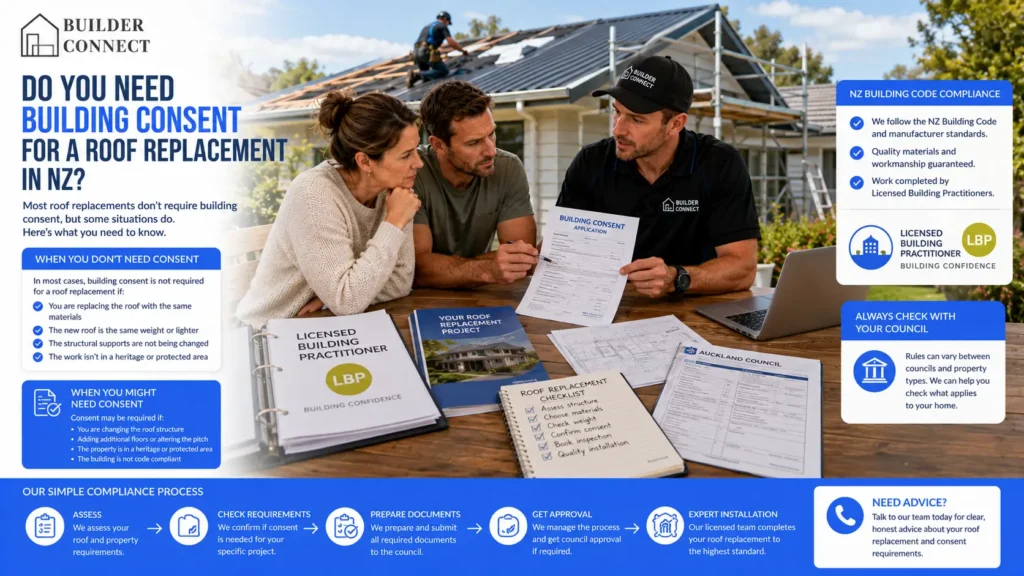
Do You Need Building Consent For A Roof Replacement In NZ?
Before replacing a roof, it is important to understand whether building consent is required for your project. Many homeowners assume every roof replacement follows the same rules, but that is not always the case. In New Zealand, the need for building consent depends on the type of work being carried out, whether the structure is being altered, and whether the project affects the building’s compliance with the Building Code. Taking the time to confirm the requirements before work starts can help you avoid unexpected delays, additional costs, and compliance issues later.
Why the Answer Depends on the Work
Not every roof replacement requires building consent. In many cases, replacing existing roof cladding with the same type of material on an unchanged roof may have different requirements from projects that involve structural modifications or significant design changes. The scope of the work is what determines whether additional approvals are necessary.
If your roofing project changes important parts of the building, the consent process may become more complex. Alterations that affect structural performance, weather protection, or fire safety often require additional assessment to ensure the completed work complies with the New Zealand Building Code.
Some of the factors that may influence whether building consent is required include:
- Structural framing: Replacing or modifying rafters, trusses, purlins, or other load-bearing components may require consent because these elements support the roof structure.
- Roof shape: Changing the pitch, height, or overall design of the roof can affect structural performance, drainage, and wind loading, which may trigger consent requirements.
- Building load: Installing heavier roofing materials than the existing roof may increase the load placed on the structure. The framing may need engineering assessment to confirm it can safely support the additional weight.
- Weathertightness systems: Changes to roof underlays, flashings, junctions, skylights, or other moisture-management systems may require careful assessment to ensure the home remains weather-tight.
- Fire performance: Certain roofing systems or construction methods may have fire-resistance requirements that must continue to meet the Building Code after the work is completed.
- Major alterations: Projects involving extensions, additions, or significant renovations often require building consent because the roof forms part of a larger construction project.
Even if your roofing contractor believes consent is unnecessary, it is wise to verify this before signing a contract. Requirements can vary depending on the property’s design, location, and the nature of the work.
If you are unsure, contact your local council or speak with a qualified building professional before construction begins. Receiving the correct advice early can prevent expensive changes after work has already started.
When a Licensed Building Practitioner May Be Required
Some roofing work in New Zealand falls under Restricted Building Work, particularly when it affects the home’s primary structure or external moisture-management system. In these situations, the work must be completed or supervised by a Licensed Building Practitioner (LBP) who holds the appropriate licence class, as required under New Zealand building regulations.
Using an appropriately licensed professional provides confidence that the work is being carried out by someone who has demonstrated the necessary skills and knowledge for that type of construction. It also helps protect homeowners by ensuring important documentation is completed correctly throughout the project.
When your roofing work involves Restricted Building Work, you should keep accurate records from the beginning of the project until long after it has been completed.
Important documents to retain include:
- Contracts: Keep signed agreements that clearly outline the scope of work, pricing, responsibilities, payment terms, and project timeline.
- Product information: Retain manufacturer specifications, installation instructions, and technical data for roofing materials used during construction.
- Warranties: Store both manufacturer warranties and workmanship warranties in a safe location for future reference if repairs or warranty claims become necessary.
- Consent records: Keep copies of all building consent documents, approvals, inspection records, and correspondence with your local council where applicable.
- Records of Work: If Restricted Building Work has been completed, retain the official Record of Work supplied by the Licensed Building Practitioner. This document confirms who carried out or supervised the work.
- Invoices and photographs: Save all invoices, payment records, and progress photographs showing each stage of the roofing project. These records can be valuable for insurance claims, future property sales, warranty enquiries, or maintenance planning.
Maintaining complete project records can make future renovations, insurance claims, and property transactions much smoother. It also demonstrates that the roofing work was completed responsibly and in accordance with the applicable building requirements.
Understanding the consent process before work begins allows you to plan your project with greater confidence, choose the right professionals, and avoid unnecessary compliance issues that could delay your roof replacement or increase overall costs.
What Happens If You Delay Replacing A Failing Roof?
Putting off a roof replacement may seem like the only option when money is tight, but delaying necessary work can often lead to more expensive problems. A roof is your home’s first line of defense against rain, wind, and changing weather conditions. Once it begins to fail, water can reach parts of the house that are difficult and costly to repair. The key is understanding whether your roof can safely continue performing its job or whether the risks of waiting outweigh the savings. A professional inspection can help you make that decision based on the roof’s actual condition rather than assumptions.
Potential Costs of Waiting
A roof leak rarely stays in one place. Water can travel through insulation, roof framing, and wall cavities before it becomes visible inside your home. By the time stains appear on a ceiling, the underlying damage may already be more extensive.
- Damaged Ceiling Linings: Water stains, bubbling paint, sagging plasterboard, and weakened ceiling materials often require replacement rather than simple repairs if moisture continues to spread.
- Wet or Ineffective Insulation: Insulation loses much of its thermal performance when it becomes wet. This can make your home harder to heat during colder months and may increase ongoing energy costs until the insulation is replaced.
- Mould and Moisture Problems: Persistent moisture creates ideal conditions for mould growth inside roof spaces, wall cavities, and ceilings. Besides damaging building materials, mould can affect indoor air quality and become difficult to remove once it spreads.
- Rotten Framing: Timber roof framing exposed to long-term moisture may begin to decay. Structural repairs are generally more expensive than replacing roof cladding alone because they involve additional labour and materials.
- Electrical Hazards: Water entering ceiling spaces can come into contact with electrical wiring, lighting, or fittings. If you suspect water is affecting electrical components, arrange professional assistance immediately rather than attempting repairs yourself.
- Damage to Walls and Flooring: Moisture does not stop at the ceiling. Water can run down internal walls, damage paintwork, warp timber flooring, stain carpets, and affect cabinetry or other interior finishes.
- Higher Heating Costs: A roof that allows moisture into the insulation can reduce your home’s energy efficiency. Heating systems often need to work harder to maintain comfortable indoor temperatures.
- Larger Repair Scope: A problem that begins as a small leak can eventually require additional work involving insulation, framing, ceilings, gutters, or interior repairs. Addressing issues early often limits the amount of work required.
- Reduced Property Marketability: Buyers are often cautious about properties with obvious roofing problems. Visible leaks or signs of water damage may reduce buyer confidence, delay a sale, or result in lower offers after building inspections.
- Insurance Complications: Insurance policies generally distinguish between sudden insured events and damage caused by gradual deterioration or poor maintenance. Delaying necessary repairs could make future claims more complicated if preventable damage continues to worsen.
When Delaying May Be Reasonable
Not every ageing roof requires immediate replacement. In some situations, a qualified roofer may confirm that a professionally completed repair can safely extend the roof’s service life while you prepare financially for future replacement.
A delay may be reasonable when the roof remains structurally sound, the leak has been correctly identified, and the repair fully addresses the source of water entry rather than simply hiding the symptoms. Temporary fixes should not be confused with permanent repairs, so ask your contractor to explain how long the repair is expected to last under normal conditions.
Regular inspections also become more important when replacement has been postponed. Having the roof checked after major storms and during scheduled maintenance can identify developing issues before they become emergencies. This proactive approach helps protect both your home and your future replacement budget.
Delaying replacement also makes more sense when you are actively saving toward the project. Setting aside money each month allows you to prepare for planned work rather than facing an unexpected financial emergency if the roof deteriorates more quickly than expected.
Create a Roof Replacement Plan
A clear plan can reduce uncertainty and help you prepare financially while keeping your home protected. Rather than waiting until the roof fails completely, create a simple replacement plan that can be updated as circumstances change.
Your plan should include:
- Current Condition: Record the roof’s overall condition based on a professional inspection, including photographs and any identified defects.
- Essential Repairs: List repairs that should be completed immediately to maintain weather-tightness and prevent further damage.
- Expected Replacement Date: Estimate when full replacement is likely to become necessary based on professional advice and the remaining service life of the roofing material.
- Target Budget: Establish a realistic budget using recent written quotations rather than rough estimates so you understand the likely financial commitment.
- Monthly Savings Amount: Calculate a practical monthly savings goal that gradually builds your replacement fund while fitting within your household budget.
- Annual Inspection Schedule: Arrange regular roof inspections to monitor changes in condition and identify new issues before they become major repairs.
- Preferred Material: Decide which roofing material best suits your property’s location, climate, maintenance preferences, durability expectations, and long-term budget.
- Two or Three Potential Contractors: Research reputable local roofing companies, compare qualifications, warranties, and customer reviews, and keep several trusted options available when you are ready to proceed.
Planning ahead gives you greater control over both the timing and cost of replacing your roof. Instead of reacting to an emergency, you can make informed decisions based on expert advice, realistic budgeting, and the actual condition of your home, helping you protect your property while avoiding unnecessary financial pressure.
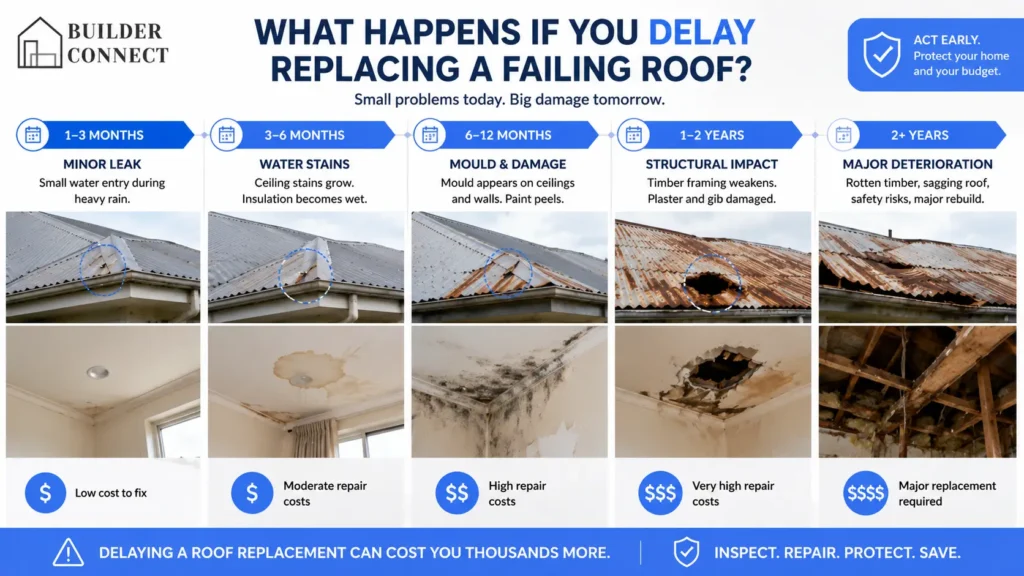
A Practical Action Plan When You Cannot Afford A New Roof
If you need a new roof but cannot afford it in NZ, having a clear plan can help you protect your home while making informed financial decisions. Rather than rushing into a costly replacement or delaying necessary work, focus on the most urgent issues first. By following a structured approach, you can reduce further damage, explore available funding options, and choose the most suitable long-term solution for your property.
Step 1 – Address Immediate Safety and Water Entry
When a roof begins leaking, your first priority should be protecting the people inside your home and preventing additional damage. Even a small leak can quickly spread through insulation, ceilings, walls, and electrical systems if left unattended.
- Protect Your Household: Move furniture, electronics, important documents, and other valuable belongings away from leaking areas. Place buckets or containers under active drips to minimise water damage until repairs can be arranged.
- Stay Safe Around Electricity: Water and electricity are a dangerous combination. If water is leaking near ceiling lights, switches, or electrical wiring, switch off the affected circuit if it is safe to do so and contact a qualified electrician immediately.
- Reduce Further Water Damage: If safe access is available from inside the property, place plastic sheeting beneath the leak to help direct water into containers. Avoid climbing onto the roof during wet or windy conditions.
- Contact Emergency Trades: If water is entering the property rapidly or structural damage is suspected, contact a professional roofing contractor as soon as possible. Emergency repairs may prevent significantly larger repair costs later.
- Document All Damage: Take clear photographs and videos of roof damage, interior leaks, damaged ceilings, walls, insulation, and personal belongings. Record the date and weather conditions, as this information may be useful for insurance claims or future inspections.
Taking these immediate steps helps protect both your family and your property while buying valuable time to organise professional repairs or replacement.
Step 2 – Get a Professional Roof Assessment
Many homeowners assume a leaking roof automatically means a complete replacement is necessary. In reality, some roofs only require targeted repairs, while others have reached the end of their practical lifespan. A professional inspection provides the information needed to make the right decision.
Ask an experienced roofing contractor to inspect the entire roofing system rather than focusing only on the visible leak. Water often travels beneath roofing materials before appearing inside the house, making the source difficult to identify without a thorough assessment.
Request a written roof condition report that includes:
- Overall Roof Condition: An explanation of the roof’s current condition and estimated remaining service life.
- Cause Of The Leak: Identification of the source of water entry and any contributing issues.
- Repair Recommendations: A detailed explanation of repairs that could safely extend the roof’s lifespan.
- Replacement Recommendations: Clear reasons why replacement may be necessary if repairs are no longer practical.
- Photographic Evidence: Images showing damaged roofing materials, flashing, fixings, gutters, or structural concerns.
- Cost Options: Separate pricing for immediate repairs, temporary repairs, and complete roof replacement where appropriate.
If the recommendation is a full replacement, consider obtaining a second opinion from another reputable roofing company. Comparing professional assessments can help you feel more confident before making a significant financial commitment.
Step 3 – Check Insurance
Before authorising major roofing work, review whether your insurance policy may provide any cover. While many policies do not cover gradual deterioration or lack of maintenance, they may cover damage caused by sudden insured events such as storms, falling trees, hail, or accidental impacts.
Contact your insurer as soon as possible if you believe the damage may be covered. Early communication allows the insurer to explain the claims process and advise whether an assessor needs to inspect the property before permanent repairs begin.
Prepare the following information:
- Photos And Videos: Clear images showing both exterior and interior damage.
- Roof Inspection Report: A professional assessment explaining the cause and extent of the damage.
- Weather Information: Dates of storms or significant weather events if applicable.
- Repair Quotes: Written estimates from qualified roofing contractors.
- Emergency Repair Receipts: Records of temporary work completed to prevent further damage.
Even if the roof itself is not covered, some policies may cover resulting damage inside the home. Understanding your policy before approving major work can prevent unexpected costs and claim complications.
Step 4 – Investigate Financial Assistance
If replacing your roof is beyond your current budget, it is worth exploring available financial assistance before making a decision.
If the repair is urgent and essential for maintaining a safe and healthy home, contact Work and Income to discuss your eligibility. Assistance depends on your personal circumstances, income, assets, and the urgency of the repair.
You may also wish to speak with your bank about suitable home-repair finance. Existing customers sometimes have access to home-loan top-ups, renovation lending, or other financing options that may offer lower interest rates than unsecured borrowing.
If a roofing contractor offers finance, compare it carefully before signing any agreement.
Consider:
- Interest Rate: Understand both the advertised rate and the total borrowing cost.
- Repayment Schedule: Confirm the monthly repayments and overall loan term.
- Fees And Charges: Check for application fees, administration fees, or early repayment costs.
- Total Repayment Amount: Focus on the total amount you will repay rather than just the weekly payment.
Taking time to compare funding options may save thousands of dollars over the life of the loan.
Step 5 – Compare Detailed Quotes
Choosing the right roofing contractor involves much more than comparing prices. Two quotes with similar totals may include very different scopes of work, materials, and warranties.
Request at least two or three detailed written quotations so you can compare each proposal fairly.
Review each quote carefully for:
- Scope Of Work: Exactly what work will be completed and what is excluded.
- Roofing Materials: Brand, profile, thickness, and product specifications.
- Labour Costs: Installation, removal of existing roofing, and disposal costs.
- Scaffolding: Whether safe access equipment is included.
- Repairs: Timber replacement, flashing work, gutter repairs, or structural repairs included in the price.
- Warranty: Manufacturer warranties and workmanship guarantees.
- Project Timeline: Estimated start date and completion timeframe.
- Total Cost: GST, optional upgrades, and any provisional sums.
A detailed quotation helps reduce misunderstandings and allows you to compare value rather than simply selecting the lowest price.
Step 6 – Complete the Most Urgent Work
If you cannot immediately afford a full roof replacement, focus on work that protects your home from further deterioration.
Stopping active leaks and restoring weather tightness should always take priority over cosmetic improvements. Delaying decorative upgrades is often a sensible financial decision when the primary goal is preventing structural damage.
Prioritise work such as:
- Active Leak Repairs: Stop water entering the property.
- Damaged Flashings: Replace failed flashings around roof penetrations and junctions.
- Loose Roofing Materials: Secure or replace damaged sheets or tiles that could allow further water entry.
- Emergency Weatherproofing: Install temporary protective measures where appropriate until permanent work can be completed.
Once the roof is secure and weatherproof, you can begin planning the larger replacement project with less pressure and greater financial flexibility.
Step 7 – Plan the Full Replacement
Even if you cannot replace the roof immediately, creating a realistic replacement plan allows you to prepare financially while monitoring the roof’s condition.
Develop a simple plan that includes:
- Replacement Timeline: Set an achievable target based on the roof’s current condition.
- Savings Goal: Determine how much needs to be saved each month toward future replacement.
- Inspection Schedule: Arrange regular inspections to identify any new problems before they become emergencies.
- Preferred Roofing Material: Research materials suitable for your home’s location, climate, and budget.
- Contractor Shortlist: Keep contact details and quotations from reputable roofing companies for future reference.
- Project Records: Store inspection reports, warranties, invoices, insurance documents, and photographs together in one location for easy access.
Planning ahead gives you more control over the project and reduces the likelihood of having to make expensive decisions during an emergency.
Taking a structured approach allows you to deal with immediate roofing problems while planning confidently for the future. By focusing on safety, obtaining professional advice, comparing your financial options, and making informed decisions, you can protect your home and work towards a roof replacement that fits both your property’s needs and your budget.
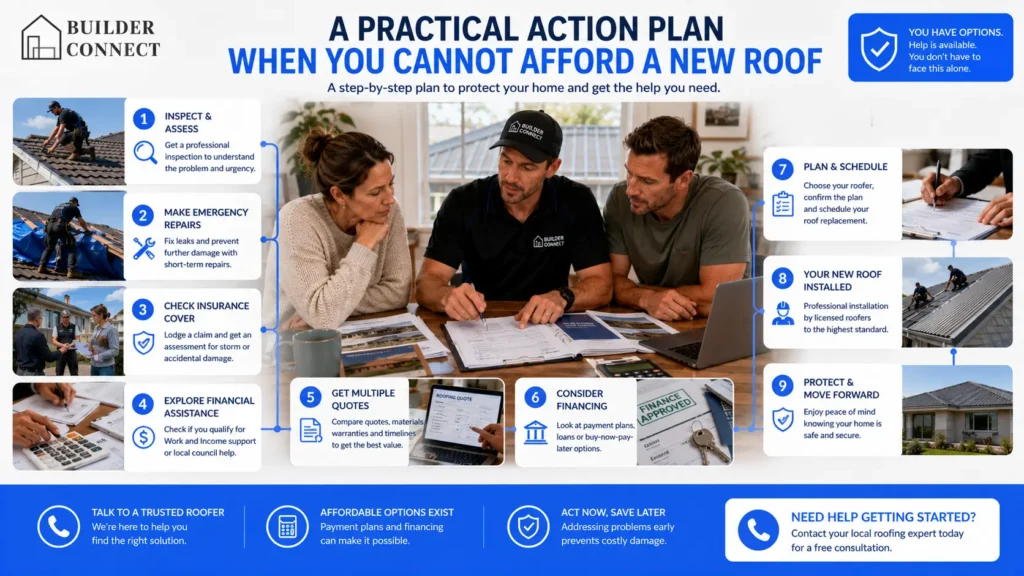
Get A Clear Roof Assessment Before Making A Financial Decision
Before committing to the cost of a new roof, it is important to understand exactly what condition your existing roof is in. Many homeowners assume that a leak or visible damage automatically means a full roof replacement is required, but that is not always the case. A thorough roof assessment from an experienced roofing professional can identify the actual cause of the problem, explain whether repairs are still practical, and help you avoid spending more than necessary. Making a financial decision based on accurate information gives you confidence that you are investing in the right solution rather than reacting to the first quote you receive.
Understand the True Condition of Your Roof
A professional roof inspection looks beyond the obvious signs of damage. While a missing sheet, cracked tile, or water stain may be easy to spot, the underlying cause may be hidden beneath the roofing material or within the roof structure itself.
An experienced roofer should inspect:
- Roofing material: Check for rust, cracked tiles, damaged sheets, loose fixings, and general wear.
- Flashings: Examine areas around chimneys, skylights, vents, and roof junctions where leaks commonly develop.
- Roof structure: Look for sagging sections, timber deterioration, or structural movement that could affect the roof’s performance.
- Drainage system: Assess gutters, downpipes, valleys, and drainage paths to ensure water is flowing away from the home properly.
- Signs of moisture: Identify hidden water damage, mould, or deteriorated insulation caused by ongoing leaks.
This assessment provides a much clearer picture of the roof’s remaining service life and helps determine the most practical course of action.
Request Separate Pricing for Each Option
Instead of accepting a single quote for a complete roof replacement, ask the roofing contractor to provide separate pricing for different solutions. This allows you to compare costs and choose the option that best matches your budget and the roof’s actual condition.
Immediate Repairs
If the roof is still structurally sound, immediate repairs may stop active leaks and prevent further damage while you plan for future work.
These repairs may include:
- Replacing damaged materials: Repairing broken tiles, damaged metal sheets, or loose roofing components.
- Repairing flashings: Sealing vulnerable roof penetrations where water commonly enters.
- Securing loose sections: Tightening or replacing fixings that have failed over time.
- Clearing drainage: Removing blockages that allow water to back up onto the roof.
Immediate repairs are often the most cost-effective way to protect the home while buying time to prepare for larger work.
Short-Term Life Extension
If the roof is approaching the end of its service life but is not yet beyond repair, a roofer may recommend work that extends its usable life for several more years.
Possible options include:
- Targeted repairs: Replacing sections that have deteriorated while leaving sound areas intact.
- Maintenance work: Repairing gutters, flashings, and drainage components that contribute to leaks.
- Preventative improvements: Addressing minor issues before they become major structural problems.
This approach can be useful when you need additional time to save for a complete replacement or arrange suitable financing.
Full Roof Replacement
A complete roof replacement may be the safest and most economical option when deterioration is widespread or repeated repairs are no longer delivering reliable results.
A written replacement quote should clearly explain:
- Materials: The roofing products and specifications being proposed.
- Scope of work: Everything included in the project, from removal to installation.
- Additional work: Any timber repairs, insulation upgrades, or gutter replacement if required.
- Warranties: Manufacturer and workmanship warranty details.
- Project timeline: Estimated start date and expected completion period.
Having separate pricing allows you to compare short-term and long-term costs instead of feeling pressured into one solution.
Prioritise the Right Decisions
When finances are limited, focusing on the correct priorities can prevent unnecessary expenses while protecting your home.
- Safety: Address any issues that create immediate risks, such as unstable roofing materials, structural movement, or water near electrical systems.
- Weather tightness: Stop active leaks as quickly as possible to reduce damage to ceilings, insulation, walls, and flooring.
- Accurate diagnosis: Make decisions based on a professional inspection rather than assumptions or visible symptoms alone.
- Suitable funding: Explore insurance, payment plans, bank lending, or available financial assistance before committing to major work.
- Long-term value: Consider whether repeated repairs will eventually cost more than replacing the roof once with a durable, long-lasting solution.
Following this order helps ensure your money is spent where it delivers the greatest benefit.
Compare Recommendations Before Making a Commitment
Roof replacement is a significant investment, so there is value in comparing professional opinions before making a final decision. If one contractor recommends replacing the entire roof while another believes repairs are still practical, ask both to explain their reasoning with photographs and written findings.
A detailed roof condition report should include:
- Current condition: An assessment of the overall roof and any structural concerns.
- Evidence: Photographs showing damaged areas and the causes of leaks where possible.
- Recommended work: A clear explanation of what should be repaired or replaced.
- Expected lifespan: An estimate of how long repairs or the existing roof may reasonably last.
- Cost options: Separate pricing for repairs, life-extension work, and complete replacement.
- Future planning: Guidance on when replacement is likely to become necessary if repairs are chosen now.
A well-documented report allows you to compare quotes fairly and make decisions based on evidence rather than sales pressure.
Take the time to understand your roof before committing to a major expense. Booking a professional roof inspection, requesting a written condition report, and comparing repair and replacement options can help you make a confident decision that protects both your home and your budget. Ask the roofer what work is essential now, what can safely wait, and which option offers the best long-term value for your situation.
Do not wait for a small roof problem to become major structural or interior damage. Request a professional roof assessment and a clear written breakdown of urgent repairs, short-term options, and full replacement costs. Our experienced roofing team can help you understand what needs immediate attention, what may safely wait, and which solution offers the best long-term value for your home and budget.
References
- Work and Income New Zealand – Home Repairs and Maintenance
https://www.workandincome.govt.nz/eligibility/urgent-costs/house-maintenance.html
(workandincome.govt.nz) - Consumer Protection NZ – Insurance
https://www.consumerprotection.govt.nz/help-product-service/managing-money/insurance
(consumerprotection.govt.nz) - Building Performance NZ – Protection for Homeowners
https://www.building.govt.nz/getting-started/your-rights-and-obligations/homeowner-rights-and-obligations/know-your-rights-consumers/protection-for-homeowners
(building.govt.nz) - Consumer Protection NZ – Home Renovation and Repair
https://www.consumerprotection.govt.nz/help-product-service/home-renovation-repair
(consumerprotection.govt.nz
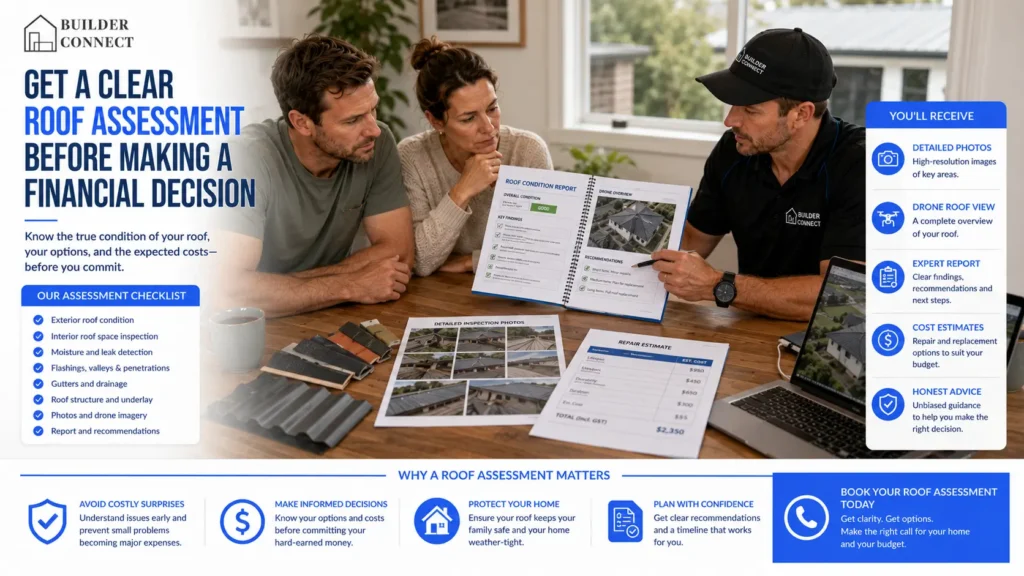
FAQs: About I Need A New Roof But Can’t Afford It NZ
Conclusion
Replacing a roof can feel overwhelming, especially when finances are already stretched, but making informed decisions early can help prevent more costly problems later. Whether you are comparing roof replacement cost NZ estimates, looking for help with roof repairs NZ, exploring roof repair financial assistance NZ, or arranging emergency roof repair, the first step should always be a professional roof inspection NZ to determine whether you should repair or replace a roof. From checking home insurance roof replacement eligibility and Work and Income roof repairs assistance to comparing roof replacement payment plans, roof finance NZ options, and affordable roofing options, there are several ways to manage the cost while protecting your home. Obtaining detailed roofing quotes from a licensed roofer NZ, understanding Licensed Building Practitioner roofing requirements, confirming whether building consent for reroofing applies, and using temporary roof repairs when appropriate can all help you make confident decisions. By taking action early and exploring available government help for home repairs and essential home maintenance assistance where you qualify, you can reduce the risk of further damage and plan a reroofing New Zealand project that suits both your property and your budget.
Find A Professional Roofing Company Near You!
- Auckland Roofing Company
- Cambridge Roofing NZ
- Central Otago Roofing Services
- Hamilton Roofing Services
- Hastings Roofing Company
- Hawkes Bay Roofing Company
- Kapiti Coast Roofing Services
- Lower Hutt Roofing Services
- Napier Roofing Company
- Nelson Roofing Company
- New Plymouth Roofing Company Taranaki
- North Shore Roofing Company
- Orewa Roofing Company
- Porirua Roofing Services
- Roof Painting Company Auckland
- Roof Repairs Manukau
- Roof Repairs Takanini
- Roofers Papakura
- Roofing Company Invercargill
- Roofing Contractors Northland
- Roofing Contractors South Auckland
- Roofing Contractors Whangarei
- Roofing Palmerston North
- Roofing Waikato
- Roofing Walkworth
- Roofing Wellington
- Te Awamutu Roofing
- Tile Roofing Christchurch
- Upper Hutt Roofing Services
- Warkworth Roofing Company

About the Author:
Mike Veail is a recognized digital marketing expert with over 6 years of experience in helping tradespeople and small businesses thrive online. A former quantity surveyor, Mike combines deep industry knowledge with hands-on expertise in SEO and Google Ads. His marketing strategies are tailored to the specific needs of the trades sector, helping businesses increase visibility and generate more leads through proven, ethical methods.
Mike has successfully partnered with numerous companies, establishing a track record of delivering measurable results. His work has been featured across various platforms that showcase his expertise in lead generation and online marketing for the trades sector.
Learn more about Mike's experience and services at https://theleadguy.online or follow him on social media: