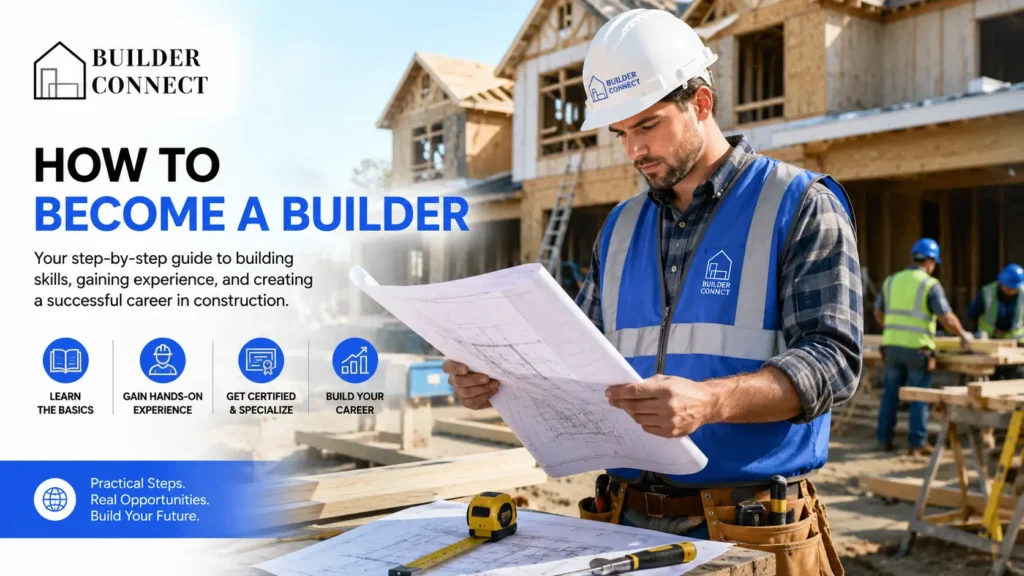
Welcome to your complete guide on how to become a builder, where you’ll learn exactly what it takes to enter and succeed in the construction industry whether you’re starting from scratch or considering a career change. Becoming a builder is more than just working with tools, it’s about developing practical skills, gaining real-world experience, and understanding how to manage projects from start to finish. In this guide, we’ll break down the essential steps, training paths, skills, and opportunities available so you can confidently navigate your journey, avoid common mistakes, and build a stable, rewarding career in a high-demand field.
To become a builder, start by learning basic construction skills through trade school or hands-on experience, then complete an apprenticeship to gain practical knowledge. Choose a specialization, obtain any required licenses or certifications, and build experience on real projects before advancing or starting your own building business.
- What Does A Builder Do? (Roles, Responsibilities, And Career Paths)
- Skills You Need to Become A Builder
- Education And Training Paths To Become A Builder
- Step-by-Step: How To Become A Builder
- Certifications, Licenses, And Legal Requirements
- How Long Does It Take To Become A Builder?
- How Much Do Builders Earn? (Salary and Income Potential)
- Common Challenges And How To Overcome Them
- Tips For Succeeding As A Builder
- References
- FAQs: About How To Become A Builder
- Conclusion
- Find A Professional Builders Company Near You!
What Does A Builder Do? (Roles, Responsibilities, And Career Paths)
A builder plays a central role in turning construction plans into finished structures, whether it’s a home, commercial space, or renovation project. The job goes beyond physical labor and involves coordination, decision-making, and problem-solving at every stage of a project. Understanding the different types of builders and their day-to-day responsibilities will help you see where you might fit in the industry and what path aligns with your skills and goals.
Common Types of Builders
Not all builders follow the same path, and the role can vary depending on the type of projects they handle and their level of responsibility. Here are the most common builder types you’ll come across in the construction industry.
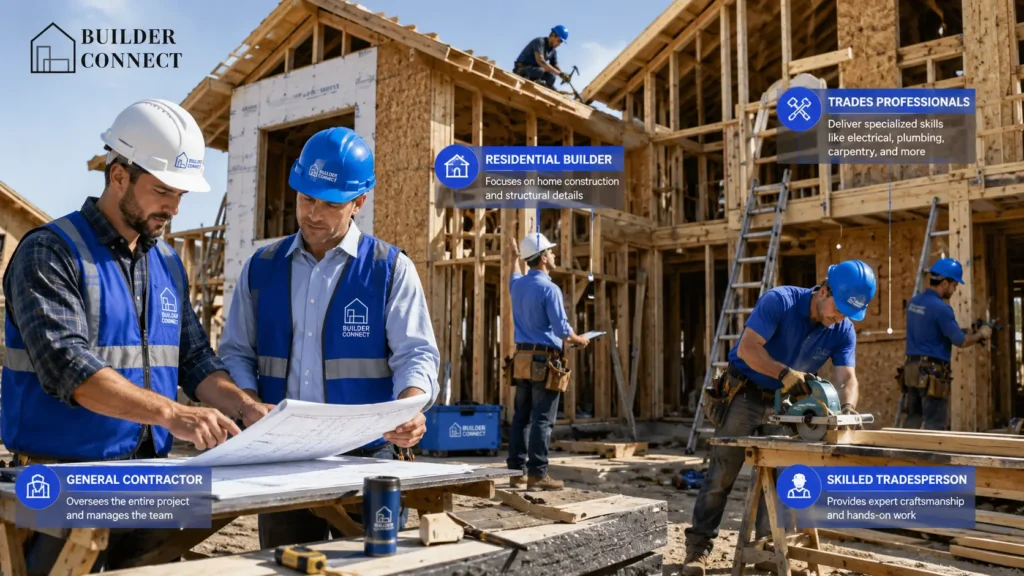
- General contractor: A general contractor oversees the entire construction process from start to finish. They coordinate subcontractors, manage schedules, handle permits, and ensure the project stays within budget. This role requires strong leadership and project-management skills.
- Residential vs commercial builder: Residential builders focus on homes, apartments, and small housing projects, while commercial builders work on larger-scale developments such as offices, retail spaces, and industrial buildings. Commercial projects tend to involve more complex regulations and larger teams.
- Trades-focused builder: These builders specialize in a specific trade such as carpentry, masonry, plumbing, or electrical work. They develop deep technical expertise and often work as part of a larger construction team or as independent contractors.
- Property developer or self-builder: A property developer or self-builder takes on both the financial and construction aspects of a project. They may purchase land, plan developments, and either manage or directly participate in the building process. This path often requires business knowledge in addition to construction skills.
Typical Responsibilities
While the exact tasks can vary depending on the role and project size, most builders share a core set of responsibilities that ensure construction projects are completed successfully and safely.
- Planning and project coordination: Builders are responsible for organizing the workflow of a project, from scheduling tasks to coordinating materials and labor. Effective planning helps prevent delays and keeps the project running smoothly.
- Reading blueprints and specifications: Understanding technical drawings and construction plans is essential. Builders use these documents to guide the structure, layout, and details of the project, ensuring accuracy from the foundation to the final finish.
- Managing teams and subcontractors: Builders often work with a range of professionals, including electricians, plumbers, and carpenters. Managing these teams requires clear communication, leadership, and the ability to resolve issues quickly on-site.
- Budgeting and timelines: Keeping a project within budget and on schedule is a key responsibility. Builders must track costs, manage resources efficiently, and adjust plans when unexpected challenges arise.
- Ensuring safety and compliance: Builders must follow safety standards and local building regulations at all times. This includes maintaining a safe work environment, using proper equipment, and ensuring that all work meets legal and quality standards.
Becoming a builder means stepping into a role that combines hands-on work with strategic thinking, and the more you understand these responsibilities early on, the better prepared you’ll be to grow in the field and take on larger, more rewarding projects.
Skills You Need to Become A Builder
Becoming a successful builder requires more than just knowing how to use tools. It’s a combination of technical knowledge, practical ability, and people-focused skills that allow you to complete projects efficiently, safely, and to a high standard. Whether you’re starting out or looking to improve your capabilities, developing the right skill set is what separates a beginner from a reliable, in-demand builder.
Technical Skills
Technical skills form the foundation of any builder’s career. These are the hands-on and knowledge-based abilities that allow you to understand how structures are built and maintained.
- Construction fundamentals: A strong understanding of materials, tools, and building methods is essential. You need to know when to use wood, concrete, steel, or other materials, and how different construction techniques impact durability, cost, and safety. This includes knowing how to properly handle tools and equipment on-site.
- Blueprint reading and basic engineering concepts: Builders must be able to interpret blueprints, layouts, and technical drawings accurately. This skill helps you understand dimensions, structural requirements, and how each part of a project fits together. Basic engineering knowledge also supports better decision-making when adjustments are needed on-site.
- Knowledge of building codes and safety regulations: Every construction project must comply with local building codes and safety standards. Understanding these regulations ensures your work is legally compliant and reduces the risk of costly mistakes, delays, or safety hazards. This is especially important if you plan to take on a contractor role or run your own projects.
Soft Skills
While technical ability is critical, soft skills are what make a builder effective in real-world working environments. Construction is often a team-based, fast-moving field where communication and decision-making play a major role.
- Communication and leadership: Builders regularly work with clients, contractors, and team members. Clear communication helps prevent misunderstandings and keeps projects running smoothly. As you gain experience, leadership skills become important for managing teams and coordinating tasks.
- Problem-solving and decision-making: Construction projects rarely go exactly as planned. Unexpected issues such as material shortages, design changes, or weather-related delays require quick thinking. Being able to assess a situation and make practical decisions on the spot is a key part of the job.
- Time management and organization: Staying on schedule is critical in construction. Builders must manage deadlines, coordinate tasks, and ensure that each phase of a project is completed on time. Strong organizational skills help keep everything on track and avoid costly delays.
Physical and Practical Abilities
Construction is a physically demanding, hands-on profession. Your ability to perform tasks efficiently and maintain consistency over time is just as important as your technical knowledge.
- Stamina and strength: Builders often work long hours performing physically intensive tasks such as lifting materials, operating equipment, and working in different weather conditions. Good physical endurance helps you maintain productivity and reduce the risk of injury.
- Attention to detail: Small mistakes in construction can lead to major issues later. Paying close attention to measurements, alignments, and finishes ensures quality work and reduces the need for rework. Precision is especially important when working with structural elements.
- Hands-on learning mindset: The construction industry is constantly evolving with new tools, materials, and techniques. A willingness to learn through experience and adapt to new methods will help you grow faster and stay competitive in the field.
Building a strong mix of technical expertise, people skills, and practical ability gives you the confidence to take on more complex projects and opens the door to long-term career growth in construction.
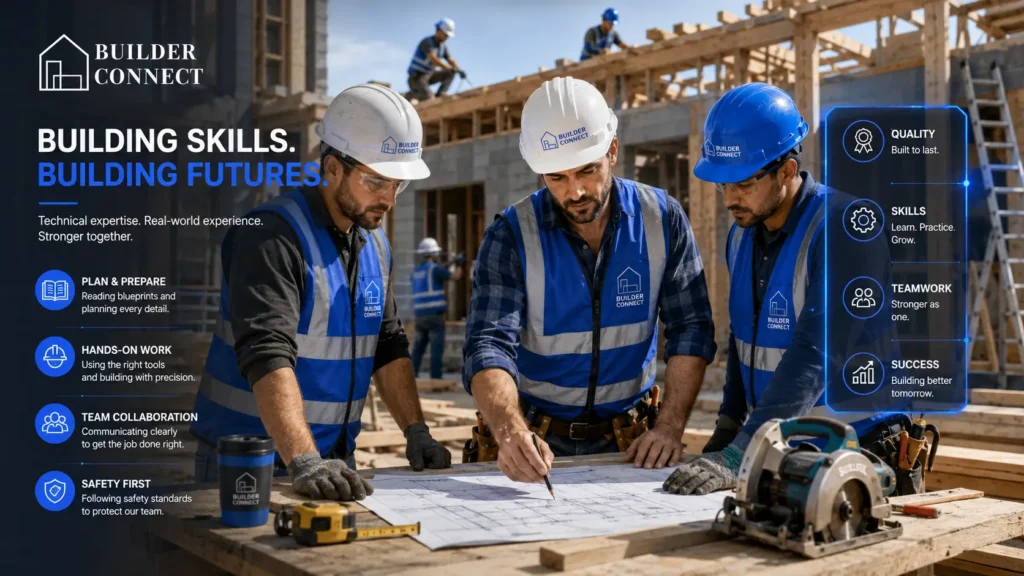
Education And Training Paths To Become A Builder
Choosing the right education and training path is one of the most important steps in becoming a builder. While there is no single route that fits everyone, understanding your options will help you build the right foundation based on your goals, whether you want to work on-site, specialize in a trade, or eventually run your own construction business.
Do You Need Formal Education?
Formal education is not always required to become a builder, but it can give you a strong starting point and open up more opportunities as you progress in your career.
A high school diploma is typically the minimum requirement for most entry-level roles in construction. It helps you develop essential skills such as basic math, communication, and problem-solving, which are all used regularly on job sites. Subjects like mathematics, technical drawing, and shop classes are especially useful because they relate directly to measurements, materials, and construction planning.
For those who want to move into leadership roles or specialize further, pursuing a degree can be beneficial. While not mandatory, degrees in construction management or engineering provide a deeper understanding of project planning, structural principles, and business operations. These programs are especially helpful if your long-term goal is to become a contractor, site manager, or property developer.
- High-school foundation: Builds essential math, reading, and communication skills needed for construction work
- Optional degree programs: Offer advanced knowledge in project management, engineering concepts, and construction planning
- Career advancement potential: Formal education can make it easier to transition into supervisory or management roles
Trade School And Vocational Training
Trade schools and vocational programs are one of the most practical ways to start a career as a builder, especially if you prefer hands-on learning over classroom-based theory.
These programs focus on teaching real-world construction skills such as carpentry, masonry, electrical basics, and tool usage. Instead of spending years in general education, you learn exactly what you need to perform on a job site. This makes trade-school training both time-efficient and career-focused.
Another key advantage is the opportunity to earn certifications that validate your skills. These short courses can cover safety practices, equipment handling, and specific construction techniques, helping you stand out to employers and increasing your job readiness.
- Hands-on training: Focuses on practical, job-ready skills you can apply immediately on-site
- Short-term programs: Typically completed faster than traditional degrees, allowing quicker entry into the workforce
- Industry-recognized certifications: Help demonstrate competence and improve employability
- Skill specialization: Allows you to focus on a specific trade such as carpentry, plumbing, or bricklaying
Apprenticeships (Best Path For Beginners)
Apprenticeships are widely considered the best path for beginners because they combine structured learning with real-world experience. This approach allows you to develop skills while working alongside experienced builders who can guide you through the process.
One of the biggest advantages of an apprenticeship is that you earn income while you learn. Instead of paying for education upfront, you gain hands-on experience and build your skill set at the same time. This makes it an accessible and practical option for many people entering the construction industry.
Working under experienced professionals also exposes you to real job-site conditions, including safety standards, problem-solving, and teamwork. Over time, this experience helps you build confidence, improve efficiency, and understand how projects are managed from start to finish.
In addition, apprenticeships naturally help you build a network within the industry. The relationships you develop with contractors, supervisors, and coworkers can lead to future job opportunities and long-term career growth.
- Earn-while-you-learn model: Provides income while developing valuable construction skills
- Mentorship from experienced builders: Offers guidance, feedback, and real-world insights
- Practical job-site experience: Builds confidence and prepares you for actual construction work
- Networking opportunities: Helps you connect with professionals who can support your career growth
Choosing the right path depends on your goals, but many successful builders start with a combination of trade-school training and apprenticeship experience. This blend of knowledge and hands-on practice creates a strong foundation for long-term success in the construction industry.
Starting with the right training path sets the tone for your entire career, and the sooner you begin gaining real experience, the faster you will build the skills and confidence needed to succeed as a builder.
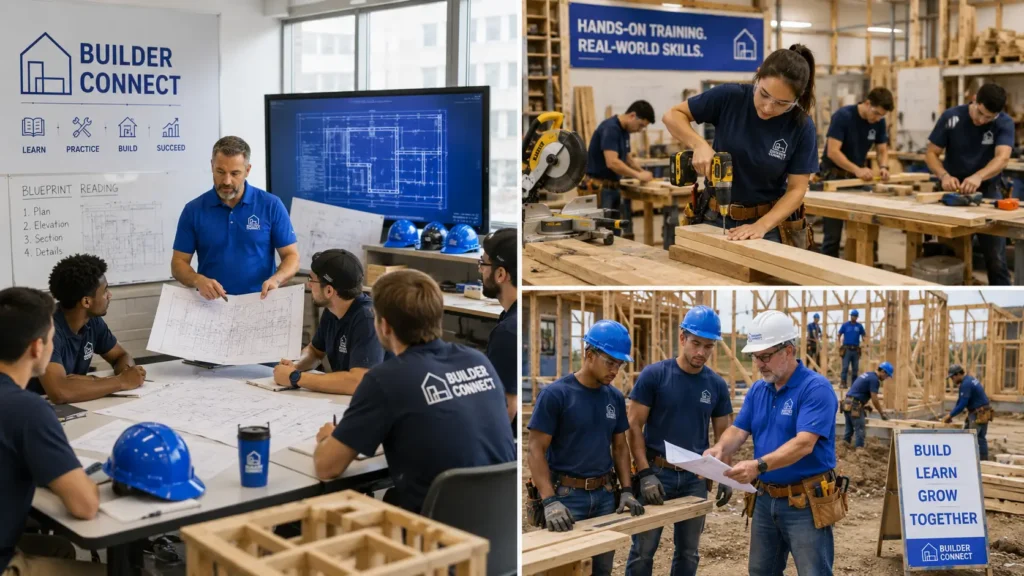
Step-by-Step: How To Become A Builder
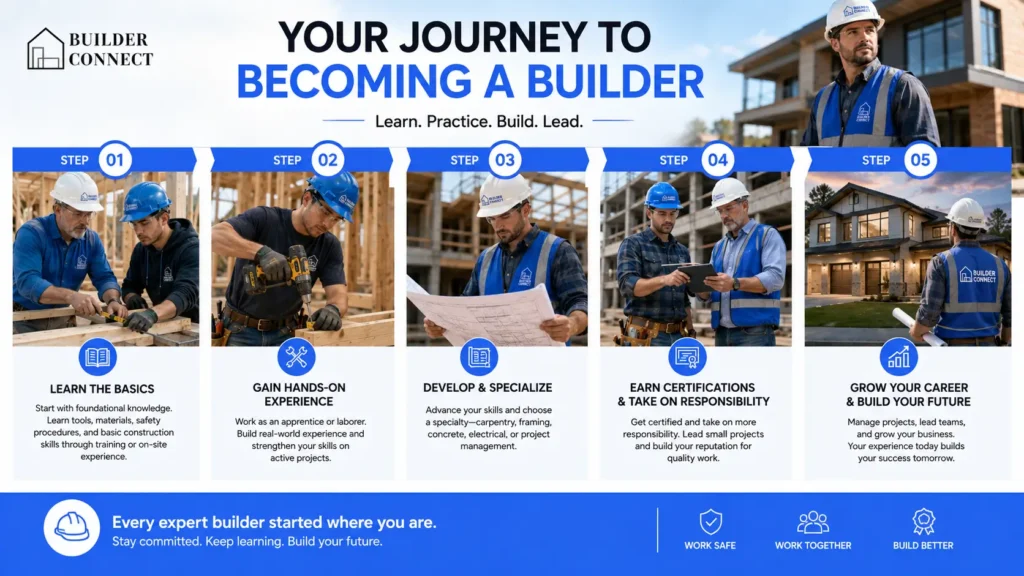
Becoming a builder is a process that combines practical skills, real-world experience, and a clear understanding of how construction projects come together. Whether your goal is to work on-site, manage projects, or eventually run your own business, following a structured path will help you build confidence and credibility over time.
Step 1 – Learn the Basics of Construction
Starting with a strong foundation is essential. Before stepping onto a job site, you need to understand how construction works at a fundamental level. This includes familiarizing yourself with tools, materials, and safety practices that are used every day in the industry.
- Tools and Equipment: Learn how to safely use hand tools and power tools such as hammers, drills, saws, and measuring equipment, as these are part of daily work on-site
- Building Materials: Understand the purpose and use of materials like concrete, wood, steel, and insulation, including how they behave in different conditions
- Workplace Safety: Study safety guidelines, protective equipment, and hazard awareness to reduce risks and follow industry standards from day one
Many beginners gain this knowledge through trade-school programs, online courses, or by observing experienced workers in entry-level roles.
Step 2 – Get Hands-On Experience
Construction is a hands-on profession, and real learning happens on-site. Gaining practical experience allows you to apply what you’ve learned and develop skills that cannot be taught in a classroom alone.
- Apprenticeships: Work under experienced builders while earning an income, which helps you learn industry-standard practices in a structured environment
- Entry-Level Jobs: Roles such as laborer or assistant expose you to real projects and help you understand how construction sites operate
- Internships: Short-term placements can provide valuable exposure to different aspects of building, from groundwork to finishing
This stage is where you begin to understand workflow, teamwork, and problem-solving in real construction settings.
Step 3 – Choose Your Specialization
As you gain experience, it becomes important to decide what type of builder you want to become. Specializing helps you develop deeper expertise and opens up more focused career opportunities.
- Trade-Focused Builder: Concentrate on a specific skill such as carpentry, masonry, or electrical work, which allows you to become highly skilled in one area
- General Builder: Take on a broader role by overseeing multiple aspects of construction and coordinating different trades
- Residential Projects: Focus on homes and smaller-scale builds, often involving closer interaction with clients
- Commercial Projects: Work on larger, more complex structures such as offices, retail spaces, or industrial buildings
Choosing a path early helps you target the right training, certifications, and job opportunities.
Step 4 – Get Certified or Licensed (If Required)
Depending on your location, you may need certifications or licenses to legally work as a builder or contractor. Even when not required, these credentials can significantly improve your credibility.
- Local Licensing Requirements: Research your region’s regulations, as some areas require exams, documented experience, or formal applications before you can take on projects independently
- Safety Certifications: Obtain recognized safety training such as OSHA or equivalent programs to demonstrate your commitment to safe work practices
- Trade Certifications: Completing certification programs in your chosen specialization can help you stand out and qualify for higher-level work
Meeting these requirements ensures compliance and builds trust with clients and employers.
Step 5 – Build Your Network and Reputation
Success in construction often depends on relationships and reputation. The more people trust your work, the more opportunities you will receive.
- Working with Contractors: Collaborate with experienced professionals who can mentor you and recommend you for future projects
- Building a Portfolio: Document completed work with photos, descriptions, and outcomes to showcase your skills and experience
- Client Relationships: Deliver consistent, high-quality work and communicate clearly to build long-term trust and referrals
A strong reputation can often lead to steady work without relying heavily on advertising.
Step 6 – Start Your Own Building Business (Optional)
Once you have enough experience and confidence, you may choose to run your own building business. This step requires both construction expertise and basic business knowledge.
- Registering a Business: Choose a business structure, register your company, and ensure you meet all legal requirements
- Insurance Coverage: Protect your business with liability insurance and other relevant policies to manage risks
- Finding Clients: Use referrals, online presence, and local networking to secure projects and grow your client base
Running your own business gives you more control over your projects and income, but it also requires careful planning and consistent effort.
Becoming a builder is not about rushing the process but steadily building your skills, experience, and reputation over time, and each step you take brings you closer to a stable and rewarding career in the construction industry.
Certifications, Licenses, And Legal Requirements
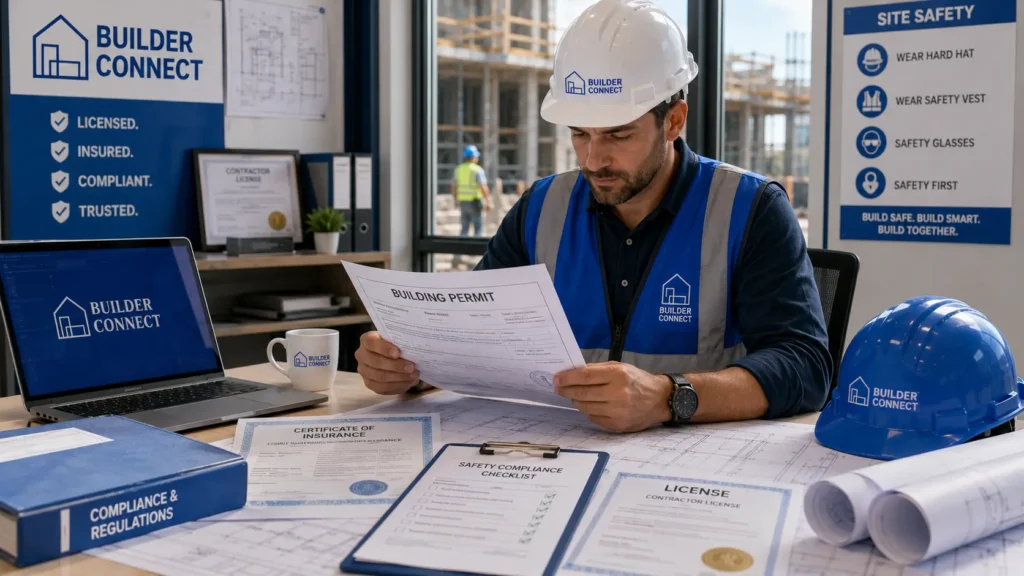
Before working as a builder independently or taking on larger projects, it is essential to understand the legal side of the profession. Certifications, licenses, and permits are not just formalities, they play a critical role in protecting your work, your clients, and your reputation. Knowing what is required in your area helps you avoid costly mistakes and positions you as a professional who takes the job seriously.
Why Licensing Matters
Licensing is one of the most important steps in becoming a builder because it confirms that you meet industry standards and are legally allowed to perform certain types of work. It also separates professionals from unqualified operators in a highly competitive field.
- Legal compliance: Most regions require builders or contractors to hold a valid license before working on residential or commercial projects. Operating without one can lead to fines, project shutdowns, or legal action. Staying compliant ensures you can work confidently and grow your career without unnecessary risk.
- Trust and credibility: Clients are far more likely to hire a licensed builder because it signals professionalism and accountability. A license shows that you have met specific requirements, passed assessments where needed, and are committed to following industry regulations. This builds confidence and often leads to more referrals and repeat work.
Common Certifications for Builders
Certifications help demonstrate your knowledge, improve your skill set, and increase your value in the market. While not all certifications are mandatory, having them can give you a clear advantage, especially when competing for higher-paying projects.
- Safety certifications: These are often required on job sites and include training in workplace safety, hazard management, and proper equipment use. Programs similar to OSHA training or local equivalents ensure you understand how to maintain a safe working environment for yourself and others.
- Trade-specific certifications: If you choose to specialize in a particular area such as carpentry, masonry, or electrical work, certifications in that trade can validate your expertise. These credentials show clients and employers that you have advanced, hands-on knowledge in a specific discipline.
- Contractor licenses: For those planning to manage projects or run a business, a contractor license is usually required. This often involves passing an exam, proving work experience, and understanding building codes, contracts, and project management. It allows you to legally take on larger projects and hire subcontractors.
Insurance and Permits
Beyond licenses and certifications, builders must also handle insurance and permits to operate responsibly and protect both themselves and their clients.
- Liability insurance: This type of insurance protects you in case of property damage, accidents, or injuries that occur during a project. Without it, you could be personally responsible for costly claims. Having coverage also reassures clients that they are working with a professional who takes risk management seriously.
- Permits for projects: Most construction work requires permits issued by local authorities before starting. These permits ensure that the project follows building codes, zoning laws, and safety standards. As a builder, it is your responsibility to understand when permits are needed and to secure them before work begins to avoid delays or penalties.
Understanding and meeting these legal requirements is not just about following rules, it is about building a reliable and professional foundation for your career. When you are properly licensed, certified, and insured, you position yourself as a trustworthy builder who clients can depend on.
Taking the time to get your certifications, licenses, and legal requirements in order early on will make your career path smoother and open up more opportunities as you grow in the construction industry.
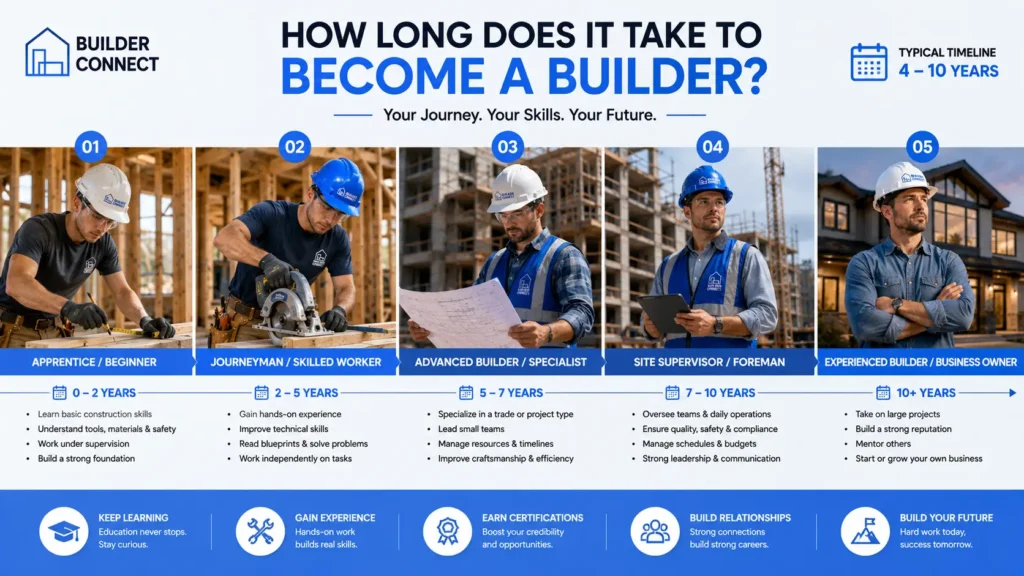
How Long Does It Take To Become A Builder?
The time it takes to become a builder depends on the path you choose, your starting point, and how quickly you gain hands-on experience. There is no single timeline because construction is a skill-based career where real-world exposure matters just as much as formal training. Some people take a structured route through apprenticeships or trade school, while others progress faster by building on prior experience. What remains consistent across all paths is the need for continuous learning and practical skill development.
Apprenticeship Path (2–4 Years)
An apprenticeship is one of the most common and reliable ways to become a builder, especially if you are starting with little to no experience. This path combines paid work with structured training, allowing you to learn directly from experienced professionals.
- Hands-on learning: You gain real construction-site experience while working on actual projects, which helps you understand tools, materials, and workflows in a practical setting
- Progressive skill development: Skills are built gradually, starting with basic tasks and advancing to more complex responsibilities over time
- Industry exposure: Working alongside skilled builders gives you insight into best practices, safety standards, and project coordination
- Recognized pathway: Many employers value apprenticeship-trained builders because they have proven, real-world experience
By the end of an apprenticeship, most individuals are job-ready and capable of working independently or advancing into specialized roles.
Trade School Plus Experience
Another common route involves attending a trade school or vocational program, followed by hands-on work experience. This option can be ideal if you prefer structured learning before entering a job site.
- Foundational knowledge: Trade school provides a solid understanding of construction principles, tools, and safety procedures
- Short-term programs: Many courses can be completed in months rather than years, allowing you to enter the workforce quickly
- Skill application gap: Classroom learning must be reinforced with real-world experience to build confidence and competence
- Better starting position: Graduates often begin with a stronger theoretical base, which can help them progress faster once they start working
While trade school can shorten the learning curve, practical experience is still essential to becoming a fully capable builder.
Fast-Track With Prior Experience
If you already have related experience in construction or a specific trade, you may be able to move more quickly into a builder role. This path is less about formal timelines and more about leveraging existing skills.
- Transferable skills: Experience in carpentry, masonry, or site work can significantly reduce the time needed to transition into a builder role
- On-the-job advancement: Many workers move up by taking on more responsibility and demonstrating reliability and skill
- Networking advantage: Existing industry connections can open doors to better opportunities and faster career growth
- Portfolio development: Previous projects and hands-on work can serve as proof of your capabilities
This fast-track approach works best for individuals who are already familiar with construction environments and want to expand into broader building responsibilities.
Why Ongoing Learning Matters
No matter which path you take, becoming a builder is not a one-time achievement. The construction industry evolves with new materials, tools, safety regulations, and building standards, which means continuous learning is essential.
- Skill improvement: Regularly updating your skills helps you stay competitive and efficient on the job
- Regulation awareness: Keeping up with local codes and safety requirements ensures compliance and reduces risk
- Career growth: Advanced knowledge can open opportunities for specialization or leadership roles
- Business readiness: If you plan to start your own building business, ongoing learning helps you manage projects, clients, and operations effectively
In most cases, you can begin working in construction within a few months, but becoming a confident, experienced builder typically takes a few years of consistent effort and real-world practice.
Becoming a builder is less about reaching a fixed timeline and more about steadily building skills, experience, and confidence through hands-on work and continuous learning.
How Much Do Builders Earn? (Salary and Income Potential)
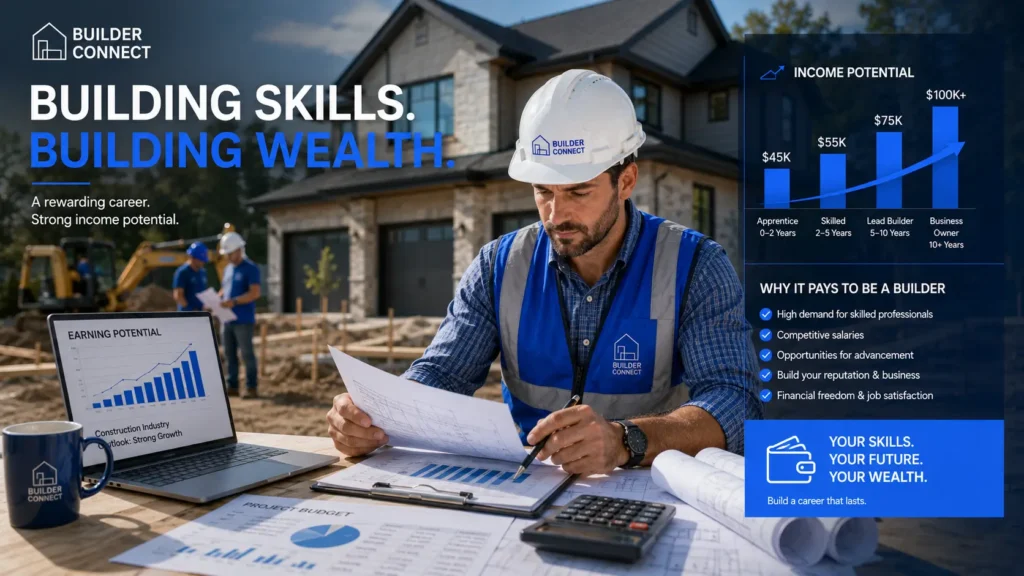
Understanding how much builders earn is important if you are considering this career path, as income can vary widely depending on experience, location, and whether you work for someone else or run your own business. While construction is often seen as a stable, high-demand field, earnings are not fixed and tend to grow over time as skills, reputation, and responsibilities increase.
Entry-Level vs Experienced Builders
When starting out, most builders earn a modest income while they develop hands-on skills and gain real-world experience. Entry-level roles such as laborers or apprentices typically involve learning basic tasks under supervision, which means lower pay initially but strong long-term growth potential.
As builders gain experience, their earning potential increases significantly. Skilled workers who specialize in areas like carpentry, masonry, or electrical work often command higher wages due to their expertise. Experienced builders who take on leadership roles, manage teams, or handle full projects can earn even more.
Typical salary ranges vary depending on the region, but in general:
- Entry-level builders: Often earn a basic hourly wage or starting salary, with steady increases as they gain experience
- Mid-level builders: Earn higher pay due to improved skills and the ability to work independently
- Experienced builders: Can earn strong, consistent income, especially if they specialize or supervise projects
Several factors influence how much a builder earns:
- Location: Wages tend to be higher in urban or high-demand areas where construction activity is strong
- Specialization: Builders with trade-specific expertise such as plumbing or structural work often earn more than general laborers
- Experience level: More years in the field usually translate to higher pay and better opportunities
- Project complexity: Larger or more technical projects often come with higher compensation
- Certifications and licensing: Qualified and licensed builders are often trusted with higher-paying work
Self-Employed Builders and Contractors
For builders who choose to become self-employed, income shifts from a fixed wage to project-based earnings. This means income can vary depending on the number of projects completed, the size of those projects, and the builder’s reputation in the market.
Project-based earnings offer both flexibility and higher earning potential, but they also come with more responsibility. Self-employed builders must manage costs, timelines, client expectations, and legal requirements while maintaining consistent work flow.
Key considerations for self-employed builders include:
- Project-based income: Earnings depend on the type and number of jobs completed, which can fluctuate month to month
- Client relationships: Strong relationships often lead to repeat work and referrals, which help stabilize income
- Business expenses: Tools, materials, insurance, and labor costs must be factored into profits
- Reputation and quality: High-quality work leads to better opportunities and the ability to charge higher rates
Over time, builders who grow their own business can significantly increase their income by taking on larger projects, hiring teams, or expanding into full-service contracting. This transition requires both technical skill and business knowledge, but it can be one of the most rewarding paths in the construction industry.
Builders who treat their work as both a craft and a business often see the strongest long-term financial growth, especially when they focus on delivering consistent quality and building trust with clients.
In the end, a builder’s income reflects not just their skill level, but their ability to grow, adapt, and take on greater responsibility over time, making it a career with strong earning potential for those willing to invest in their development.
Common Challenges And How To Overcome Them
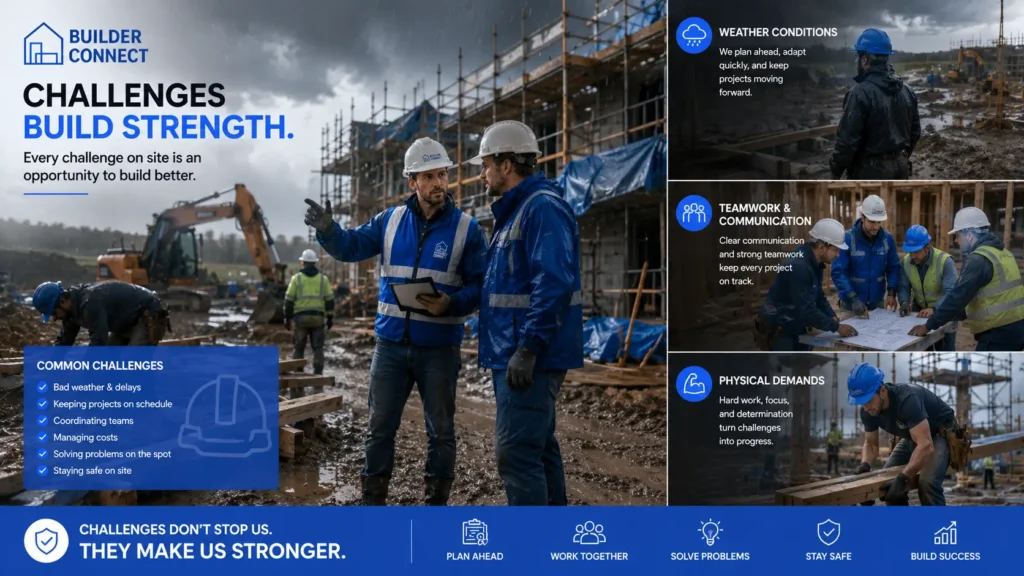
Becoming a builder is a rewarding path, but it comes with real-world challenges that can test your resilience, consistency, and long-term commitment. Understanding these challenges early on allows you to prepare, adapt, and build habits that support both your career growth and personal well-being. Below are some of the most common obstacles builders face, along with practical ways to overcome them.
Physical Demands
Working in construction is physically demanding, and many new builders underestimate how much strain the job can place on the body. Long hours, repetitive tasks, and exposure to outdoor conditions can lead to fatigue or injury if not managed properly.
Managing Workload and Health
Taking care of your physical health is not optional in this field, it is essential for long-term success. Builders who last in the industry are the ones who learn how to work smart, not just hard.
- Proper Technique: Learn correct lifting methods and tool handling early to prevent long-term injuries
- Rest and Recovery: Schedule regular breaks during the day and ensure you get enough sleep to allow your body to recover
- Protective Gear: Use safety equipment such as gloves, helmets, and steel-toe boots to reduce injury risk
- Physical Conditioning: Maintain strength and flexibility through basic exercise routines that support job-related movements
- Hydration and Nutrition: Staying hydrated and eating balanced meals helps sustain energy levels throughout demanding workdays
Finding Consistent Work
One of the biggest concerns, especially for new builders or those who are self-employed, is maintaining a steady flow of projects. Construction work can sometimes be seasonal or dependent on economic conditions.
Building a Client Base
Establishing a reliable client base takes time, but it is one of the most important steps toward career stability and growth.
- Start Small: Take on smaller projects to gain experience and build a portfolio of completed work
- Deliver Quality Work: Consistently meeting or exceeding expectations leads to repeat business and referrals
- Ask for Reviews: Positive feedback from clients builds trust and helps attract new opportunities
- Showcase Your Work: Document projects with photos and descriptions to demonstrate your skills and results
Networking Strategies
Strong relationships often lead to new opportunities in the construction industry. Builders who actively network tend to find more consistent work.
- Connect with Contractors: Build relationships with experienced contractors who may subcontract work
- Join Local Groups: Participate in construction-related associations or community groups to expand your network
- Leverage Word-of-Mouth: Personal recommendations remain one of the most powerful ways to gain new clients
- Stay Visible: Maintain a basic online presence or portfolio so potential clients can find and evaluate your work
Learning Industry Standards
The construction industry is constantly evolving, with new materials, techniques, and regulations being introduced over time. Builders who fail to stay updated risk falling behind or making costly mistakes.
Staying Updated with Regulations and Techniques
Keeping up with industry standards is key to maintaining professionalism, safety, and credibility.
- Follow Local Regulations: Stay informed about building codes and legal requirements in your area to ensure compliance
- Continuous Learning: Take short courses or attend workshops to improve your skills and knowledge
- Learn from Experience: Pay attention to lessons learned on job sites and apply them to future projects
- Use Trusted Resources: Rely on reputable sources, training programs, or industry professionals for accurate information
- Adopt New Techniques Carefully: Evaluate new methods or tools before fully integrating them into your workflow
Every builder faces challenges, but those who stay consistent, prioritize learning, and take care of their health are the ones who build lasting careers and strong reputations in the industry.
Tips For Succeeding As A Builder
Becoming a builder is one thing, but building a long-term, successful career requires consistency, smart decisions, and a commitment to continuous improvement. The most successful builders are not just skilled with tools, they understand how to grow their experience, learn from others, invest in their craft, and earn trust through their work.
Start Small and Build Experience
Starting with smaller projects allows you to develop confidence, refine your skills, and avoid costly mistakes early in your career. Many experienced builders began with simple jobs before progressing to larger, more complex projects.
- Beginner-friendly projects: Start with basic construction tasks such as small repairs, home improvements, or assisting on job sites to understand real-world workflows
- Skill development: Focus on mastering core techniques like measuring, cutting, and material handling before taking on advanced responsibilities
- Low-risk learning: Smaller jobs reduce financial and structural risk while giving you room to learn and improve
- Portfolio building: Even minor projects can be documented to showcase your work and attract future opportunities
The goal at this stage is not speed, but building a solid foundation that supports long-term growth.
Learn from Experienced Professionals
One of the fastest ways to improve as a builder is by learning directly from those who have already spent years in the field. Real-world knowledge often goes beyond what you can learn in training programs or books.
- Mentorship opportunities: Work under experienced builders or contractors who can guide you, correct mistakes, and share proven techniques
- On-site learning: Pay attention to how professionals handle challenges, manage time, and coordinate with teams on active job sites
- Practical insights: Learn industry standards, safety practices, and efficient work methods that are not always taught formally
- Professional habits: Observe communication styles, work ethic, and problem-solving approaches that contribute to long-term success
Being open to feedback and asking questions can significantly accelerate your learning curve.
Invest in Tools and Skills
Your tools and skills are the foundation of your work quality. Investing in both ensures that you can deliver consistent results and stay competitive in the construction industry.
- Quality tools: Reliable, well-maintained tools improve efficiency, precision, and safety on the job
- Skill upgrades: Continuously improve your knowledge through courses, certifications, and hands-on practice
- Technology adoption: Learn to use modern tools such as construction software, measurement devices, or project management systems
- Safety knowledge: Stay updated with safety standards and best practices to protect yourself and your team
A builder who invests in improvement is more likely to produce high-quality work and earn long-term trust.
Build a Strong Reputation
In construction, your reputation often determines your success more than any marketing effort. Clients and contractors prefer to work with builders who are known for reliability and quality.
- Consistent workmanship: Deliver high-quality results on every project, regardless of size
- Reliability: Show up on time, meet deadlines, and follow through on commitments
- Client satisfaction: Communicate clearly with clients and address concerns professionally
- Word-of-mouth referrals: Satisfied clients and colleagues are your strongest source of new opportunities
- Professional conduct: Maintain honesty, transparency, and respect in every interaction
A strong reputation takes time to build but can open doors to better projects, higher earnings, and long-term career stability.
Success as a builder comes from steady progress, learning from the right people, investing in your craft, and consistently delivering work you can stand behind, because in this industry, your results speak louder than anything else.
References
- Education and Training Requirements for Construction Workers
https://www.careerexplorer.com/careers/construction-worker/education-and-training-requirements/ (CareerExplorer) - What Qualifications Do I Need to Work in Construction in 2025?
https://www.constructionplacements.com/what-qualifications-do-i-need-to-work-in-construction/ (ConstructionPlacements) - Career Guide: How to Become a Construction Worker
https://www.buildstream.co/career-guides/career-guide-how-to-become-a-construction-worker (buildstream.co) - What Are the Requirements to Become a Builder?
https://climbtheladder.com/what-are-the-requirements-to-become-a-builder/ (climbtheladder.com) - How to Become a Home Builder
https://tradesmanskills.com/how-to-become-a-home-builder/ (tradesmanskills.com)
FAQs: About How To Become A Builder
Conclusion
Becoming a builder is a step-by-step process that starts with learning the basics, continues through hands-on training and real-world experience, and grows into specialization and long-term career development. Whether you choose an apprenticeship, trade school, or entry-level role, the key is to take consistent action and build your skills over time while understanding local requirements and industry standards. As you progress, focus on developing a strong reputation, expanding your knowledge, and exploring opportunities that align with your goals. If you are ready to move forward, start by researching training programs, connecting with experienced contractors in your area, or enrolling in a short course so you can begin gaining practical experience and confidently take the first step toward a rewarding career in construction.
Find A Professional Builders Company Near You!
- Auckland Builders For Small Jobs
- Builders Alexandra
- Builders Ashburton
- Builders Auckland
- Builders Blenheim
- Builders Cambridge
- Builders Central Otago
- Builders Christchurch
- Builders Clyde
- Builders Cromwell
- Builders Dunedin
- Builders Feilding
- Builders Gisborne
- Builders Hamilton
- Builders Hastings
- Builders Havelock North
- Builders Hawkes Bay
- Builders Hibiscus Coast
- Builders Invercargill
- Builders Johnsonville
- Builders Kapiti
- Builders Kerikeri
- Builders Levin
- Builders Lower Hutt
- Builders Manawatu
- Builders Masterton
- Builders Mosgiel
- Builders Napier
- Builders Nelson
- Builders New Plymouth
- Builders Oamaru
- Builders Paihia
- Builders Palmerston North
- Builders Paraparaumu
- Builders Porirua
- Builders Pukekohe
- Builders Queenstown
- Builders Rangiora
- Builders Rolleston
- Builders Taupo
- Builders Tauranga
- Builders Te Awamutu
- Builders Timaru
- Builders Tokoroa
- Builders Upper Hutt
- Builders Waikanae
- Builders Wanaka
- Builders Warkworth
- Builders Wellington
- Builders West Auckland
- Builders Whakatane
- Builders Whanganui
- Builders Whangarei
- Handyman Wellington
- Home Builders Rotorua
- Kitchen Removal Service Auckland
- Wellington Builders For Small Jobs

About the Author:
Mike Veail is a recognized digital marketing expert with over 6 years of experience in helping tradespeople and small businesses thrive online. A former quantity surveyor, Mike combines deep industry knowledge with hands-on expertise in SEO and Google Ads. His marketing strategies are tailored to the specific needs of the trades sector, helping businesses increase visibility and generate more leads through proven, ethical methods.
Mike has successfully partnered with numerous companies, establishing a track record of delivering measurable results. His work has been featured across various platforms that showcase his expertise in lead generation and online marketing for the trades sector.
Learn more about Mike's experience and services at https://theleadguy.online or follow him on social media: