Welcome to your complete guide on what a silt fence is and why it plays a critical role in controlling erosion and sediment on construction and landscaping sites. If you have ever noticed black fabric barriers installed around disturbed soil, you may have wondered how they work and whether you need one. In this guide, you will learn what a silt fence does, how it helps manage stormwater runoff, where it is commonly used, and how proper installation can make the difference between effective sediment control and costly site issues.
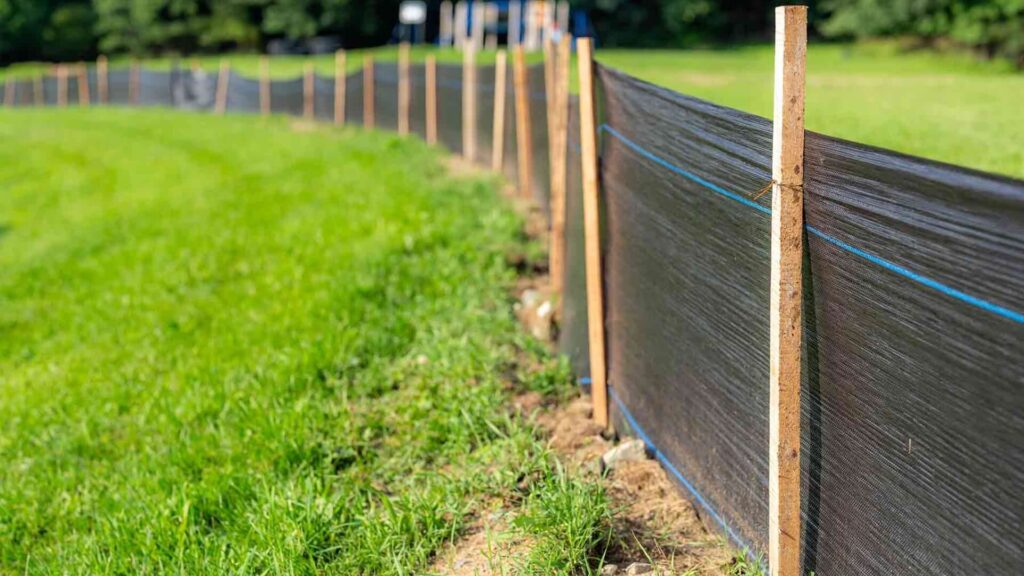
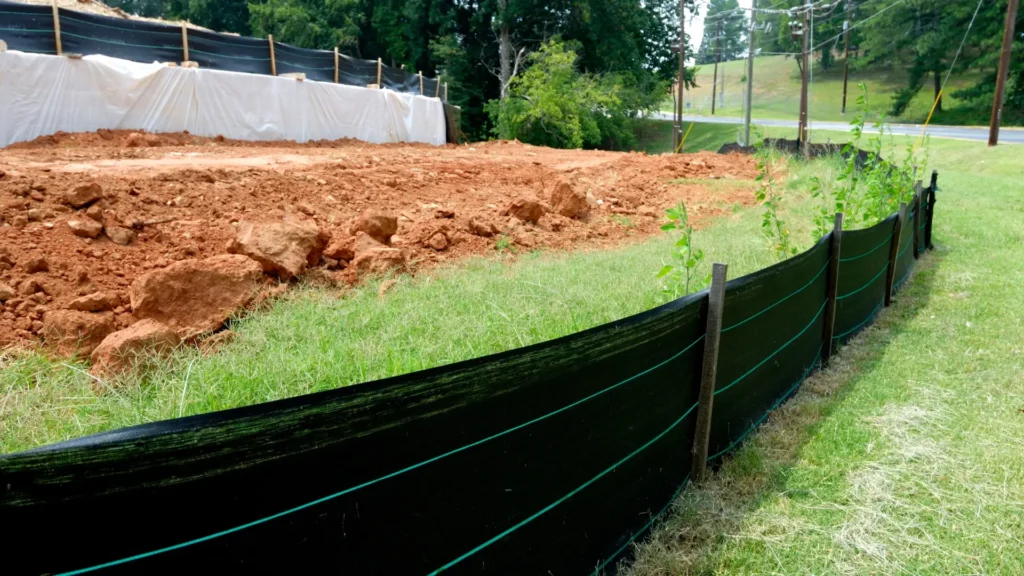
A silt fence is a temporary sediment control barrier made of geotextile fabric attached to posts, used on construction sites to prevent soil erosion and keep sediment from washing away during rainfall. It works by slowing runoff and allowing sediment to settle, helping protect nearby drains, waterways, and properties.
- What Is A Silt Fence?
- How Does A Silt Fence Work?
- When And Where Is A Silt Fence Used?
- What Is the Purpose Of A Silt Fence?
- Silt Fence vs. Other Erosion And Sediment Control Methods
- Basic Parts Of A Proper Silt Fence Installation
- Step-By-Step Overview Of How A Silt Fence Is Installed
- Common Silt Fence Installation Mistakes
- How To Maintain A Silt Fence
- How Long Does A Silt Fence Last?
- Do You Need A Silt Fence For Every Project?
- Expert Tips For Choosing The Right Sediment Control Approach
- References
- FAQs: About What Is A Silt Fence
- Conclusion
- Find A Professional Fencing Company Near You!
What Is A Silt Fence?
A silt fence is one of the most widely used sediment-control tools on construction and land-disturbance sites. It is designed to manage stormwater runoff by capturing loose soil before it leaves the site and causes environmental or compliance issues. While it may look simple, its effectiveness depends heavily on proper placement, installation, and maintenance.
Simple Definition
At its core, a silt fence is a temporary sediment-control barrier that helps prevent soil from being carried away by stormwater runoff. When land is disturbed during construction or grading, the exposed soil becomes highly vulnerable to erosion, especially during rainfall.
- Primary function: Captures sediment while allowing water to pass through slowly
- Typical use-case: Installed along the perimeter of construction sites or downslope areas
- Key benefit: Reduces soil loss and protects nearby drains, roads, and waterways
In practical terms, a silt fence acts as a first line of defense against erosion-related problems. It is not meant to eliminate runoff entirely, but rather to manage how sediment moves with water across a site.
What a Silt Fence Is Made Of
A properly installed silt fence is made up of a few essential components that work together to control sediment effectively. Each part plays a specific role in ensuring the barrier performs as intended under real-world conditions.
- Geotextile filter fabric: A durable, permeable material designed to allow water to pass through while trapping soil particles
- Support posts or stakes: Typically made of wood or metal, these hold the fabric upright and maintain structural integrity
- Trench-in bottom section: The lower portion of the fabric is buried in a shallow trench to prevent water from flowing underneath
The trench-in design is especially important. Without it, runoff can easily bypass the fence from below, making the entire system ineffective. This is one of the most common failure points seen on poorly installed sites.
What a Silt Fence Does and Does Not Do
Understanding the limitations of a silt fence is just as important as understanding its purpose. Many issues arise when it is used incorrectly or expected to perform beyond its intended function.
- What it does well:
- Traps sediment: Slows water enough for soil particles to settle behind the barrier
- Controls runoff flow: Reduces the speed of water moving across disturbed soil
- Supports compliance: Helps meet site-level erosion and sediment control requirements
- What it does not do:
- Stop all water flow: Water will still pass through or around the fence
- Handle heavy-flow areas: Not suitable for concentrated runoff or drainage channels
- Replace full erosion-control planning: Must be used alongside other best management practices
A silt fence works best when it is part of a broader, well-planned erosion-control strategy. Relying on it alone, especially on large or complex sites, often leads to performance issues and increased maintenance.
How Does A Silt Fence Work?
A silt fence works by slowing down runoff and giving sediment enough time to settle before water leaves a disturbed area. While the concept is simple, its effectiveness depends on how water behaves on-site and how well the fence is installed and maintained. Understanding the mechanics behind it helps ensure it performs as intended rather than becoming a weak point in your erosion-control strategy.
How Runoff Carries Sediment
When soil is disturbed during construction, landscaping, or grading, it becomes loose and highly vulnerable to erosion. Without vegetation or stabilization, even moderate rainfall can displace soil and carry it away.
- Disturbed soil conditions: Bare or recently graded soil lacks structure and root systems, making it easy for water to dislodge particles and initiate erosion.
- Rainfall impact: Raindrops hitting exposed ground break apart soil aggregates, loosening particles that can then be transported by runoff.
- Downhill movement: Gravity drives water flow across slopes, picking up sediment and carrying it toward lower areas such as storm drains, streets, or nearby waterways.
This process is known as sediment-laden runoff, and without control measures, it can quickly lead to environmental damage and site compliance issues.
How the Fence Filters Sediment
A properly installed silt fence acts as a barrier that interrupts the flow of water and reduces its velocity. This slowdown is key to allowing sediment to separate from the water.
- Flow reduction: As runoff reaches the fence, the fabric creates resistance, reducing water speed and preventing it from rushing off-site.
- Sediment settling: Slower-moving water loses the energy needed to carry soil particles, causing sediment to settle and accumulate behind the fence.
- Partial filtration: The geotextile fabric allows some water to pass through while trapping larger soil particles, improving water clarity before it exits the site.
It is important to understand that a silt fence is not designed to fully filter water like a fine-screen system. Its primary function is sediment retention through flow control and settling.
Why Proper Installation Matters
Even the highest-quality silt fence will fail if it is not installed correctly. Many performance issues can be traced back to avoidable installation mistakes.
- Incorrect placement: Installing a fence in areas with concentrated water flow, such as channels or steep slopes, can overwhelm the barrier and lead to failure.
- Poor trenching: The bottom of the fabric must be buried and secured in a trench. Without this step, water can flow underneath the fence and carry sediment with it.
- Insufficient support: Wide spacing between posts or loosely attached fabric can cause sagging, reducing the fence’s ability to hold back sediment.
- Gaps and damage: Openings, tears, or poorly connected sections create weak points where runoff can bypass the system entirely.
A silt fence may look simple, but its effectiveness depends on understanding how water moves and how sediment behaves. When installed and maintained correctly, it becomes a dependable first line of defense against erosion and runoff-related problems.
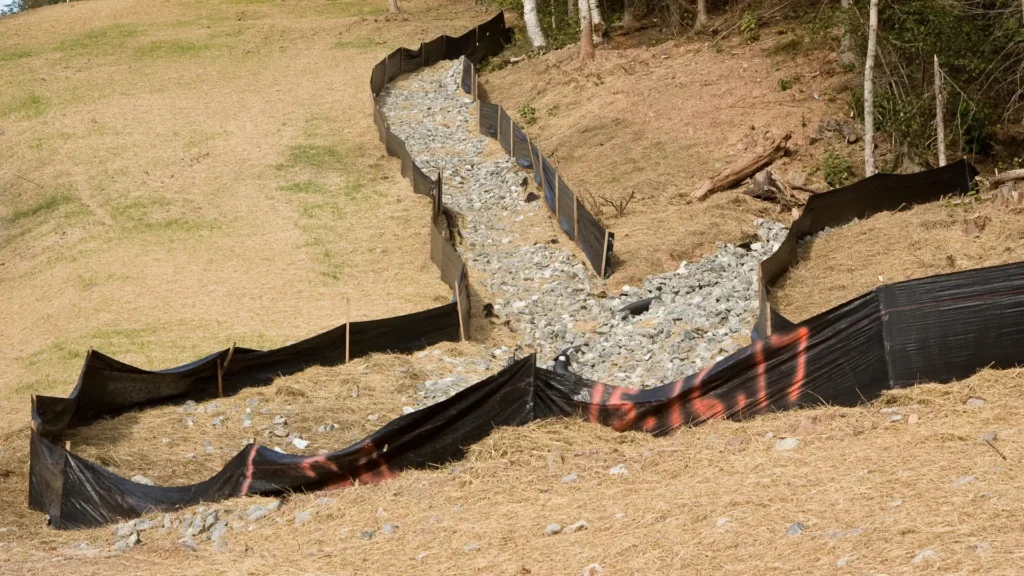
When And Where Is A Silt Fence Used?
Understanding where and when to use a silt fence is key to getting real value from it. While it is a simple tool, its effectiveness depends heavily on proper placement and choosing the right situations. Used correctly, it can significantly reduce sediment runoff and help maintain a cleaner, compliant job site.
Common Use Cases
Silt fences are widely used across projects that involve soil disturbance. Anytime the ground is exposed and vulnerable to erosion, a silt fence can help manage sediment before it leaves the site.
- Residential construction sites: During home building, excavation and grading expose loose soil. A silt fence helps prevent sediment from washing into nearby properties, streets, or drainage systems.
- Commercial job sites: Larger-scale developments often disturb significant areas of land. Silt fences are commonly installed as part of a broader sediment-control plan to manage runoff across multiple zones.
- Roadwork and infrastructure projects: Highway construction, utility installation, and public works projects frequently use silt fences to protect adjacent land and waterways from sediment displacement.
- Landscaping and grading projects: Even smaller projects like yard leveling or slope adjustments can create erosion risks. A silt fence helps contain soil movement until vegetation or ground cover is established.
Typical Placement Areas
Where you place a silt fence is just as important as deciding to use one. The goal is to intercept runoff before it gains enough speed or volume to carry sediment off-site.
- Downslope edges of disturbed areas: This is the most common placement. Installing the fence at the lower edge allows it to catch sediment as water flows downhill.
- Perimeter control around construction zones: Surrounding a site with silt fencing creates a boundary that helps contain sediment within the work area, especially in multi-phase projects.
- Along contours where runoff can be intercepted: Placing the fence along the natural contour of the land helps slow water evenly across a wider area, which improves sediment settling and reduces pressure on any single point.
Situations Where It Works Best
Silt fences are not a one-size-fits-all solution. They perform best under specific site conditions where water flow is manageable and predictable.
- Sheet flow areas: Silt fences are most effective where water flows evenly across the ground rather than concentrating into channels. This allows sediment to settle without overwhelming the barrier.
- Small drainage zones: They work well in areas with limited runoff volume. Large drainage areas can generate too much water pressure, causing failure or bypass.
- Sites with moderate sediment risk: When soil disturbance is present but not extreme, silt fences provide a practical and cost-effective way to control sediment without needing more complex systems.
In real-world applications, experienced contractors often combine silt fences with other erosion-control methods. This layered approach ensures better performance, especially on sites with varying slopes, soil types, or rainfall exposure.
What Is the Purpose Of A Silt Fence?
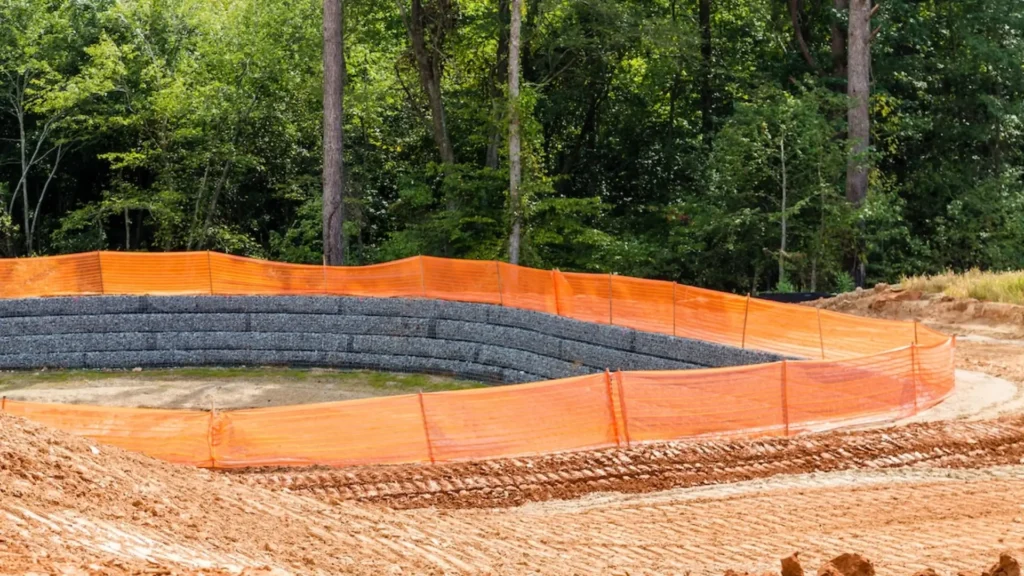
A silt fence serves a very specific role on construction and land-disturbance projects: it acts as a temporary sediment-control barrier that helps manage how soil moves during rainfall and runoff events. While it may look simple, its purpose is tied directly to environmental protection, regulatory compliance, and cost control. When installed correctly, a silt fence helps keep sediment where it belongs while reducing downstream impact and project risk.
Protecting Storm Drains, Streams, and Nearby Property
One of the primary purposes of a silt fence is to prevent sediment from leaving a job site and entering areas where it can cause damage or contamination. Loose soil from disturbed ground is easily carried by stormwater, especially on exposed construction sites.
- Sediment containment: A properly installed silt fence slows down runoff, allowing soil particles to settle before water exits the site. This helps keep sediment from spreading into surrounding areas.
- Waterway protection: By trapping sediment, the fence reduces the amount of soil entering streams, rivers, and drainage systems, which helps protect aquatic ecosystems and water quality.
- Property protection: Sediment runoff can stain surfaces, clog drainage systems, and damage nearby properties. A silt fence acts as a first line of defense against these issues.
In real-world projects, this function is critical because even a small amount of uncontrolled runoff can lead to noticeable environmental and property impacts.
Supporting Site Compliance
Beyond environmental protection, silt fences are commonly required as part of regulatory compliance for construction and land-disturbance activities. Many local and national guidelines require sediment-control measures before work begins.
- Regulatory alignment: Silt fences are often included in stormwater pollution prevention plans and erosion-control strategies to meet environmental standards.
- Inspection readiness: Proper installation and maintenance help ensure a site passes inspections by local authorities or environmental agencies.
- Permit requirements: Many permits for construction or grading specifically require sediment-control measures like silt fences before and during project work.
From a compliance perspective, a silt fence is not just a best practice. It is often a necessary component of legally responsible site management.
Reducing Cleanup and Damage Costs
Another key purpose of a silt fence is financial. Preventing sediment from leaving the site can significantly reduce cleanup efforts and avoid costly problems later in the project.
- Reduced cleanup workload: Capturing sediment on-site minimizes the need for post-rain cleanup of roads, sidewalks, and neighboring areas.
- Lower risk of penalties: Sites that fail to control sediment runoff may face fines, project delays, or enforcement actions.
- Less rework required: Sediment loss can lead to erosion damage that requires additional grading or stabilization, increasing labor and material costs.
In practice, investing time in proper silt fence installation and maintenance often saves far more in avoided repairs, delays, and compliance issues.
Silt Fence vs. Other Erosion And Sediment Control Methods
Choosing the right erosion and sediment control method is not just about picking a product, it is about understanding how water moves across a site and how soil behaves under different conditions. A silt fence is one of the most common tools used in construction, but it is not always the best or only solution. To use it effectively, it helps to compare it with other widely used methods and understand where each one performs best.
Silt Fence vs. Erosion Control Blanket
A silt fence and an erosion control blanket serve two very different purposes, even though they are often used together on the same project. The key difference lies in whether you are trying to prevent erosion or manage sediment after it has already moved.
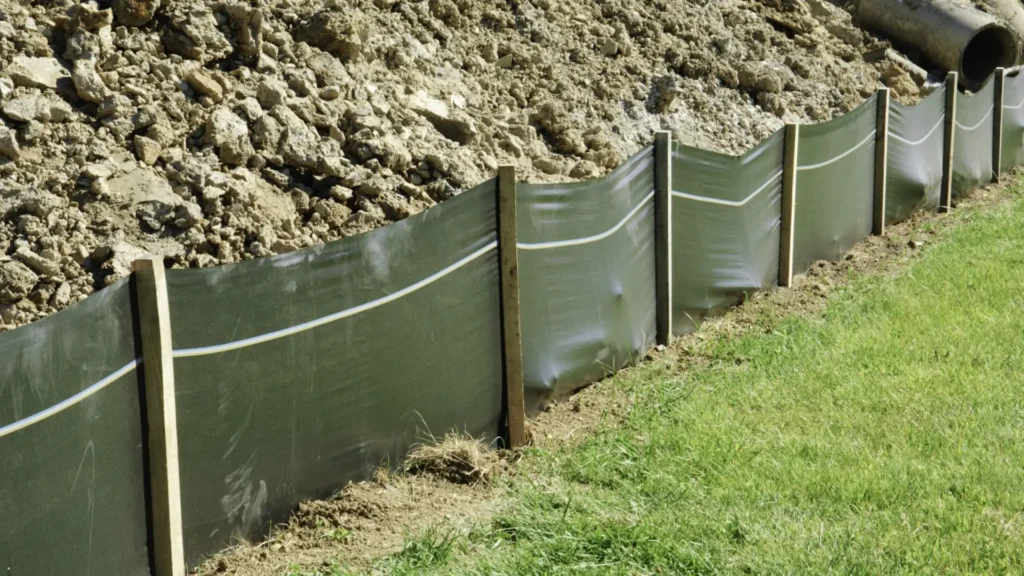
- Primary function: A silt fence is a sediment-control barrier designed to capture soil that has already been displaced, while an erosion-control blanket is used to stabilize soil and prevent erosion from happening in the first place
- Placement: Silt fences are installed along the perimeter or downslope edge of a disturbed area, whereas erosion-control blankets are placed directly on exposed soil surfaces such as slopes or embankments
- Best use case: Silt fences work well for intercepting runoff at the edge of a site, while blankets are ideal for protecting newly graded areas or seeded slopes from rain impact and runoff
- Performance approach: A blanket reduces soil movement at the source, while a silt fence manages the consequences of that movement
In real-world projects, these two are often combined. For example, a slope may be covered with an erosion-control blanket to prevent soil loss, while a silt fence is installed at the bottom as a secondary line of defense.
Silt Fence vs. Wattles or Fiber Rolls
Wattles, also known as fiber rolls, are flexible sediment-control tools that function differently from silt fences in both installation and performance. While both are used to slow runoff and capture sediment, their design makes them suitable for different terrain and site conditions.
- Flexibility: Wattles are highly adaptable and can be easily shaped to follow uneven ground, while silt fences rely on straight-line installation supported by posts
- Installation method: Silt fences require trenching and anchoring into the ground, whereas wattles are typically staked directly onto the surface with minimal excavation
- Flow handling: Wattles allow water to pass over and through them more gradually, making them useful for low-flow or sheet-flow conditions, while silt fences are better suited for intercepting runoff at defined boundaries
- Terrain suitability: Wattles perform well on slopes and curved layouts, while silt fences are more effective along straight perimeters or flat-to-moderate slopes
In practice, wattles are often preferred on irregular or sloped terrain where a rigid fence would be difficult to install correctly. However, silt fences generally provide stronger sediment containment when properly installed in the right conditions.
Silt Fence vs. Sediment Basin
A sediment basin operates on a much larger scale than a silt fence and is designed to handle significant volumes of runoff and sediment. The difference between the two is not just in size, but in how they manage water and soil.
- Scale of control: A silt fence provides localized, perimeter-based sediment control, while a sediment basin is a large-scale system designed to collect and settle sediment from an entire drainage area
- Water management: Silt fences slow and filter runoff at the surface level, whereas sediment basins hold water temporarily, allowing sediment to settle before releasing cleaner water
- Capacity: Silt fences are suitable for small drainage areas with sheet flow, while sediment basins are necessary for sites with high runoff volume or concentrated flow
- Project type: Silt fences are common on residential and small commercial sites, while sediment basins are typically used on large construction or infrastructure projects
From an experienced perspective, relying on a silt fence alone in a high-runoff environment is a common mistake. In those cases, a sediment basin provides the primary control, and silt fences may still be used as secondary protection along the site perimeter.
When a Silt Fence Is Not Enough
While silt fences are effective in many situations, there are conditions where they simply cannot handle the demands of the site. Understanding these limitations is critical to avoiding failure and ensuring proper sediment control.
- Steep slopes: Water gains speed quickly on steep terrain, which can overwhelm a silt fence and cause it to collapse or allow sediment to bypass the barrier
- High-flow channels: Silt fences are not designed for concentrated water flow such as drainage ditches or channels, where stronger control measures are required
- Large drainage areas: When a large volume of runoff collects in one area, a single silt fence cannot manage the load effectively and may fail under pressure
- Multi-practice projects: Complex sites often require a combination of best management practices such as erosion-control blankets, wattles, inlet protection, and sediment basins working together
In professional site planning, a silt fence should be viewed as one component within a broader erosion and sediment-control strategy. Matching the method to the site conditions, rather than relying on a single solution, is what ultimately leads to effective and compliant results.
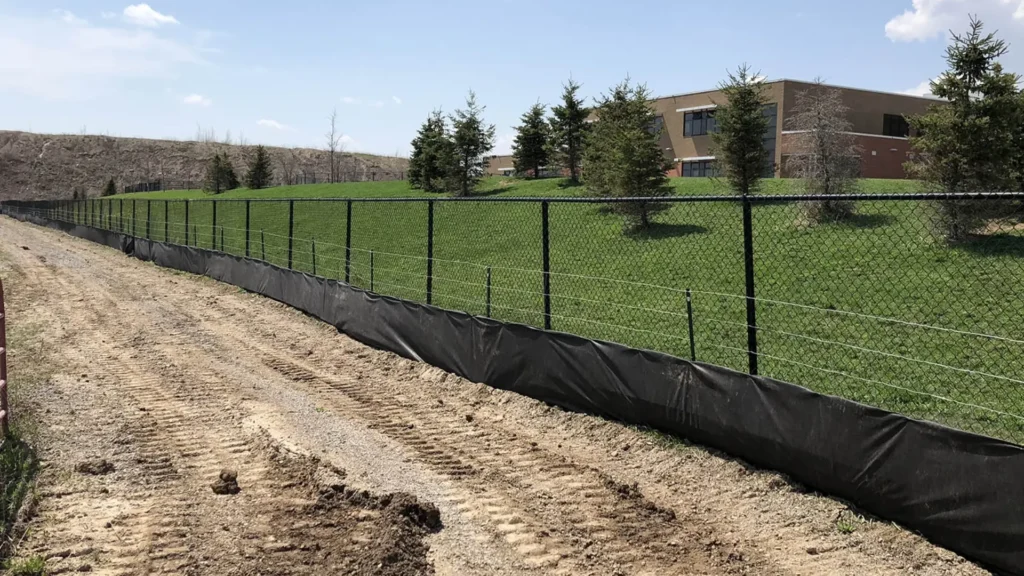
Basic Parts Of A Proper Silt Fence Installation
A silt fence is only as effective as the components that make up its installation. When each part is properly selected and installed, the system works together to slow runoff, trap sediment, and protect surrounding areas. Understanding these basic elements helps ensure the fence performs as intended and avoids common site failures.
Filter Fabric
The filter fabric is the core component of a silt fence system. It is typically made from durable geotextile material designed to withstand outdoor conditions while managing water flow and sediment capture.
- Material durability: The fabric is engineered to resist tearing, UV exposure, and prolonged contact with soil and water, making it suitable for temporary but demanding job-site conditions
- Permeability balance: It allows water to pass through at a controlled rate while trapping sediment particles, preventing soil from being carried off-site
- Sediment retention: As runoff slows down against the fabric, heavier particles settle behind the fence, which reduces downstream pollution and erosion risk
A high-quality filter fabric is critical because if it fails or clogs improperly, the entire system can lose effectiveness or collapse under pressure.
Posts And Support
Posts provide the structural backbone of a silt fence, keeping the fabric upright and stable against water pressure and sediment buildup. Without proper support, even the best fabric will fail.
- Post materials: Wooden stakes and metal posts are the most common options, with metal often offering greater durability in high-stress areas
- Spacing requirements: Posts should be installed at consistent intervals to prevent sagging, typically close enough to keep the fabric taut under load
- Structural integrity: Proper anchoring ensures the fence can withstand runoff force, wind, and accumulated sediment without leaning or collapsing
Strong post support is especially important on active construction sites where conditions change quickly and fences are exposed to repeated stress.
Trenching And Backfill
Trenching and backfilling the bottom of the silt fence is one of the most critical and commonly overlooked steps in installation. This process ensures that water does not flow underneath the barrier, which would render it ineffective.
- Trench depth and placement: A shallow trench is dug along the fence line, allowing the bottom edge of the fabric to be buried securely
- Backfill compaction: Soil is packed firmly over the buried fabric to anchor it in place and prevent gaps where water can escape
- Undercut prevention: Proper trenching eliminates the risk of runoff slipping beneath the fence, which is a leading cause of system failure
A well-installed silt fence relies on all three components working together. When the fabric, posts, and trenching are handled correctly, the system becomes a reliable, cost-effective solution for controlling sediment on disturbed sites.
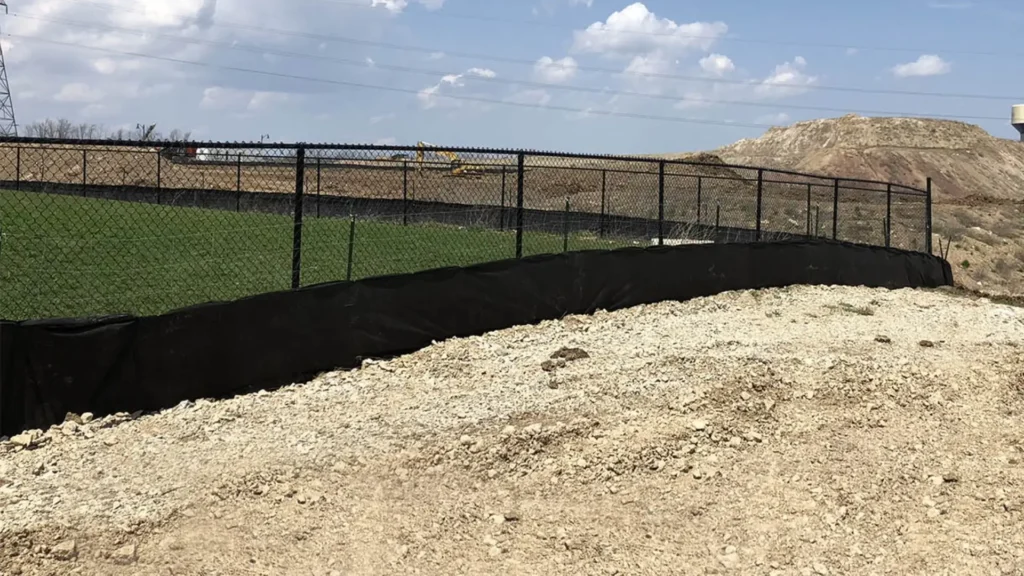
Step-By-Step Overview Of How A Silt Fence Is Installed
Installing a silt fence correctly is what determines whether it actually controls sediment or fails during the first heavy rain. While the concept is simple, the details matter. A properly installed silt fence follows the natural flow of water, is securely anchored into the ground, and is supported well enough to handle runoff pressure over time.
Site Planning And Layout
Before any materials go into the ground, the layout must be carefully planned based on how water moves across the site. This step is often overlooked, but it is one of the most important parts of effective sediment control.
- Runoff Direction: Observe the natural slope of the land to understand how water flows during rainfall. Water always follows the path of least resistance, so the fence should be placed where it can intercept sheet flow before it gains speed.
- Contour-Based Placement: Install the fence along the contour of the slope rather than straight down a hill. This helps distribute water evenly across the fence instead of concentrating pressure in one area.
- Avoiding Concentrated Flow Paths: Do not place a silt fence across channels, ditches, or areas where water is already concentrated. These high-flow zones can easily overwhelm the barrier unless a reinforced design is specifically used.
- Coverage Area: Ensure the fence fully surrounds or protects the disturbed soil area. Gaps in coverage can allow sediment to escape and defeat the purpose of the installation.
Post Placement And Fabric Attachment
Once the layout is defined, the next step is installing the structural support system. A silt fence is only as strong as its posts and how well the fabric is secured.
- Secure Post Installation: Drive posts firmly into the ground at consistent intervals to create a stable support line. Loose or shallow posts can lean or collapse under the weight of accumulated sediment and water pressure.
- Proper Spacing: Keep posts close enough together to prevent sagging. Wider spacing may reduce material use, but it increases the risk of failure during heavy runoff events.
- Fabric Positioning: Attach the geotextile fabric on the uphill side of the posts so the structure can resist the force of flowing water. This positioning helps the posts support the load rather than the fasteners alone.
- Maintaining Tension: The fabric should be pulled tight between posts to avoid sagging pockets where water can collect. A well-tensioned fence distributes pressure evenly and improves durability.
Trenching The Bottom Edge
One of the most critical steps in silt fence installation is anchoring the bottom edge. Without proper trenching, water will simply flow underneath the fence, carrying sediment with it.
- Shallow Trench Excavation: Dig a trench along the fence line that is deep enough to secure the fabric. This trench acts as a barrier to prevent undercutting.
- Fabric Burial: Extend the bottom portion of the fabric into the trench before backfilling. This creates a sealed edge that blocks water from slipping underneath.
- Backfill And Compaction: Fill the trench with soil and compact it firmly. Loose soil can wash away, reopening gaps and weakening the entire system.
- Continuous Seal: Ensure there are no breaks in the buried section of fabric. Even small gaps can become failure points during heavy rainfall.
Final Inspection Before Rain Events
Before the site is exposed to rain, a thorough inspection ensures the fence is ready to perform as intended. Catching issues early prevents costly repairs and sediment loss.
- Gap Detection: Walk the entire fence line and look for openings between sections or at the base where water could escape.
- Fabric Condition: Check for tears, punctures, or weak spots in the fabric that could worsen under pressure.
- Alignment Check: Confirm the fence follows the planned contour and is not leaning or misaligned, which can reduce effectiveness.
- Sagging Areas: Identify sections where the fabric is loose or sagging and tighten or reinforce them to prevent pooling and failure.
- Post Stability: Test posts to ensure they are firmly anchored and can withstand runoff pressure.
A silt fence may seem like a simple installation, but attention to detail at each step is what makes it effective. When properly planned, installed, and inspected, it becomes a reliable first line of defense against sediment runoff and site damage.
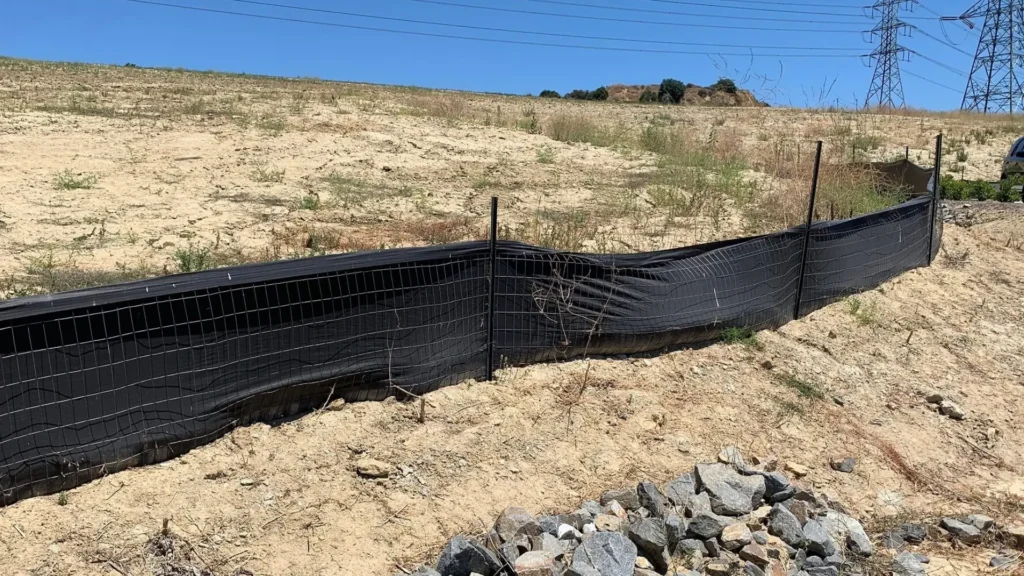
Common Silt Fence Installation Mistakes
Even though a silt fence is a simple and widely used sediment-control solution, its effectiveness depends heavily on how it is installed and maintained. Many failures on construction sites are not due to the product itself, but to avoidable mistakes during setup. Understanding these common issues can help you prevent runoff problems, reduce site damage, and stay compliant with erosion-control requirements.
Installing It in Areas of Concentrated Flow
One of the most frequent mistakes is placing a silt fence in areas where water naturally collects and flows with force, such as channels, ditches, or low points on a slope. Silt fences are designed for sheet-flow conditions, not high-volume or fast-moving water.
- Why this fails: Concentrated flow builds pressure against the fabric, which can cause tearing, overtopping, or complete blowouts.
- What happens on site: Water finds the weakest point and pushes through or around the fence, carrying sediment with it.
- Better approach: Use silt fences along contours where water spreads evenly, and consider stronger sediment-control measures like check dams or sediment basins for high-flow areas.
Not Trenching the Bottom
Skipping the trenching step is one of the most critical installation errors. The bottom edge of the fabric must be buried and secured into the ground to prevent water from flowing underneath.
- Why this matters: Water always follows the path of least resistance, and an untrenched fence creates an easy escape route.
- Common outcome: Runoff slips under the fence, bypassing the filtration process entirely and carrying sediment off-site.
- Best practice: Dig a shallow trench, typically 6 inches deep, place the fabric into it, and backfill with compacted soil to anchor the fence properly.
Using It on Slopes Incorrectly
Improper placement on slopes can significantly reduce the effectiveness of a silt fence. Installing it straight down a slope instead of following the land’s natural contour is a common mistake.
- Why placement matters: Water accelerates as it moves downhill, increasing erosion and reducing the fence’s ability to trap sediment.
- Typical issue: The fence becomes overwhelmed by runoff volume, leading to overtopping or failure.
- Correct method: Install the fence along contour lines so it intercepts water evenly and slows runoff across the entire slope.
Leaving Too Much Space Between Posts
The spacing of support posts directly affects the strength and stability of the fence. When posts are placed too far apart, the fabric loses tension and structural support.
- What goes wrong: The fence begins to sag under the weight of accumulated sediment and water pressure.
- Resulting problems: Gaps form, fabric collapses, and sediment escapes through weak points.
- Recommended setup: Keep post spacing consistent, typically 6 to 10 feet apart depending on site conditions, and ensure posts are firmly driven into the ground.
Failing to Maintain It
Even a properly installed silt fence will fail without regular inspection and maintenance. Over time, sediment buildup, weather exposure, and site activity can reduce its effectiveness.
- Why maintenance is critical: A silt fence is a temporary solution that requires ongoing attention to function properly.
- Common signs of neglect: Excess sediment accumulation, torn fabric, leaning posts, and water bypassing the fence.
- What to do: Inspect the fence after rainfall, remove excess sediment before it reaches the top, and repair or replace damaged sections promptly.
A well-installed and maintained silt fence can make a significant difference in controlling sediment and protecting nearby areas. By avoiding these common mistakes, you can ensure your erosion-control efforts are effective, reliable, and aligned with best practices.
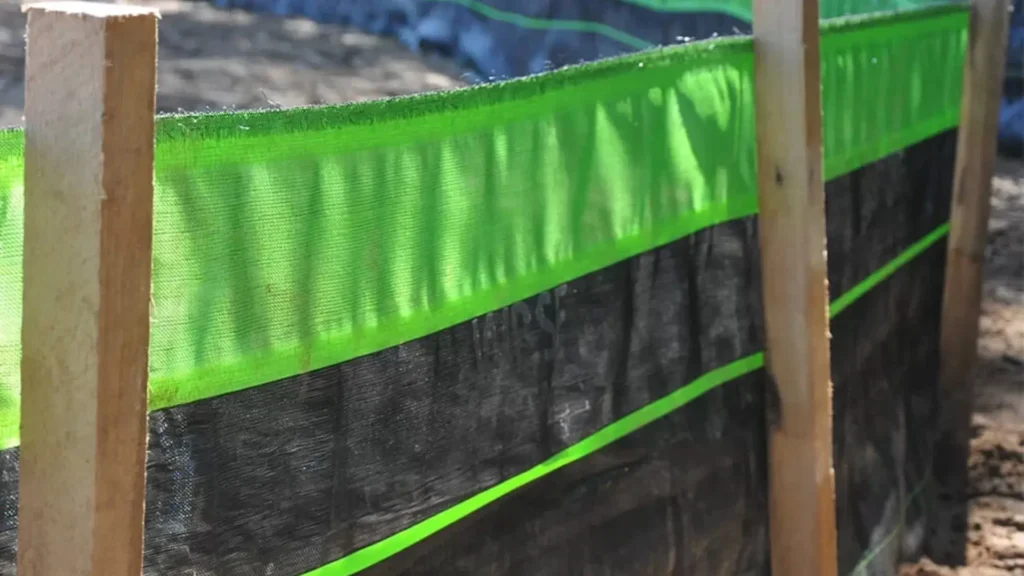
How To Maintain A Silt Fence
Proper maintenance is what determines whether a silt fence actually does its job or quietly fails when you need it most. Even a well-installed fence can become ineffective if it is not regularly inspected and maintained. In real-world job-site conditions, weather, soil movement, and ongoing construction activity can quickly compromise the system, so a consistent, proactive approach is essential.
When It Should Be Inspected
Regular inspection is the foundation of effective silt fence maintenance. The goal is to catch small issues early before they turn into larger failures that allow sediment to escape the site.
- After rainfall: Heavy or even moderate rain can put stress on the fence, causing sediment buildup, fabric strain, or water bypass. Always check for pooling, sagging, or washouts immediately after storms.
- During active earthwork: Grading, excavation, and soil disturbance can shift runoff patterns and damage sections of the fence. Frequent checks during active construction help ensure the barrier still aligns with actual site conditions.
- On a routine site schedule: Even without rain or major activity, inspections should be done on a consistent schedule, such as weekly. Routine checks help identify gradual wear that might otherwise go unnoticed.
Signs It Needs Repair
Knowing what to look for can save time and prevent compliance issues. Small defects often lead to larger failures if ignored.
- Torn fabric: Holes or tears reduce the fence’s ability to filter sediment and can quickly worsen under pressure from flowing water.
- Leaning posts: Posts that tilt or loosen compromise the structural support of the fence, leading to sagging or collapse.
- Undercutting: When water flows underneath the fence, it bypasses the barrier entirely. This usually indicates poor trenching or soil erosion at the base.
- Overflowing sediment: If sediment has built up too high behind the fence, water will flow over the top instead of being filtered, reducing effectiveness.
When Sediment Should Be Removed
Sediment removal is one of the most overlooked maintenance tasks, yet it is critical to keeping the fence functional. As sediment accumulates, it reduces the fence’s capacity to hold additional runoff and increases the risk of overtopping.
- Removal threshold: Sediment should be cleared before it reaches a level where it stresses the fabric or approaches the top of the fence. A common best practice is to remove buildup once it reaches about one-third to one-half the height of the barrier.
- Proper disposal: Removed sediment should be placed in a stable area where it will not re-enter the drainage path or wash back toward the fence.
- Ongoing monitoring: After removal, continue to monitor the same area closely, as repeated buildup may indicate a need for additional erosion-control measures upstream.
When To Replace Or Remove It
Silt fences are temporary systems, so knowing when to replace or remove them is just as important as maintaining them during use.
- End of project: Once construction is complete and the site is stabilized, the fence should be removed to avoid unnecessary obstruction and material degradation.
- After site stabilization: When vegetation or permanent erosion-control measures are established and functioning, the fence is no longer needed.
- When material is damaged beyond repair: If the fabric is extensively torn, posts are no longer secure, or repeated failures occur, replacement is more effective than patchwork repairs.
Maintaining a silt fence is not complicated, but it does require consistency and attention to detail. A well-maintained fence protects your site, reduces environmental impact, and helps you stay compliant with regulations without costly setbacks.
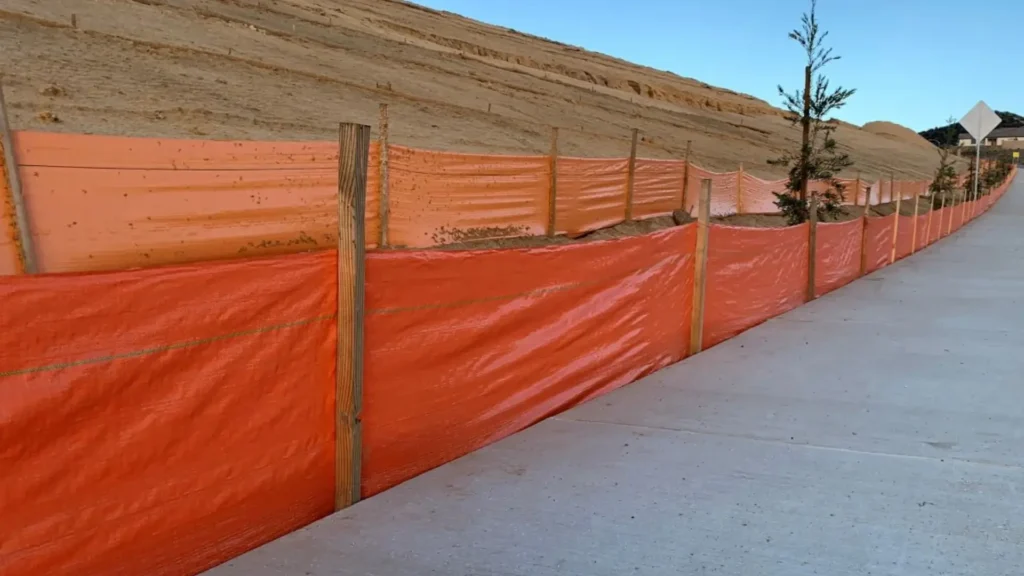
How Long Does A Silt Fence Last?
A silt fence is designed as a temporary sediment-control measure, but its actual lifespan can vary depending on how it is installed, maintained, and exposed to site conditions. While it is not intended to be a long-term solution, understanding how long it can remain effective helps ensure your site stays compliant and protected throughout the construction process.
Temporary Use Expectations
Silt fences are built for short-term use during active construction or land-disturbance phases. Their primary purpose is to manage sediment runoff until the site is stabilized, typically through vegetation, paving, or other permanent erosion-control methods.
In most cases, a properly installed silt fence will remain functional for the duration of a project, which can range from a few weeks to several months. However, they are not designed to withstand long-term environmental exposure or heavy, repeated runoff events without degradation.
- Project-based lifespan: Silt fences are expected to last only as long as the construction or grading activity is ongoing
- Temporary material design: The geotextile fabric and stakes are not engineered for permanent installation
- Transition to permanent control: Once the soil is stabilized, the fence should be removed and replaced with long-term solutions
Relying on a silt fence beyond its intended use can lead to reduced performance and increased risk of failure.
Factors That Affect Lifespan
Several real-world factors influence how long a silt fence will remain effective. Even high-quality materials can fail early if site conditions are harsh or maintenance is neglected.
- Weather exposure: Heavy rainfall, strong winds, and repeated storm events can weaken the structure and cause washouts or leaning posts
- Sunlight: Prolonged UV exposure can degrade the fabric, making it brittle and more prone to tearing over time
- Soil load: Accumulated sediment behind the fence increases pressure, which can lead to sagging or collapse if not removed regularly
- Installation quality: Proper trenching, secure post placement, and correct alignment significantly extend the fence’s effectiveness
- Maintenance frequency: Regular inspections and timely repairs are critical to keeping the fence functional throughout the project
In practice, the difference between a silt fence that lasts a few weeks and one that performs well for months often comes down to installation and maintenance. A well-installed, well-maintained fence can consistently control sediment, while a poorly managed one can fail quickly and create costly problems.
A silt fence does not fail all at once. It gradually loses effectiveness as fabric weakens, sediment builds up, and structural support declines. Paying attention to these warning signs early can prevent larger issues and keep your site compliant.
In the end, a silt fence is only as reliable as the care it receives. Treating it as an active part of site management rather than a one-time installation ensures it performs as intended until the job is complete.
Do You Need A Silt Fence For Every Project?
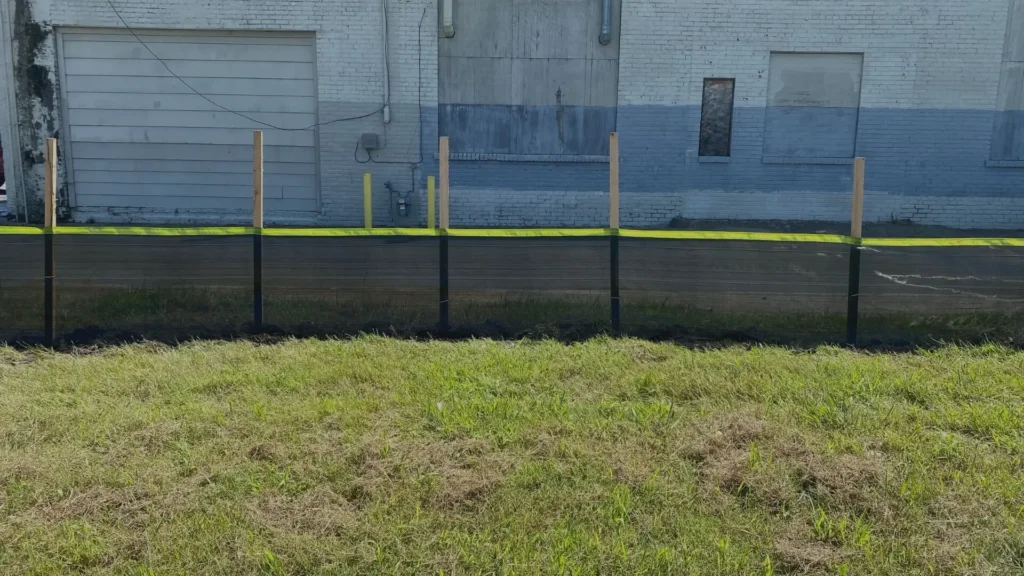
Deciding whether you need a silt fence depends on the size of your project, the level of soil disturbance, and how water moves across your site. While silt fences are one of the most common sediment-control solutions, they are not always necessary or effective in every situation. Understanding when they are appropriate and when alternative methods may be better will help you avoid unnecessary costs, compliance issues, and site failures.
Small Projects vs. Large Construction Sites
Not every project requires a silt fence, but many projects that disturb exposed soil can benefit from one. The key factor is whether your work creates conditions where sediment could be carried off-site by rainfall or runoff.
- Small-scale projects: Minor landscaping or light grading work may not require a full silt fence if the disturbed area is limited and the runoff risk is low. However, even small projects can cause sediment issues if the soil is loose and unprotected.
- Large-scale construction sites: Projects involving excavation, grading, or clearing large areas almost always require sediment-control measures. Silt fences are commonly used along site perimeters to prevent soil from leaving the property.
- Disturbed-soil exposure: Any project that leaves soil bare for an extended period increases erosion risk. In these cases, a silt fence can act as a first line of defense against sediment loss.
From a practical standpoint, experienced contractors often evaluate whether rainfall could move soil beyond the project boundary. If the answer is yes, a silt fence or similar control measure is usually needed.
Local Requirements and Site Conditions
Even if a silt fence seems optional, local regulations and site-specific conditions often determine whether it is required. Many municipalities and project approvals include erosion-control standards that must be followed before work begins.
- Regulatory compliance: Local governments, counties, or environmental agencies may require sediment-control measures as part of construction permits. Failing to install a required silt fence can result in fines or project delays.
- Stormwater management plans: Larger projects often include a formal plan that outlines required best management practices. Silt fences are frequently listed as a standard perimeter-control method.
- Site-specific conditions: Soil type, slope, drainage patterns, and rainfall frequency all influence whether a silt fence is appropriate. Sandy or loose soils, for example, are more prone to erosion and may require additional protection.
A good approach is to review local guidelines early and assess how water behaves on your site during rain events. This ensures your sediment-control strategy is both compliant and effective.
When Another Solution May Be Better
While silt fences are widely used, they are not designed for every situation. In certain conditions, relying on a silt fence alone can lead to failure or inadequate protection.
- Steep or highly sloped areas: On steep slopes, water gains speed quickly and can overwhelm a silt fence. In these cases, erosion-control blankets or terracing methods may be more effective.
- High-flow runoff zones: Areas where water concentrates into channels or flows heavily during storms require stronger control measures such as wattles, check dams, or sediment basins.
- Permanent drainage issues: If a site has ongoing drainage problems, a temporary solution like a silt fence will not address the root cause. Long-term drainage improvements, such as grading adjustments or drainage systems, are more appropriate.
Choosing whether to install a silt fence comes down to understanding your project’s impact on soil stability and water flow. When used in the right context and combined with proper planning, it can be a simple but effective tool for protecting your site and surrounding environment.
Expert Tips For Choosing The Right Sediment Control Approach
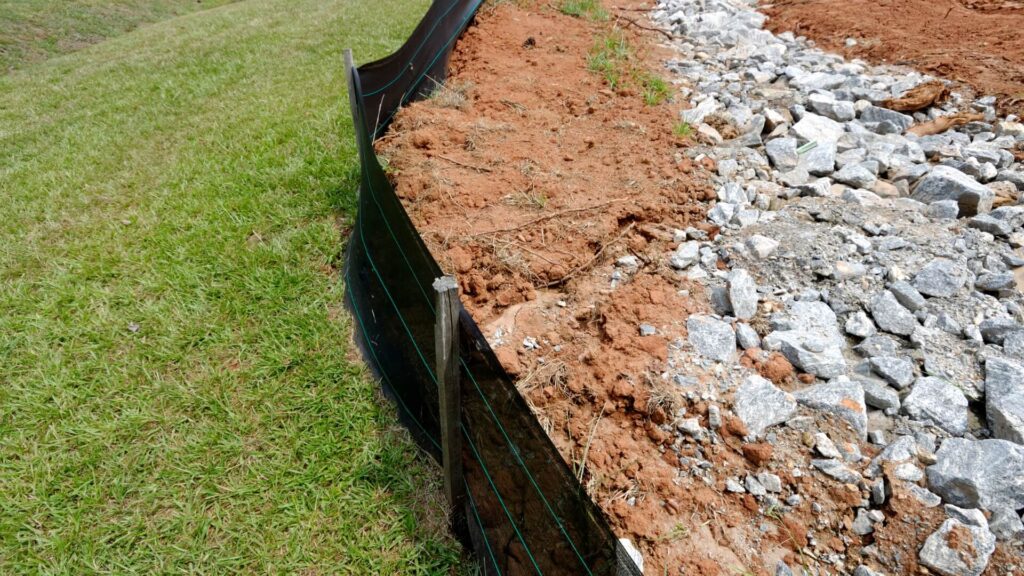
Choosing the right sediment-control approach is not about picking a single product and hoping it works across every condition. Effective results come from understanding how water moves across a site, how soil behaves under stress, and how different control methods work together. The goal is to reduce erosion at the source, capture sediment before it leaves the site, and maintain performance throughout the life of the project.
Match the Method to the Site, Not the Product
One of the most common mistakes in sediment control is applying a one-size-fits-all solution. A silt fence may work well in certain conditions, but it is not designed for every environment. The most reliable approach starts with evaluating the physical characteristics of the site before selecting any control method.
- Soil type: Sandy soils drain quickly but can still shift under heavy runoff, while clay-heavy soils hold water and increase surface flow. Each type affects how sediment moves and how well a barrier can perform.
- Slope and grade: Steeper slopes increase runoff speed and erosion risk. In these areas, relying only on a silt fence can lead to failure unless combined with additional stabilization methods.
- Rainfall exposure: Sites in high-rainfall areas require stronger and more layered control systems. Light-duty solutions may not withstand repeated storm events.
- Drainage area: Larger drainage zones produce higher water volume, which can overwhelm basic barriers. Understanding how much water flows across a site helps determine whether additional controls are needed.
A well-matched approach ensures that the chosen method works with the site’s natural conditions instead of against them. This reduces the risk of washouts, rework, and compliance issues.
Combine Silt Fence With Other Best Management Practices
A silt fence is most effective when used as part of a broader sediment-control strategy. On its own, it provides perimeter protection, but combining it with other best management practices creates a more complete system that addresses both erosion and runoff.
- Stabilized entrances: These reduce the amount of sediment tracked off-site by vehicles. By controlling mud at entry and exit points, you prevent additional contamination beyond the project area.
- Inlet protection: Storm drains are a direct path for sediment to enter waterways. Protecting inlets with filters or barriers helps capture sediment before it leaves the site.
- Surface stabilization methods:
- Mulch and seeding: Help establish vegetation and reduce exposed soil over time.
- Erosion-control blankets: Provide immediate protection on slopes and high-risk areas.
- Wattles or fiber rolls: Slow down runoff and help trap sediment along contours.
Using multiple methods together creates a layered defense system. Instead of relying on one barrier, you are addressing sediment at different stages, from prevention to capture.
Think Beyond Installation
Installing a silt fence correctly is only the first step. Long-term performance depends on how well the system is maintained and monitored throughout the project. Even a properly installed fence can fail if it is ignored after heavy rainfall or ongoing site activity.
- Routine inspections: Regular checks help identify early signs of damage, such as sagging fabric, leaning posts, or gaps along the base. Catching these issues early prevents larger failures.
- Sediment buildup management: As sediment collects behind the fence, it reduces capacity and increases pressure on the structure. Removing excess buildup keeps the system functioning as intended.
- Timely repairs: Small tears or loose sections can quickly turn into major failures during the next storm. Prompt repairs extend the life of the installation and maintain compliance.
- End-of-project removal: Once the site is stabilized, removing temporary controls ensures the area is left clean and functional without unnecessary barriers.
The true effectiveness of any sediment-control method is measured over time, not just at installation. A well-maintained system performs consistently, protects surrounding areas, and reduces the likelihood of costly setbacks.
References
- Stormwater Best Management Practice: Silt Fences (EPA)
https://www.epa.gov/sites/production/files/2015-11/documents/siltfences_0.pdf - What Is a Silt Fence? Purpose, Installation, and Limits (Vista Projects)
https://www.vistaprojects.com/what-is-a-silt-fence/ - Silt Fence for Erosion Control: Installation and Best Practices
https://mewarpolytex.com/blog/silt-fence-for-erosion-control/ - Silt Fence Design Manual (Iowa SUDAS)
https://www.iowasudas.org/wp-content/uploads/sites/15/2020/03/7E-14.pdf - Everything You Need to Know About Silt Fences (NTX Erosion Supplies)
https://ntxerosionsupplies.com/blog/the-ultimate-guide-to-silt-fences/
FAQs: About What Is A Silt Fence
Conclusion
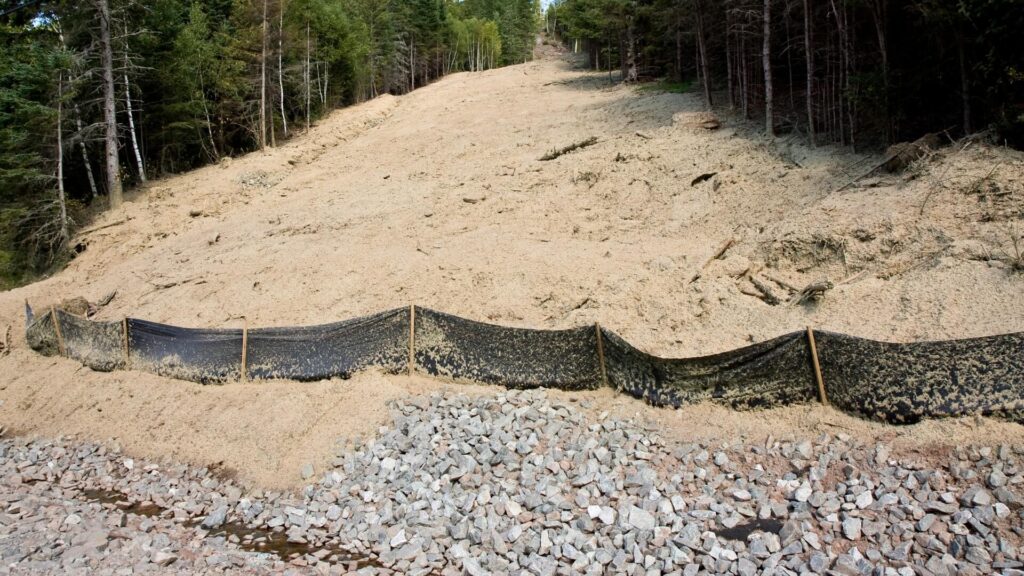
A silt fence is a simple yet essential sediment-control solution designed to catch soil before it leaves a disturbed site, working by slowing stormwater runoff and allowing sediment to settle behind a properly installed barrier. It fits best along downslope edges of construction areas, landscaping projects, and other soil-disturbing activities where managing runoff is critical to protecting nearby drains, waterways, and properties. However, its effectiveness depends heavily on correct placement, secure post spacing, and proper trenching, since even small installation errors can lead to failure. Before deciding if you need one, take time to evaluate your site conditions, including slope, soil type, drainage patterns, and local compliance requirements, as these factors determine whether a silt fence alone is sufficient or should be combined with other erosion-control methods. If you are unsure about the right approach, consulting an erosion-control professional, contractor, or site engineer can help ensure your project stays compliant, effective, and protected from costly runoff issues.
Find A Professional Fencing Company Near You!
- Farm Fencing Waikato
- Fence Builders Alexandra, Clyde & Cromwell
- Fence Builders Auckland
- Fence Builders Central Otago
- Fence Builders Christchurch
- Fence Builders Hamilton Waikato
- Fence Builders Invercargill
- Fence Builders Kapiti
- Fence Builders Lower Hutt
- Fence Builders Palmerston North
- Fence Builders Queenstown
- Fence Builders Taupo
- Fence Builders Upper Hutt
- Fence Builders Wanaka
- Fence Builders Wellington
- Fencing Contractors Levin
- Fencing Contractors Napier
- Fencing Hastings
- Fencing Hawkes Bay
- Fencing Kerikeri
- Fencing Manawatu–Whanganui
- Fencing Mangawhai
- Fencing Nelson
- Fencing New Plymouth
- Fencing Paihia
- Fencing Taranaki, New Plymouth
- Fencing Warkworth
- Fencing Whangarei

About the Author:
Mike Veail is a recognized digital marketing expert with over 6 years of experience in helping tradespeople and small businesses thrive online. A former quantity surveyor, Mike combines deep industry knowledge with hands-on expertise in SEO and Google Ads. His marketing strategies are tailored to the specific needs of the trades sector, helping businesses increase visibility and generate more leads through proven, ethical methods.
Mike has successfully partnered with numerous companies, establishing a track record of delivering measurable results. His work has been featured across various platforms that showcase his expertise in lead generation and online marketing for the trades sector.
Learn more about Mike's experience and services at https://theleadguy.online or follow him on social media: